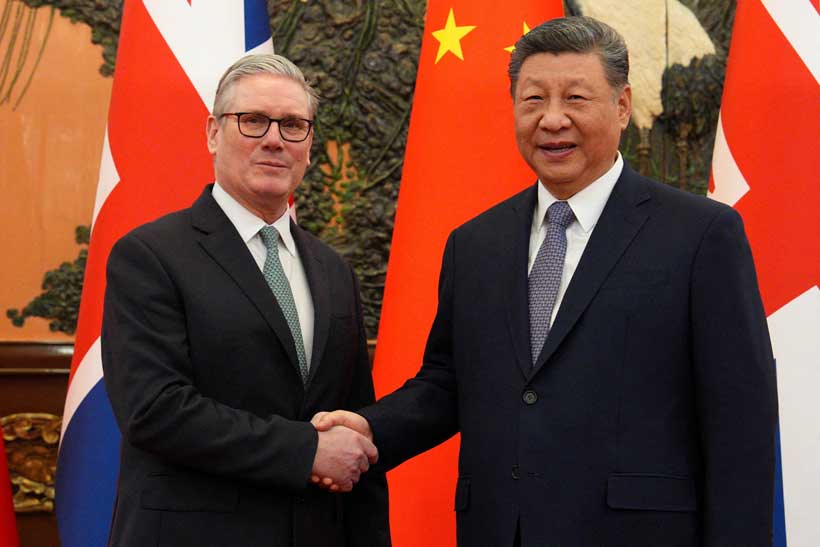
Britain and China announced a renewed partnership on Thursday, with Prime Minister Keir Starmer and President Xi Jinping committing to increased cooperation in trade, investment, and technology for mutual benefits. Starmer called for a “more sophisticated relationship” with China, emphasizing improved market access, reduced tariffs, and investment opportunities. Notably, during the visit, Beijing agreed to 30 days of visa-free access for British citizens and halved tariffs on whisky. Additionally, UK drugmaker AstraZeneca announced a $15 billion investment in China.
The meeting between Starmer and Xi lasted around three hours, covering topics like trade, security, the Ukraine war, soccer, and Shakespeare. Starmer prioritized improving relations with China to stimulate economic growth for his Labour government, which has faced criticism for not delivering promised growth. He highlighted AstraZeneca’s investments as evidence of the potential benefits for both nations but also mentioned the importance of having open discussions on disagreements. Xi expressed China’s willingness to develop a long-term partnership with Britain, noting past challenges in their relationship.
Starmer’s visit occurred against a backdrop of uncertainty due to U. S. President Donald Trump’s unpredictable policies, causing concerns among allies like Britain. Starmer has not yet secured the extensive trade deals achieved by Canadian Prime Minister Mark Carney during his recent visit but is working to mend ties that weakened under previous Conservative administrations, which had limited Chinese investments due to security fears and human rights issues.
Starmer’s opposition, led by Kemi Badenoch, criticized his visit due to perceived risks related to China. British intelligence reports accuse China of espionage, which China denies. However, Starmer viewed his relationship with Xi positively, describing their discussions as warm, including a conversation about English Premier League soccer. Starmer gifted Xi a soccer ball from a Manchester United match.
In addition to trade discussions, Starmer sought China’s cooperation to enhance security measures and battle human trafficking, particularly targeting gangs involved in smuggling migrants across the Channel. Elements of this plan include sharing intelligence on smuggling routes and working with Chinese manufacturers to prevent exploitation by criminals.
Upon arriving in Beijing, Starmer enjoyed local cuisine and participated in cultural exchanges, such as practicing Chinese phrases with restaurant staff.
With information from Reuters