


NEWS BRIEF
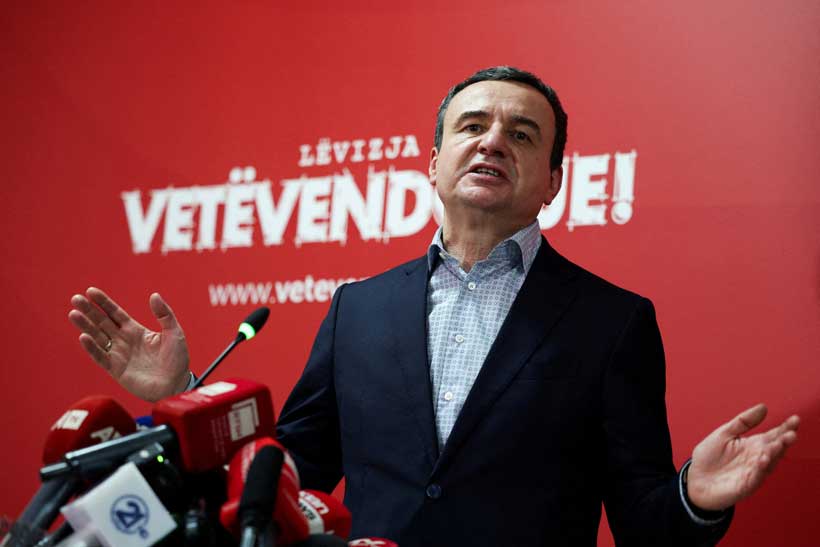
Kosovo’s Prime Minister Albin Kurti has won a resounding election victory with nearly 49% of the vote, ending a nine-month political deadlock and positioning his nationalist Vetëvendosje party to govern with a strong mandate. The “political earthquake” grants Kurti the leverage to unlock €1 billion in stalled international funding, pursue domestic reforms, and navigate fraught relations with Serbia and the EU, but also risks consolidating power in a region familiar with strongman politics.
WHAT HAPPENED
- Prime Minister Albin Kurti’s Vetëvendosje party won nearly 49% of the vote in Kosovo’s parliamentary election, a result analysts have called a “political earthquake.”
- The victory ends a political impasse that had paralyzed parliament for most of 2025, blocking international funding and stalling governance.
- Kurti now needs only minor coalition partners to form a government, granting him significant domestic authority and a mandate to advance welfare reforms and public-sector wage hikes.
- The election coincided with the EU’s decision to lift sanctions on Kosovo and release €216 million in aid, with another €205 million pledged for early 2026.
WHY IT MATTERS
- Kurti’s strong mandate allows him to restart Kosovo’s stalled institutions, approve a national budget, and unlock roughly €1 billion in frozen EU and World Bank funding critical for one of Europe’s poorest economies.
- The result shifts Kosovo toward a model of dominant-party governance seen elsewhere in the Western Balkans, raising concerns about political pluralism and checks on power.
- With tensions with Serbia still unresolved, Kurti’s renewed authority will test whether he pursues a more confrontational or conciliatory approach, a key factor in Kosovo’s EU accession hopes.
- The election reaffirms public support for Kurti’s nationalist reform agenda despite international criticism and economic hardship, signaling a desire for decisive leadership over consensus politics.
IMPLICATIONS
- Kosovo can expect accelerated domestic reforms, including welfare expansion and public wage increases, but must address systemic issues in healthcare, education, and corruption.
- EU-Kosovo relations may improve with funding unlocked, but Brussels will pressure Kurti to normalize ties with Serbia, a longstanding condition for EU membership.
- Serbia’s refusal to recognize Kosovo’s independence ensures continued regional instability, though reduced EU sanctions may temporarily ease hostilities.
- Kurti’s consolidation of power could deepen political polarization domestically and test Kosovo’s democratic institutions amid a trend of strongman rule in the Balkans.
This briefing is based on information from Reuters.
