


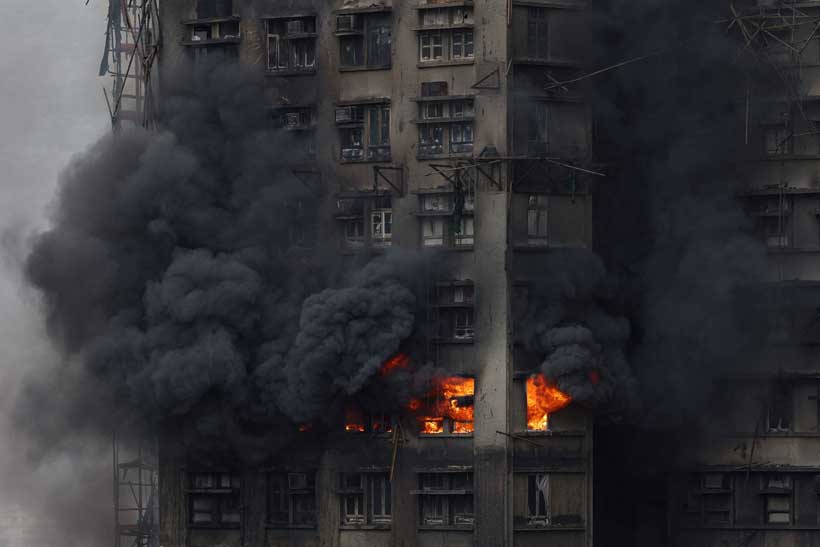
Hong Kong is reeling after the city’s deadliest fire in more than seven decades tore through the Wang Fuk Court housing estate, killing at least 146 people and displacing thousands. The blaze, which erupted on Wednesday as the building complex was undergoing renovations, spread rapidly along scaffolding and exterior cladding, trapping residents in stairwells and rooftops as they attempted to escape. Authorities have completed sweeps of four of the seven devastated apartment towers and are now focusing on the worst-hit blocks, where the final stages of the search could take weeks.
Why It Matters
The scale of the tragedy has exposed long-ignored concerns about fire safety in older Hong Kong estates and sparked public frustration over government assurances issued last year that the buildings carried “relatively low fire risk.” The disaster has also become politically sensitive ahead of legislative elections, with Beijing warning against any mobilisation resembling the 2019 pro-democracy protests. New arrests including residents calling for an independent investigation have fueled concerns that authorities may clamp down on public dissent surrounding the handling of the renovations and safety inspections.
The victims span families, elderly residents, migrant domestic workers and young professionals including at least nine Indonesians and one Filipino helper. Emergency shelters remain full as over 4,000 residents struggle to restart their lives, many without documents or belongings. Hong Kong authorities, the Fire Services Department, and police are under pressure to explain why fire alarms malfunctioned and unsafe materials were reportedly used during renovations. At the national level, Beijing’s security office has positioned itself as a guardian of “order,” cautioning against any public criticism that could evolve into political challenges.
Contractors and developers are also at the centre of the probe. Eleven people have already been arrested for suspected corruption and use of unsafe materials, drawing attention to the oversight of Hong Kong’s construction sector, where bamboo scaffolding and plastic mesh are still routinely used.
Stay ahead of the geopolitical week.
MD Briefing delivers expert analysis across five global fronts — the Indo-Pacific, energy, geoeconomics, European security, and the Middle East — every Monday morning. Free.
What’s Next
Police searches will continue through the remaining and most dangerous buildings, with investigators examining whether flammable insulation and faulty alarms worsened the disaster’s spread. The government has begun distributing emergency cash and replacing lost identity documents, but survivors and families are likely to continue demanding accountability as vigils roll out in Hong Kong, Tokyo and London this week.
The political dimension is poised to intensify. Calls for an independent inquiry have already led to detentions, and Beijing’s warnings signal the government may move swiftly against any group drawing links between the tragedy and broader governance failures. As public anger simmers, the coming days will test whether authorities prioritise transparency or control — and whether the fire becomes a flashpoint ahead of the elections.
With infromation from Reuters.
