


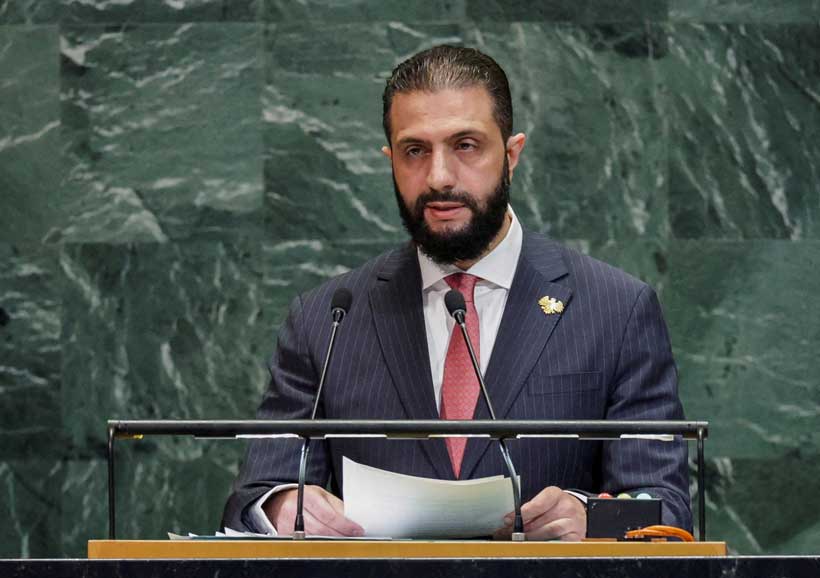
Ahmed al-Sharaa has transitioned from being an al Qaeda militant to the president of Syria in a remarkable political journey, culminating in his anticipated visit to the White House as a guest of U. S. President Donald Trump. Sharaa, who joined al Qaeda in Iraq around the time of the 2003 U. S. invasion and spent time in U. S. custody, later returned to Syria to fight against President Bashar al-Assad. He was once known as Abu Mohammad al-Golani, the commander of the Nusra Front, which was linked to al Qaeda. In 2016, he distanced his group from al Qaeda, presenting it as part of the broader Syrian revolution. Ahead of his White House meeting, the U. S. removed him from its list of Specially Designated Global Terrorists.
Sharaa became Syria’s de facto ruler in December 2024, promising to replace Assad’s repressive governance with a more inclusive system. His stated goals include unifying Syria, revitalizing its economy hindered by Western sanctions, and regulating arms under state control. He gained crucial support from regional countries like Turkey, Saudi Arabia, and Qatar, eventually obtaining Trump’s endorsement during a surprise meeting in Riyadh.
This visit to Washington marks Sharaa’s second trip to the U. S. as president; he spoke at the U. N. General Assembly in September, the first Syrian leader to do so in many years. However, he has faced difficulties in achieving his objectives. Although Trump announced an end to some U. S. sanctions, the toughest ones remain and require Congressional action to be lifted, which hampers essential investments in Syria.
Sharaa’s administration has experienced significant violence, particularly between Sunni Muslim fighters loyal to him and minority groups, challenging his commitment to inclusivity. In March, a large number of Alawites were killed in Sunni attacks, and in July, violence resulting in over 1,000 deaths affected the Druze population. He has promised justice for these incidents.
Israel, wary of Sharaa’s past, has restricted Syrian military movements in the south and conducted airstrikes to protect the Druze community. In the northeast, Kurdish forces continue to maintain their autonomy, opposing what they view as attempts by Damascus to centralize power.
Sharaa views Assad’s downfall as a significant victory and has avoided directly answering questions about implementing sharia law, suggesting it is a matter for experts. He claims that revolutionary legitimacy backs his role as interim president and states that elections could occur in up to five years. In a media interview, he expressed a desire to move beyond Assad’s governance, reflecting critically on past evils associated with it. Born in Saudi Arabia to an Arab nationalist father, Sharaa’s beliefs evolved, influenced by events such as the second Palestinian Intifada. Initially involved with al Qaeda, he publicly denounced terrorism and the killing of innocents in later interviews, asserting that his group did not threaten the West.
With information from Reuters
