


These are dark days for international development. The UN’s 2030 Sustainable Development Goals (SDGs), with their promise of a world free of extreme poverty and hunger, now read like the fictionalised depiction of a world that might have been. Aid budgets are in freefall. Multilateralism and international cooperation are under attack. How do we turn the tide, rebuild a sense of shared moral purpose, and restart the stalled shared mission to build a fair, more equitable, and more sustainable pattern of globalisation?
That question should be at the heart of planning for the G7 summit in Evian, France, next month. As political leaders prepare for the summit, they should take a quick look at the declaration their predecessors adopted in the same town twenty-three years ago. Meeting against the backdrop of the Iraq war and a faltering world economy, they nonetheless agreed on a plan of action to combat poverty and malnutrition in the world’s poorest countries.
That was then. Now, planning for the G7 gathering is overwhelmingly focused on global economic imbalances, the rise of protectionism, and energy markets. Action in all of these areas is imperative. Even so, the conspicuous absence of concern over the twin scourges of poverty and hunger raises questions over the direction of G7 policies. Progress towards the goal of eradicating extreme poverty has slowed to a near standstill. On current trends, there will be some 582 million people living with hunger in 2030 – more than there were in 2015 when the SDGs were adopted. That figure is likely to rise as the impact of the Gulf crisis on world food systems filters through to markets in the world’s poorest countries.
President Macron has called for a collective effort to end the retreat of global solidarity. But doesn’t that principle extend to the world’s poorest and marginalised people living at the sharp end of a food security crisis magnified by the actions of G7 countries?
Stay ahead of the geopolitical week.
MD Briefing delivers expert analysis across five global fronts — the Indo-Pacific, energy, geoeconomics, European security, and the Middle East — every Monday morning. Free.
The Promise of School Meals
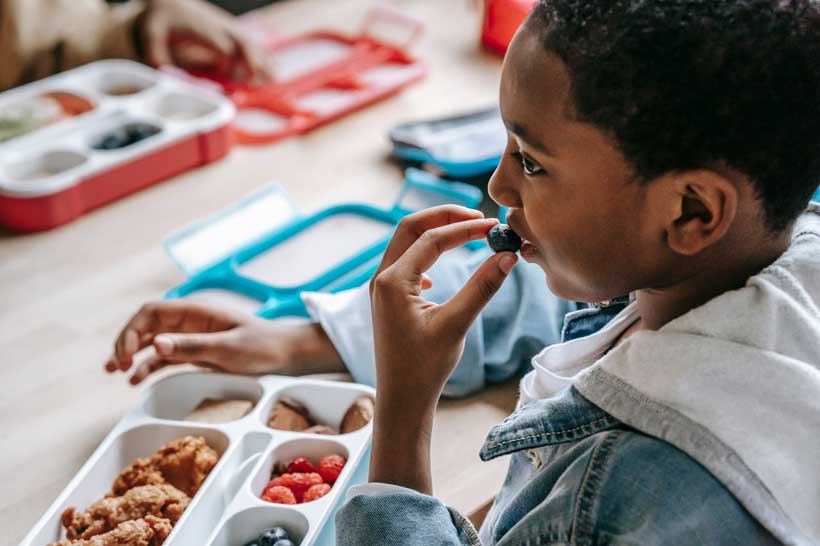
‘Solidarity’ in this context could start with children – and with the G7 providing a new impetus to an old idea. While global hunger and food insecurity demand action on many fronts, one of the most effective levers available is the provision of nutritious school meals. Most G7 countries already have major school feeding programmes in place – and France has one of the best. But coverage is most limited where it is most needed: in the schools serving poor households in poor countries.
Today, school feeding reaches about half of all primary school-age children. But there are some 266 million children in low-income countries (LICs) and lower middle-income countries (LMICs) beyond the reach of school meals. Many of these children are either left sitting in classrooms too hungry to learn or forced by poverty out of school and into labour markets.
Providing high-quality school meals offers multiple benefits. It gets more children into school, reduces dropout rates, and improves learning outcomes. National school feeding programmes provide a cost-effective route for raising nutritional standards and providing a food security safety net, which can be strengthened during periods of crisis. The benefits of improved nutrition, better education, and expanded opportunity are wide-ranging and mutually reinforcing.
Moreover, the benefits do not end there. One of humanity’s greatest collective challenges is the reform of food systems. As governments across the world increasingly recognise, diets dominated by ultra-processed, high-fat, sugar-intensive foods are at the heart of a global public health crisis, one symptom of which is surging childhood obesity. Backed by broader education measures, taxes on unhealthy products, and advertising regulation, school meals provide a vehicle for inculcating healthy eating habits at an early age, breaking the transmission of obesity across generations.
Advancing Sustainable Food Systems and Nutrition
Procurement for school meals can also advance wider goals. Brazil’s national school feeding programme, a key element in President Lula’s ‘zero hunger’ strategy, reserves 30 per cent of procurement for smallholder farmers, supporting rural poverty reduction efforts. Gearing procurement towards regenerative, sustainable agriculture can help create incentives that accelerate the transition from carbon-intensive production while protecting biodiversity and fragile ecosystems.
One of the most compelling reasons for the G7 to engage with school meals is the scope for speedy delivery at scale. In the space of two years, Indonesia has developed a national programme that now delivers nutritious meals to over sixty million children and pregnant women, with a target of reaching ninety-two million by 2029. In a world marked by endemic hunger among school-age children, President Subianto has demonstrated that political leadership can provide something more than high-sounding declarations in communiques – the G7 should take note.
The G7’s Opportunity to Close the Gap
Governments across the world’s poorest countries increasingly recognise that expanding coverage of school meals is vital not just for education, but for food security, the promotion of smallholder farming, and the development of healthy diets. Countries such as Rwanda, Ethiopia, Ghana, Cambodia, and Bangladesh, among others, have announced ambitious scale-up plans. The School Meals Coalition, a network led by over one hundred member countries and six regional bodies, aims to ensure every child has access to a healthy, nutritious meal by 2030. France, the host of the G7 summit, is co-chair of the Coalition.
So, what role could – and should – the G7 play in supporting the drive towards universal school meal provision? The bulk of the finance for school feeding comes from national governments in the Global South, but a combination of debt, slow growth, and spiralling food prices has created large financing gaps. For many countries and millions of children, an increased and more effective aid effort will be required to support national budgets.
Multilateral development banks have a critical role to play. As the biggest shareholders in the World Bank, the largest source of concessional finance for the poorest countries, they should be calling on its management to do more. As a recent blog from the Centre for Global Development and the Sustainable Finance Initiative argues, the World Bank’s engagement on school meals has been marked by limited finance and by the bureaucratic inertia, sadly common across aid agencies, that comes with siloed approaches to education, nutrition, and agriculture.
There is a ready-made opportunity to change this picture. The World Bank has set the ambitious target of reaching five hundred million people with social protection programmes by 2030. School meals should be at the heart of that commitment. The G7 summit should call on the World Bank and other multilateral development banks to develop individual and joint action plans for supporting school meals, and to report on results by the end of the year.
Turning Commitment into Action
G7 members also need to look to their own backyards. They are responsible for the unprecedented 23% cut in aid reported by the OECD for 2025. Fiscal pressures, increased defence spending, and attacks on aid by populist right-wing parties have all played a role in eroding development assistance. While the fiscal stress is real, political leaders have a vital role to play in making – and winning – the case for aid in the public square. School feeding is one of those rare issues with an ability to cut across polarised political divides, engage the public, and deliver tangible results.
In the near-term, G7 members have to address a more immediate problem of their own creation – namely, getting more impact out of less aid. Currently, most of the development assistance they provide is delivered through small, scattered, and poorly coordinated projects, much of it outside of national budgets. As highlighted in a recent report from ODI Global, the end result is a business model that comes with high transaction costs for southern governments and limited results on the ground.
There is an urgent need for donors to coordinate their shrinking resources behind some well-defined collective goals. That means breaking with old aid models and embracing innovative approaches. The Global Alliance Against Hunger and Poverty, created under Brazil’s G20 presidency, provides an opportunity. The Alliance offers a financing platform through which donors can pool their aid behind ambitious national plans on hunger and poverty. It aims to double school meal coverage over the next few years. Another mechanism – the School Meals Accelerator – supported by Germany and the Rockefeller Foundation, provides catalytic finance aimed at supporting national programmes which reach an additional one hundred million children by 2030. A coordinated G7 effort channelled through the Global Alliance and the Accelerator could deliver transformative results.
G7 summits have acquired a well-deserved reputation for delivering communiques on development that are long on vague aspirations and short on action. An initiative on school meals could change this picture, demonstrating that the world’s wealthiest countries have not abandoned their commitment to the eradication of poverty and hunger. For millions of the world’s poorest children, the Evian summit could provide the hope of a better future – and that, surely, is a prize worth fighting for.
