


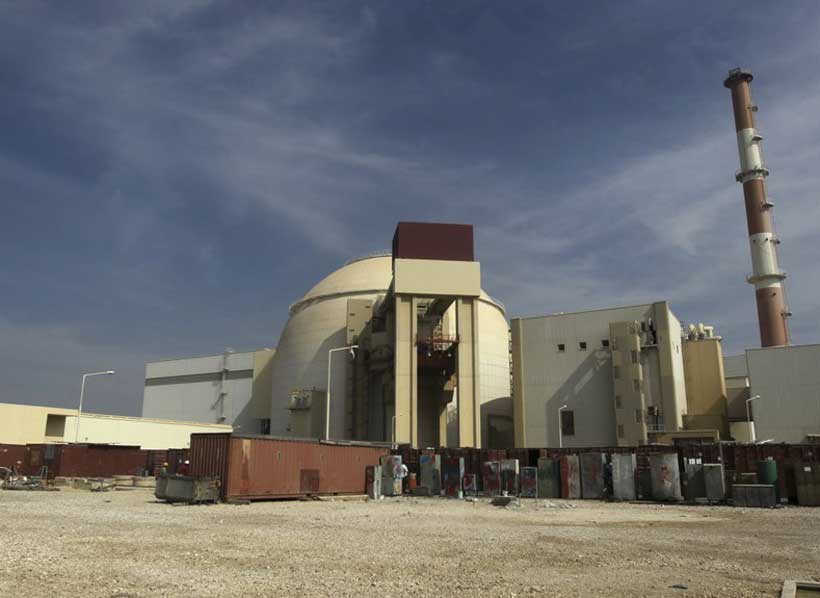
Now, with the national security team of Trump’s second cabinet becoming clear, speculation and concerns about how his government will manage some of the most important international security challenges have risen. While much of the attention so far has been focused on the war in Ukraine, the Iranian nuclear issue and the fall of Assad in Syria have now also made it to the list of priorities. Trump’s main goal, as with all previous presidents regarding Iran, is very clear: preventing Tehran from acquiring nuclear weapons by any means and actions possible. According to individuals close to Trump’s team, his future government is preparing an executive order to intensify the previous maximum pressure campaign against the Ayatollah regime. The maximum pressure policy is designed to apply even greater economic pressures on Iran in order to force the country to return to the negotiating table under U.S. terms. According to one of Trump’s former officials, since the first day of Trump’s arrival at the White House, the policy of tightening the economic pressure on Iran’s shoulders with the aim of clearing the Middle East of the chaos arising from Biden’s Middle East policy will continue.
Trump’s first attempt to apply maximum pressure began in May 2018, when Trump withdrew from the Joint Comprehensive Plan of Action (JCPOA), which temporarily limited Tehran’s uranium enrichment capacity and subjected Iran’s nuclear program to intense international inspections. At the same time, the U.S. Treasury Department reinstated sanctions that had previously been lifted and imposed new sanctions on Iran’s crude oil exports and cut its access to global banking and financial systems. As a result, tens of billions of dollars of Iran’s foreign exchange reserves were blocked, and Tehran faced increasing difficulties in securing its budget. International investors, primarily European companies, also withdrew from the Iranian market, and eventually, between 2017 and 2020, Iran’s oil exports dropped by nearly 75%.
At the time, Trump administration officials, from the Secretary of State to the National Security Advisor, emphasized that the sanctions would have a significant impact on Iran’s economy, eventually forcing Tehran to negotiate and change its behavior. However, the Iranians rejected negotiations and used Washington’s exit from the nuclear deal to expand their nuclear program, both as a reaction and to increase bargaining power for potential future talks. Under the pressure, Iran increased its enrichment level, which had been limited to about 3% under the agreement, to 20% and produced more uranium by installing more advanced centrifuges. As a result, by the end of Trump’s first term, Iran’s stockpile of enriched uranium reached over 2,400 kilograms, more than eight times the amount Iran had before implementing the maximum pressure policy.
While the U.S. sanctions had a very negative effect on Iran’s financial and economic situation, the Iranians did not only resist but also intensified their actions. Oil tankers in the Persian Gulf were repeatedly attacked or seized. Even in a bold attack attributed to Iran in September 2019, drones and cruise missiles targeted two major Saudi oil refineries, despite protection from the Patriot air defense system, temporarily halting about half of the country’s oil production. Iran’s implicit message was that if it could not export its oil, no other country could export its oil from the Persian Gulf.
Stay ahead of the geopolitical week.
MD Briefing delivers expert analysis across five global fronts — the Indo-Pacific, energy, geoeconomics, European security, and the Middle East — every Monday morning. Free.
Given the not-so-glorious results, it is now hard to imagine why Trump might be willing to try this policy again. However, Trump’s team believes that the current Middle East conditions are far more suitable for pursuing a maximum pressure campaign than in 2018. Iran’s economy is experiencing high inflation and recession, and the Ayatollah regime is grappling with multiple internal crises; their proxy network, known as the “Axis of Resistance,” has received crushing blows in the past year, and with the unfolding events in Gaza, Lebanon, and now the fall of Assad, Iran’s first ally in Syria, its regional influence has been severely weakened. Nonetheless, such claims about eliminating or changing Iran’s behavior still seem overly optimistic.
It should be noted that, unlike in the past, when the Gulf countries supported Washington’s tough stance on Tehran, Saudi Arabia and the UAE now are unwilling to exert economic pressure on Iran. Relations between Tehran and Riyadh are better today than five years ago. This view is shared by Crown Prince Mohammed bin Salman, who has concluded that regional stability is essential to achieving his country’s economic development goals. Saudi Arabia and Iran, which resumed diplomatic relations in 2023, are now striving to strengthen their bilateral ties.
However, Trump can ignore these developments and continue his policy, but in doing so, he will place himself in an uncomfortable position. He must either accept the reality of continued trade relations between Gulf countries and Iran or sanction these countries for violating the maximum pressure policy. The first option would undoubtedly diminish the impact of U.S. sanctions, while the second would sour Washington’s relations with Gulf countries and jeopardize Trump’s efforts to expand the Abraham Accords, which is considered one of the major foreign policy achievements of his first term.
There is, of course, an alternative policy. But before Trump makes a decision to reapply harsher sanctions, he should consider what role these sanctions play within his overall regional policy. He must learn from the past, listen to his hardline advisors, and take current realities into account. Given that Iran’s nuclear program has significantly expanded both quantitatively and qualitatively in recent years, reviving the old nuclear agreement seems out of reach, and a new agreement would likely be less comprehensive. However, even a partial agreement would be better than returning to a strategy that has not only failed but also worsened Iran’s nuclear issue as a consequence and could even encourage Iran to test nuclear weapons at any cost this time.
