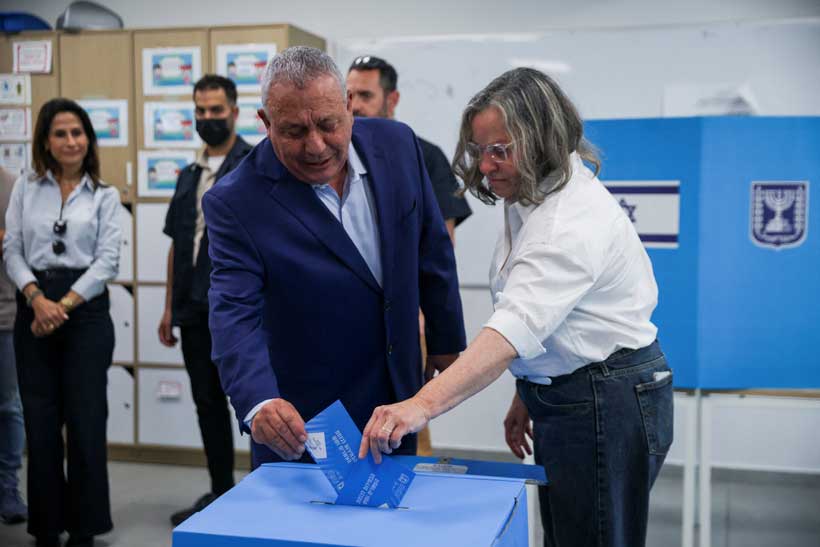
On Tuesday, Israelis flooded the polls in record numbers to vote in what many consider the most important election in the country’s history. This election follows the Hamas-led attacks on October 7, 2023, which had devastating effects, leading to long lines at polling stations and energized voter participation. The Central Elections Committee reported that 44.9% of eligible voters had already cast their ballots within the first seven hours, breaking previous turnout records.
Prime Minister Benjamin Netanyahu’s coalition has faced criticism for divisive policies and deepening Israel’s international isolation. Despite this, he defends his leadership, portraying himself as the only one capable of confronting Israel’s enemies. Netanyahu, the longest-serving Prime Minister, leads a coalition of right-wing and ultra-Orthodox parties. His main challenger, Gadi Eisenkot, a former military chief, is supported by right and center parties, but polls suggest a tight race ahead.
The high voter turnout may influence the election outcome, particularly with a potential surge of votes from Israelis of Palestinian descent, which could hinder Netanyahu’s coalition while bolstering chances for an alternative government that might rely on Arab party support. Netanyahu urged his supporters to vote, emphasizing the need for high turnout to counteract the opposition’s enthusiasm.
Voter sentiment reflects anxiety about the future. An 81-year-old left-wing voter, Ruth Epstein, claimed these elections felt like the most critical of her life. Netanyahu’s campaign received backing from U.S. President Donald Trump, who has called for action against Iran.
Stay ahead of the geopolitical week.
MD Briefing delivers expert analysis across five global fronts — the Indo-Pacific, energy, geoeconomics, European security, and the Middle East — every Monday morning. Free.
If neither Netanyahu nor Eisenkot can secure a governing coalition in Israel’s parliament, Netanyahu could continue as a caretaker until another election. His opponents have only removed him from power once since 2009, after multiple inconclusive elections.
Eisenkot’s campaign focuses on accountability for the security failures experienced on October 7. He promised a national inquiry into these failures, which Netanyahu’s government has opposed. Eisenkot expressed optimism that a new government could correct the mistakes of recent years and ensure security for Israel, vowing to dismantle Hamas’ power in Gaza within 18 months.
Itamar Ben-Gvir, a leader of a far-right party in Netanyahu’s coalition, expressed confidence that Netanyahu would remain Prime Minister, positioning his party as a cornerstone of the government. Ahmed Tibi, an Arab party candidate, noted that the high turnout from the Arab minority could lead to the formation of an alternative government.
While Eisenkot has ruled out collaboration with Arab parties, some scenarios suggest they could support a minority government against Netanyahu. Netanyahu has described Arab-Israeli voters in ways that critics see as racially charged and negative. His supporters circulated an AI-generated image aiming to discredit Arab voter participation.
Israel’s military actions following October 7 have severely impacted Gaza, where many lives have been lost, and negotiations for disarmament and withdrawal have stalled. The country has faced escalating violence with Iran-backed Hezbollah in Lebanon and ongoing tensions with Iran, culminating in hostile engagements between the nations in recent years.
With information from Reuters