


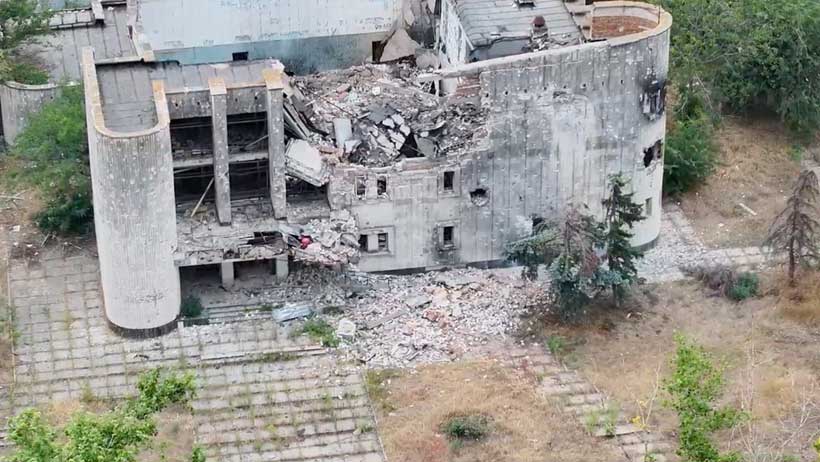
Russia and Ukraine have begun a localized ceasefire to facilitate humanitarian aid deliveries and civilian evacuations from the Russian-occupied town of Oleshky in southern Ukraine. However, fighting continues elsewhere, with fresh Russian strikes hitting Kyiv and attacks reported in several other cities.
The ceasefire is intended to address acute shortages of food and medicine in Oleshky, which lies on the eastern bank of the Dnipro River in the Kherson region, opposite the Ukrainian-held city of Kherson. Russian forces have controlled the town since the early days of their February 2022 invasion.
Ukraine’s parliamentary commissioner for human rights, Dmytro Lubinets, confirmed that Kyiv was observing the agreed arrangements. Russia’s Defence Ministry said it had halted shelling toward Kherson from 4 a.m. Moscow time on Tuesday to prepare for the humanitarian operation.
Lubinets said the agreement was reached in coordination with US First Lady Melania Trump and in cooperation with Russia’s human rights commissioner, Yana Lantratova.
Stay ahead of the geopolitical week.
MD Briefing delivers expert analysis across five global fronts — the Indo-Pacific, energy, geoeconomics, European security, and the Middle East — every Monday morning. Free.
The limited truce comes as Washington continues efforts to mediate an end to the war, Europe’s deadliest conflict since the Second World War. Despite the arrangement, the continued attacks highlight the difficulty of securing even localized pauses in fighting.
Kyiv Strikes Underscore Limits of the Truce
Fresh Russian strikes hit Kyiv on Tuesday, damaging infrastructure around the Southern Bridge and the city’s subway network and forcing authorities to suspend traffic, according to Ukrainian officials. A Reuters witness also reported hearing explosions.
The latest attacks followed a missile strike on the Ukrainian capital that killed at least one person and injured 15 others, including students in a dormitory, since Monday evening. Additional casualties were reported in Kharkiv and Pavlohrad.
Russia’s Defence Ministry said its forces had targeted transport infrastructure in Kyiv, a logistics hub in the Kharkiv region and industrial facilities and cargo vessels elsewhere that it described as being used for military purposes.
The attacks demonstrate that the Oleshky ceasefire remains geographically limited and has not produced a broader halt to hostilities.
Civilian Casualties Reported on Both Sides
Violence also continued in Russian territory and Russian-controlled areas of Ukraine.
A Ukrainian drone attack killed one person and wounded six others in the western Russian city of Bryansk, near the Ukrainian border, according to local reports.
In the Russian-controlled part of Ukraine’s southeastern Zaporizhzhia region, another person was killed and 30 injured when a drone struck a bus, local officials said.
The reports could not immediately be independently verified. Both Russia and Ukraine deny deliberately targeting civilians.
The continuing casualties underline the humanitarian costs of a conflict in which strikes on transport networks, urban infrastructure and other locations have repeatedly disrupted civilian life.
US Mediation Faces a Difficult Test
The ceasefire comes amid renewed diplomatic efforts by the United States to bring Moscow and Kyiv toward a negotiated settlement. White House envoys have held discussions with both sides in recent days, seeking progress toward ending the conflict.
Ukrainian President Volodymyr Zelenskiy said on Friday that negotiators from Ukraine, Russia and the United States had agreed to hold technical-level talks in Abu Dhabi during the first half of November.
The planned discussions could provide an opportunity to advance negotiations, although the latest strikes indicate that military operations continue alongside diplomatic engagement.
For now, the Oleshky arrangement offers a limited opportunity to deliver essential supplies and evacuate civilians from a town facing severe shortages. Its immediate success will depend on whether both sides maintain the pause long enough for humanitarian operations to proceed safely.
The broader challenge remains unresolved: translating localized ceasefires into a sustained reduction in violence while Russia and Ukraine continue to pursue their military objectives. Without wider agreements, humanitarian pauses risk remaining isolated exceptions to an ongoing war.
With information from Reuters.
