


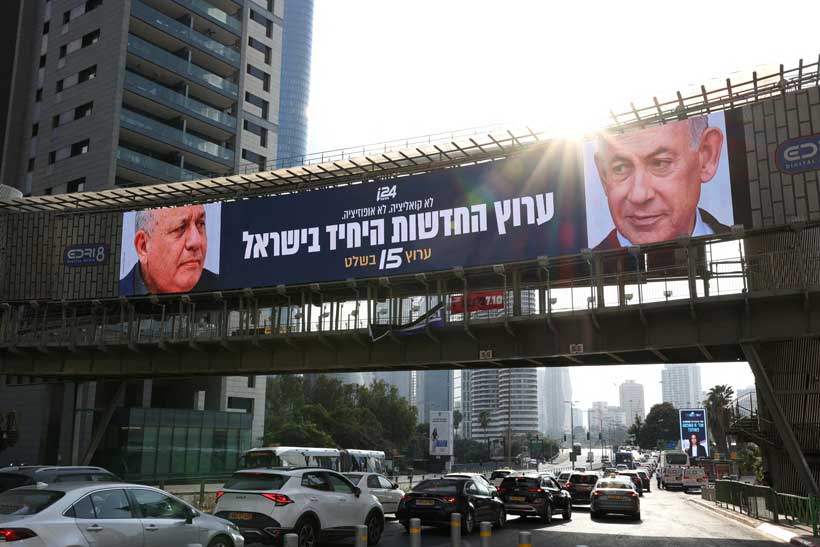
Chinese think tanks and strategic and intelligence circles, such as the China Institute of Contemporary International Relations (CICIR) and the Chinese Academy of Social Sciences (CASS), view the upcoming 26th Israeli elections in Tel Aviv as a pivotal moment for reshaping the new geopolitical balance in the Middle East. They believe that the departure of Benjamin Netanyahu could serve Chinese interests in the medium and long term. According to political analyses and the positions of Chinese research centers concerned with the Middle East, China has always adopted the principle of non-interference in the internal affairs of states as its official policy regarding Israeli elections, and it does not express public preference for any particular party or candidate. However, Beijing views the results of these elections from a purely pragmatic and flexible perspective related to its geopolitical and economic interests. China’s strategic reading of the upcoming Israeli elections, the potential change in Netanyahu’s government, and its implicit preferences, can be summarized through the following key points:
– First: The economic and technological perspective of China’s relations with Israel and China’s desire for a stable environment for its investments in Tel Aviv
1) Chinese investments in Israel: China attaches great importance to enhancing its investments in Israeli infrastructure, such as ports and railways, and its technological partnerships.
2) China prefers a new Israeli government less responsive to American pressures towards Beijing: Beijing implicitly favors any Israeli government that provides a stable environment for these investments and is less responsive to American pressure that seeks to restrict technological and economic cooperation between Israel and China.
Stay ahead of the geopolitical week.
MD Briefing delivers expert analysis across five global fronts — the Indo-Pacific, energy, geoeconomics, European security, and the Middle East — every Monday morning. Free.
– Second: The Regional Political Perspective and the Gaza War as a Cause of Tensions in Relations Between China and the Current Government in Tel Aviv
1) Relations between Beijing and Tel Aviv witnessed clear tensions following the events of October 2023 and the war on Gaza due to China’s stance supporting an immediate ceasefire and the establishment of a Palestinian state and its criticism of Israeli military policies. Meanwhile, the government of Benjamin Netanyahu accused Beijing of contributing to its international isolation.
2) Beijing prefers a stable Israeli government: Chinese analysts, think tanks, and strategic, political, and analytical circles believe that Beijing might prefer an Israeli government more inclined towards regional de-escalation and reducing tensions in the Middle East, as stability serves its larger economic project, the Belt and Road Initiative, while the continuation of the protracted regional conflict poses a threat to its vital interests and trade and energy routes in the region.
– Third: China’s Assessment of the Netanyahu Era: From Economic Partnership to Conflict and Accusations
1) The End of Pragmatism: Chinese circles believe that Netanyahu, who for years pursued a policy of broad economic and technological openness with Beijing, completely abandoned this approach after the Gaza War, adopting an ideological stance entirely aligned with the American axis at the expense of China.
2) The Crisis of Direct Accusations: Chinese intelligence reports note with displeasure Netanyahu’s direct accusations against Beijing of leading a media blockade and disseminating anti-Israel propaganda through platforms such as TikTok. This has led Chinese think tanks to classify Netanyahu’s current government as a troublemaker and detrimental to China’s international image.
– Fourth: The Scenario of Change and the Rise of the Opposition (Bennett-Lapid Alliance or Eisenkot Alliance)
1) Precise Strategic Monitoring: Chinese intelligence and analysis agencies closely monitor Israeli political alliances in the lead-up to elections, such as the Lapid-Bennett alliance or the rise of Gadi Eisenkot’s camp.
2) A More Rational and Diplomatic Government: Chinese political circles believe that Netanyahu’s downfall and the rise of a center-left or moderate military government will not alter Israel’s organic alliance with Washington but will restore rationality and traditional diplomacy to Tel Aviv’s foreign policy.
3) Reduced Global Polarization: Beijing believes that a new Israeli government will be less inclined to escalate verbal and political conflict with China and more flexible toward regional de-escalation arrangements, thus giving Beijing greater room to maneuver as a regional peace broker without directly clashing with Netanyahu’s hardline stance.
– Fifth: Chinese Regional Alliance Calculations (Iran and the Axis of Resistance)
1) Containing a Large-Scale Regional War: Chinese strategic analysis focuses on the fact that Netanyahu views open warfare as a means of his political survival. Therefore, his removal could reduce the likelihood of the region sliding into a full-scale, direct war with Iran (China’s strategic oil and political ally through the 25-year strategic partnership agreement between Beijing and Tehran).
2) Protecting China’s Belt and Road Initiative: Beijing believes that the continued military escalation by the extremist right-wing Israeli government led by Benjamin Netanyahu threatens China’s vital trade routes and supply chains in the Red Sea and the Eastern Mediterranean. Consequently, for Beijing, Netanyahu’s departure represents the beginning of a regional de-escalation that protects its investments and economic output.
– Sixth: The Sino-American Rivalry in the Region and its Relation to the Upcoming Israeli Elections
1) Israel as a Cold War Arena: Chinese think tanks recognize that the United States is exerting significant pressure to purge Israeli infrastructure and technology of any Chinese influence, such as the Chinese presence in Israeli ports and the 5G networks of the Chinese company Huawei.
2) Exploiting Israel’s International Isolation: Chinese analysts believe that Netanyahu’s hardline policies have deepened Israel’s international isolation and eroded Washington’s moral and political standing globally. While Beijing prefers stable trade, Chinese analysts see this American erosion as an opportunity to bolster the Chinese narrative in the Global South as a champion of international law and justice.
Based on this strategic analysis, we understand why Chinese strategic circles link the departure of Benjamin Netanyahu and his replacement with a more pragmatic, practical, and flexible Israeli government not to a desire to shift Israel towards the Chinese camp, but rather to reduce regional tensions that threaten Beijing’s economic interests with the Gulf and Iran and to end the direct personal and political hostility that Netanyahu adopted towards China in the latter part of his term.
