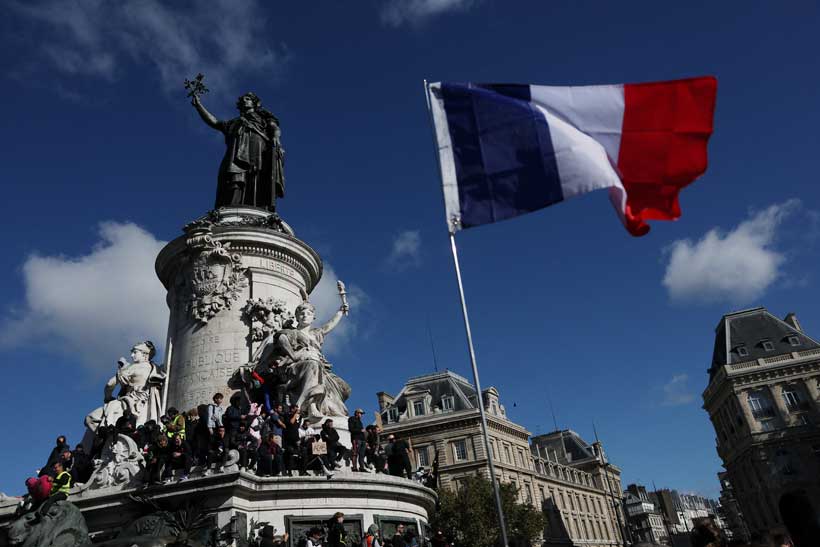
Demonstrations began across France on Saturday, marking a significant nationwide protest against high prices and diminishing social security. The protests initially started at high schools in Paris’ poorer northern areas due to frustrations over teacher absences and poor facilities, rapidly evolving into a larger movement opposing inequality, inadequate public spending, and declining educational standards.
A significant police presence was noted in central Paris, particularly near major landmarks, with separate official protest routes in place. Many other protests were scheduled throughout France, with tens of thousands expected to join. Protesters, wearing hi-vis vests, blocked streets, reminiscent of the earlier unrest during President Emmanuel Macron’s previous term. In Marseille, some trash cans were set on fire. A 19-year-old protester, Lola, expressed that they were fighting against high living costs, fuel prices, and violence towards students protesting for better educational conditions.
As Macron approaches the end of his presidency, the political climate remains polarized, with rising public debt leading to investors moving away from French bonds. Prime Minister Sebastien Lecornu mentioned concerns over potential unrest, as the government blamed the hard-left France Unbowed for escalating tensions.
Violence during the student protests has led to injuries among demonstrators and police, prompting investigations into police conduct. Despite suspending the use of stun grenades for these protests, the option remains available if clashes arise. Social media calls have encouraged past protest movement participants to join, increasing the potential for larger demonstrations. The Yellow Vest movement, which began in 2018 against diesel taxes, has revived amidst continued dissatisfaction with living costs and inequality.
With information from Reuters