


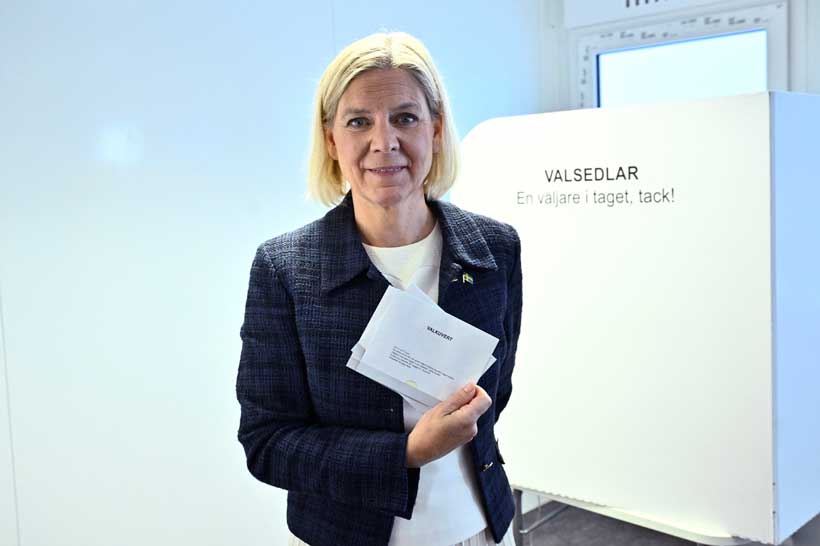
Sweden will hold a parliamentary election on September 13. The centre-left opposition, led by Magdalena Andersson, currently has a slight lead in the polls over Prime Minister Ulf Kristersson’s right-wing government. Kristersson aims to create a majority government with his current partners, the Christian Democrats and the Liberals, and the Sweden Democrats, a party with links to the far-right. The Sweden Democrats have supported the current government since 2022 but are now demanding cabinet positions after the election.
The election will address important issues, particularly the Sweden Democrats’ influence. While this party is growing in popularity, many voters are against the idea of including far-right members in the government. Kristersson believes a stable majority, including the Sweden Democrats, is necessary to tackle issues like national security and gang violence. In contrast, the centre-left warns that civil liberties may be at risk if the Sweden Democrats gain power. They focus on increasing welfare funding, climate change initiatives, and addressing income inequality.
Voting will occur from 0600 GMT to 1800 GMT on election day, with early voting already starting.
If the right-wing parties win a majority, forming a government will be easier since they are already allied. However, if the centre-left wins, Andersson will have to negotiate to create a government, which could be complicated.
Key parties include the Social Democrats, Green Party, Left Party, Centre Party, Moderates, Sweden Democrats, Christian Democrats, and Liberals. Each has distinct pledges, focusing on issues like welfare, climate change, crime, and education.
With information from Reuters
