


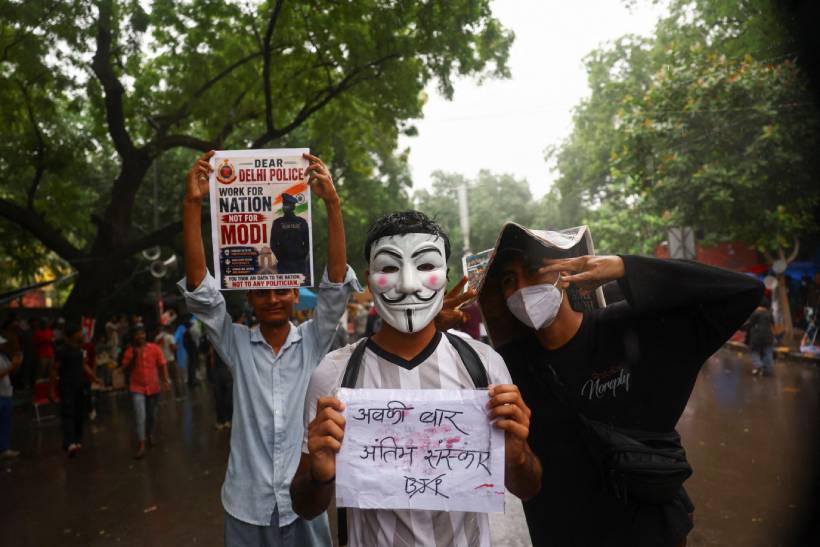
Indian Prime Minister Narendra Modi on Thursday pledged to establish fast-track courts to prosecute those responsible for examination paper leaks, marking his first public response after weeks of nationwide youth protests demanding the resignation of Education Minister Dharmendra Pradhan.
The announcement came hours after demonstrators briefly clashed with police in New Delhi, where officers used tear gas and batons to disperse crowds following another night of protests.
The unrest has evolved into the biggest youth-led political challenge to Modi since he took office in 2014 and the most serious domestic crisis of his third term, which began in 2024.
Modi Announces Fast Track Courts
Posting on X, Modi said his government would introduce special courts to ensure quick prosecution of those involved in examination leaks.
Stay ahead of the geopolitical week.
MD Briefing delivers expert analysis across five global fronts — the Indo-Pacific, energy, geoeconomics, European security, and the Middle East — every Monday morning. Free.
“Nothing is more important than the welfare and future of our youth,” he wrote.
“We have decided to set up fast-track courts to ensure swift and stringent punishment for those involved in paper leaks. Those who try to harm the future of our youth will not be spared.”
Fast-track courts are specialized judicial bodies established to speed up trials in India’s often overloaded legal system. Similar courts have previously handled cases involving terrorism, corruption, sexual offences and money laundering.
Protesters Demand Minister’s Resignation
Despite the announcement, protest leaders said the government’s response was insufficient.
The Cockroach Janta Party (CJP), the youth movement leading the demonstrations, repeated its demand that Education Minister Dharmendra Pradhan resign over the examination scandal.
The protests began after question papers for the National Eligibility cum Entrance Test (NEET), India’s highly competitive medical entrance examination, were leaked. The scandal affected around two million students and has been linked to several reported student suicides.
CJP responded directly to Modi’s social media post with a simple message: “Dharmendra Pradhan Must Resign.”
Opposition Steps Up Pressure
Congress leader Rahul Gandhi also dismissed Modi’s announcement, accusing the prime minister of allowing India’s education system to deteriorate.
In a post on X, Gandhi said Modi had done more than anyone else to damage the future of young Indians by protecting those responsible for failures within the education system.
He reiterated demands that Pradhan be removed, that Modi apologise to students and that action be taken against those responsible for violence against protesters.
Opposition lawmakers have repeatedly disrupted parliament’s monsoon session this week, making the issue one of the government’s biggest political challenges.
Police Clash With Demonstrators
Thousands of protesters remained gathered at New Delhi’s Jantar Mantar protest site late Wednesday, where movement leaders vowed to continue demonstrations until Pradhan steps down.
According to local media, more than 10,000 people attended the protest.
Police said some demonstrators threw stones and plastic bottles, injuring several officers who were later taken to hospital.
Earlier this week, tens of thousands attempted to march toward parliament before being stopped by police using tear gas and batons.
Delhi Tightens Security
Authorities continued tightening security in the capital on Thursday.
Delhi Metro Rail Corporation temporarily closed 16 metro stations in central New Delhi, marking the second major shutdown this week due to security concerns.
The government has already held one round of discussions with CJP leaders, promising to consider their demands, debate examination reforms in parliament and strengthen safeguards against future paper leaks.
Growing Political Challenge
The Cockroach Janta Party began only weeks ago as an online satirical movement but has rapidly transformed into a nationwide youth campaign reflecting broader frustration over unemployment, competitive examinations and education reforms.
CJP founder Abhijeet Dipke told supporters the protests would continue regardless of how long they take.
“It has been 25 days so far. Even if it takes 25 months, that is acceptable, but we will not move from here,” he told protesters.
The movement has also provided India’s opposition with a major opportunity to challenge Modi and his Bharatiya Janata Party, whose political strength has traditionally depended heavily on support from young voters.
With information from Reuters.
