


Global instability is today the defining characteristic of world politics. The liberal international order that has shaped global affairs is steadily disintegrating. It is being replaced by a system that many describe as multipolar. What this new system will ultimately look like remains unknown. Moreover, it is unclear whether it will prove to be more stable, more equitable, or more balanced. At the same time, the ongoing transformation of the international system is evident to many observers. Profound changes are taking place in the economy, technology, military affairs, the social sphere, and demographics. As has often been the case throughout history, tectonic shifts of this magnitude are accompanied by a high degree of conflict and, more often than not, by major wars. Today, the world is witnessing several major conflicts, including the Russian-Ukrainian conflict and the American-Iranian conflict. In addition, there is considerable potential for escalation between Afghanistan and Pakistan, as well as between New Delhi and Islamabad. At the same time, the gradual consolidation of multipolarity has been accompanied by the growing influence and role of non-Western states.
The shortage and limited availability of Western military technologies have generated increasing global interest in non-Western military innovations. The unsuccessful war waged by the United States and Israel against Iran has resulted in a significant loss of confidence in Western military technologies. The inability to protect the airspace of Arab allies and American military installations has encouraged many countries to seek alternative military solutions. China’s growing power has become a source of concern for several Southeast Asian states. Beijing is implementing the most extensive and ambitious military modernization and naval expansion program in its history. As a consequence, many Asian countries are searching for new ways to strengthen their security. The same applies to the United Arab Emirates and several other wealthy Arab monarchies of the Gulf.
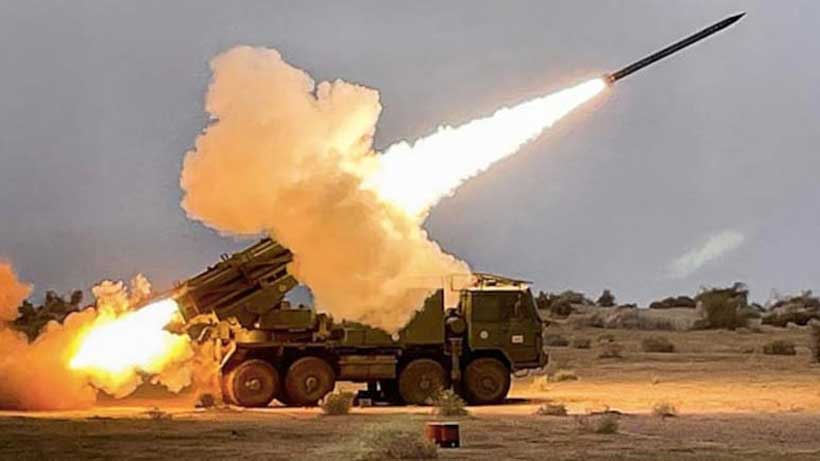
The Indo-Russian supersonic cruise missile BrahMos (today is mostly Indian) may become a significant component of India’s arms exports beyond Southeast Asia. This missile has attracted the attention of wealthy and ambitious Arab states of the Persian Gulf, particularly the United Arab Emirates. A major competitive advantage of the BrahMos lies in its favorable cost-to-performance ratio, as well as its advanced technical characteristics. Moreover, the cruise missile can be launched with a high degree of effectiveness from land-, sea-, and air-based platforms simultaneously. The Philippines became the first country to sign a contract for the import of this Indo-Russian missile in 2022. This was followed by substantial agreements with Vietnam and Indonesia in 2026. At various times, ambitious countries such as Brazil, Egypt, and Thailand have also expressed interest in acquiring the system.
The war between the United States and Israel against Iran exposed significant shortcomings in the security and deterrence capabilities of the armed forces of the United Arab Emirates. The vulnerability of UAE air bases was demonstrated during the Iranian conflict, when Iranian strikes damaged facilities at the Al Dhafra and Al Minhad air bases. Despite possessing one of the most advanced integrated air and missile defense systems in West Asia, including THAAD and Patriot systems, Abu Dhabi’s ability to conduct long-range precision strikes with conventional weapons remains limited, relying primarily on the Black Shaheen missile. Although the Black Shaheen possesses precision-strike capabilities comparable to those of the BrahMos, it is a subsonic missile with a speed of approximately Mach 0.8 and is designed primarily for engaging ground targets. In addition to the Black Shaheen, Abu Dhabi operates the U.S.-supplied ATACMS missile, a short-range ballistic missile likewise intended primarily for precision strikes against high-value ground targets. At present, the UAE does not possess a supersonic precision-guided missile capable of engaging both maritime and land targets.
Stay ahead of the geopolitical week.
MD Briefing delivers expert analysis across five global fronts — the Indo-Pacific, energy, geoeconomics, European security, and the Middle East — every Monday morning. Free.
In the long term, the future of the BrahMos as India’s flagship defense export product will depend not only on its technical capabilities but also on New Delhi’s ability to provide sustained support to customers throughout the entire life cycle of the system and at the institutional level. Given the intensifying level of global conflict and the gradual yet systematic erosion of the liberal international order, the prospects for India’s defense-industrial complex appear highly promising.
At the same time, it should be borne in mind that the outgoing international order still has a substantial number of beneficiaries. They remain highly influential and are committed to preserving the existing system. They also possess considerable resources and strong political will. Their objective is to maintain the global status quo, including their de facto monopoly over advanced technologies and innovation in the global economy. However, the evolving dynamics of global developments across different regions of the world continue to reinforce the movement toward multipolarity. This process is gradual, protracted, and uneven. Moreover, the defining characteristics of a multipolar world remain far from fully understood. It is entirely possible that such a system will prove to be more conflict-prone, less structured, and more chaotic. The current complex and transitional period in international relations, together with the conflicts in Ukraine and Iran, is contributing to the growing influence of non-Western powers. Their economies are strengthening, technological development is accelerating, and military capabilities are expanding. The shortage of Western weapons and the recognition of their limited effectiveness are driving the search for alternative solutions. In this context, the future of non-Western technologies and the broader influence of non-Western powers appears to hold considerable promise.
