


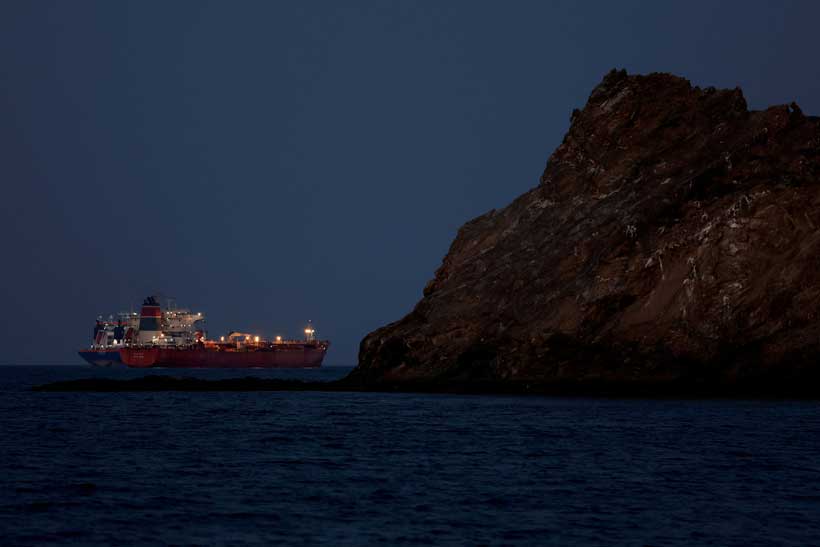
Iran is seeking international recognition of its authority over the Strait of Hormuz after its temporary agreement with the United States,insisting it should control vessel movements and eventually charge ships for transiting the strategic waterway. The position has emerged as one of the biggest obstacles to a broader U.S.-Iran settlement following the three-month conflict that disrupted global energy markets.
The Strait of Hormuz carries roughly one-fifth of global oil and liquefied natural gas shipments, making any dispute over its governance a matter of global economic and strategic importance.
Iran makes Hormuz control a central negotiating demand
Iranian officials say Tehran considers long-term control over the Strait a core national objective and will not move forward on broader negotiations with Washington until the issue is resolved.
Under the current interim agreement, Iran has temporarily suspended charging ships for passage, but maintains that it retains authority over vessel movements, transit routes and security arrangements throughout the waterway.
Stay ahead of the geopolitical week.
MD Briefing delivers expert analysis across five global fronts — the Indo-Pacific, energy, geoeconomics, European security, and the Middle East — every Monday morning. Free.
The temporary arrangement is due to expire in mid-August unless extended.
Tehran prepares to introduce shipping fees after interim deal
Iran intends to begin charging commercial vessels for transit once the temporary agreement expires, although officials have yet to outline how the fee system would operate.
The proposed charges would mark a significant departure from decades of practice, during which commercial navigation through the Strait has remained free despite periodic regional tensions.
Such a move would increase operating costs for shipping companies while potentially adding delays and regulatory uncertainty to one of the world’s busiest maritime trade corridors.
Dispute exposes conflicting interpretations of maritime rights
The United States maintains that no country has the right to impose tolls or restrict navigation through an international waterway, placing Washington’s position in direct conflict with Tehran’s interpretation of the interim agreement.
Iran argues that while the Strait qualifies as an international transit route, its geographic position gives Tehran the authority to regulate vessel movements for national security purposes and require ships to comply with Iranian procedures before entering or leaving the Gulf.
The disagreement highlights competing interpretations of international maritime law and sovereignty over one of the world’s most strategically important chokepoints.
Regional security risks remain elevated
The dispute has already produced military incidents, with Iranian forces confronting vessels attempting to navigate outside routes recognised by Tehran, prompting exchanges involving U.S. forces.
Although oil prices have retreated since the ceasefire agreement restored partial shipping through the Strait, security conditions remain fragile and commercial operators continue to face elevated insurance costs and operational uncertainty.
Shipping companies are closely monitoring negotiations as they weigh whether current access arrangements can provide long-term predictability.
Global energy markets remain exposed
Any permanent system allowing Iran to regulate access or levy transit fees could reshape global energy logistics by increasing transportation costs for crude oil, liquefied natural gas and other commodities moving through the Gulf.
Import-dependent economies across Europe and Asia would be particularly vulnerable to higher freight costs and renewed supply disruptions if negotiations fail or maritime tensions escalate.
The outcome could also influence future investment decisions in alternative energy routes, strategic petroleum reserves and diversification of global supply chains.
Future Outlook
The next phase of U.S.-Iran negotiations is likely to focus heavily on the future governance of the Strait of Hormuz, with neither side currently showing signs of softening its position. Whether negotiators can bridge fundamentally different interpretations of maritime authority before the interim agreement expires will largely determine the durability of the current ceasefire.
Analysis: Hormuz dispute could become the next flashpoint
The Strait of Hormuz has shifted from being a military battleground to becoming the central diplomatic battleground between Iran and the United States. While fighting has paused, the underlying dispute has evolved from nuclear issues alone to encompass control of one of the world’s most important maritime chokepoints.
Iran appears to view the outcome of the recent conflict as an opportunity to translate military resilience into long-term geopolitical influence. By making Hormuz a precondition for wider negotiations, Tehran is attempting to secure strategic gains that extend well beyond the ceasefire itself.
Washington, however, is unlikely to accept any arrangement that appears to legitimise Iranian control over international shipping. Doing so would not only challenge long-standing U.S. principles on freedom of navigation but could also set a precedent for other contested waterways around the world.
As a result, even if broader diplomatic engagement continues, the dispute over Hormuz is emerging as the issue most capable of derailing a lasting settlement. Rather than marking the end of tensions, the current ceasefire may simply have shifted the confrontation from the battlefield to the negotiating table, where the strategic stakes remain just as high.
With information from Reuters.
