


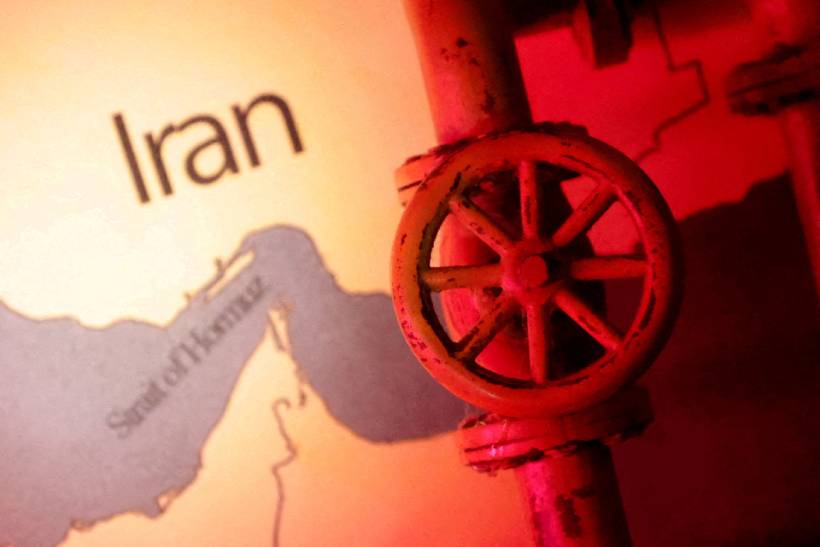
The disruption caused by the Iran war and the temporary closure of the Strait of Hormuz has prompted countries around the world to reconsider their energy security strategies. Governments that suffered economic damage from supply shortages and soaring prices are now looking to build larger strategic oil and gas reserves, potentially creating demand for hundreds of millions of additional barrels over the coming years.
Hormuz Crisis Exposed Energy Vulnerabilities
The near-total closure of the Strait of Hormuz disrupted around one-fifth of global oil and liquefied natural gas supplies for more than three months, sending shockwaves through energy markets.
Brent crude prices surged to nearly $120 a barrel as import-dependent economies faced rising fuel costs, supply uncertainty and growing inflationary pressures.
Emergency Reserves Helped Stabilize Markets
One of the key factors preventing a deeper energy crisis was the release of strategic petroleum reserves.
Stay ahead of the geopolitical week.
MD Briefing delivers expert analysis across five global fronts — the Indo-Pacific, energy, geoeconomics, European security, and the Middle East — every Monday morning. Free.
All 32 members of the International Energy Agency agreed to a record release of 400 million barrels from emergency stockpiles, helping offset supply disruptions and ease pressure on global markets.
The coordinated action highlighted the importance of maintaining large emergency reserves during major geopolitical crises.
China’s Stockpile Strategy Pays Off
China emerged from the crisis in a stronger position than many other major importers due to its massive strategic petroleum reserve.
The country has spent years building what is believed to be the world’s largest emergency oil stockpile, estimated at more than one billion barrels.
During the conflict, China significantly reduced crude imports, allowing it to avoid buying large volumes of oil at elevated prices and limiting the economic impact of the disruption.
Import-Dependent Economies Face Greater Pressure
Countries with limited strategic reserves faced much greater challenges.
Several Asian economies relied on emergency measures such as:
- Fuel subsidies
- Consumption restrictions
- Reduced working hours
- Energy-saving programs
The experience exposed vulnerabilities among countries heavily dependent on Middle Eastern energy supplies without substantial emergency stockpiles.
India Eyes Larger Strategic Reserves
India is among the countries most likely to expand its emergency storage capacity.
As the world’s third-largest oil importer and one of the fastest-growing energy consumers, India currently holds reserves covering only a small fraction of its import needs.
Meeting International Energy Agency standards would require hundreds of millions of additional barrels of storage capacity.
Recent plans under consideration suggest New Delhi is moving toward expanding its strategic petroleum reserve network.
Pakistan Also Reviewing Energy Security
Pakistan, which relied heavily on Middle Eastern oil and LNG imports before the conflict, is also examining ways to increase domestic storage capacity.
The Hormuz disruption underscored the risks facing countries that lack sufficient reserves to absorb prolonged supply interruptions.
Australia Moves to Address Reserve Gap
Australia, long criticized for failing to meet International Energy Agency stockpile requirements, has announced plans to significantly increase fuel reserves.
The move reflects a broader recognition that energy security has become a national security issue amid growing geopolitical uncertainty.
Europe Considers Additional Gas Storage
Europe already maintains extensive gas storage infrastructure to manage winter demand.
However, the war has renewed concerns about dependence on imported LNG, particularly as the region increasingly relies on overseas suppliers.
Additional government-controlled gas storage facilities may become part of future energy security planning.
Gulf Producers Seek Overseas Storage
The lessons of the Hormuz disruption are also influencing major energy exporters.
National oil companies in the Gulf are exploring opportunities to expand storage capacity outside the region to maintain export flexibility during future crises.
Additional overseas storage could help producers continue serving customers even if regional shipping routes face disruptions.
Oil Market Impact
The expansion of strategic reserves worldwide could create substantial new demand for crude oil and refined products.
At the same time, emergency reserves that were depleted during the conflict will need to be replenished.
Together, reserve rebuilding and new storage programs could generate demand for roughly one billion barrels over the coming years, providing support for global oil prices even if overall supply growth remains strong.
What It Means for Global Energy Security
The Hormuz crisis has reinforced a lesson many governments learned during previous energy shocks: supply security can be just as important as supply availability.
Countries are increasingly viewing strategic reserves not as emergency assets to be used rarely, but as a core component of economic and national security planning. The crisis has also demonstrated how large stockpiles can provide governments with flexibility to reduce imports during periods of market stress and extreme prices.
Analysis
The most significant consequence of the Iran war may not be the temporary spike in oil prices but the long-term shift in how countries manage energy security. The conflict exposed a clear divide between nations with large strategic reserves and those forced to absorb the full impact of supply disruptions. China emerged as a model for energy resilience, while countries such as India and Pakistan were reminded of their vulnerability to geopolitical shocks.
If governments follow through on plans to expand storage capacity, the global oil market could gain a major new source of structural demand. Reserve construction and replenishment may help absorb future supply surpluses and provide a floor for prices, particularly during periods of weak economic growth.
At the same time, larger strategic stockpiles could make future oil shocks less severe. Countries with substantial reserves are better positioned to reduce imports during crises, dampening demand spikes and limiting extreme price volatility. In the longer term, the world could emerge from the Hormuz crisis with a more resilient energy system, but one in which strategic stockpiles play a much larger role in shaping oil demand, trade flows and government policy.
With information from Reuters.
