


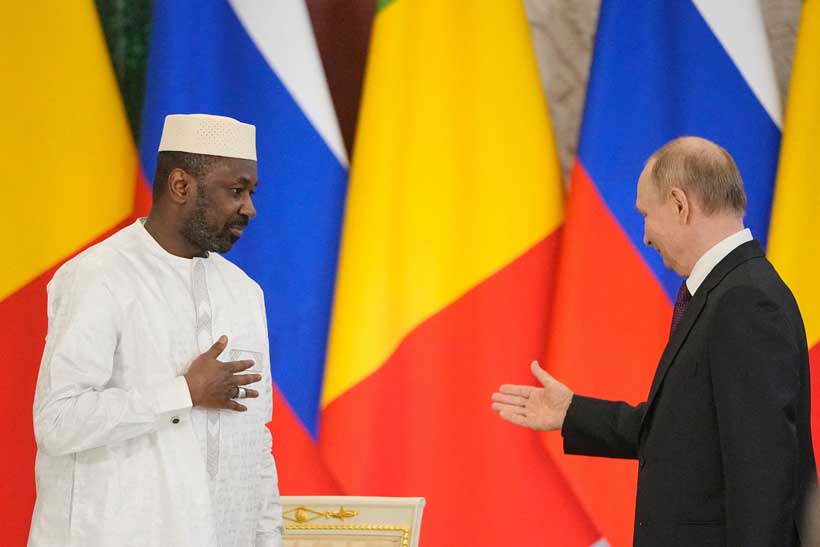
Mali’s al Qaeda linked group Jama’at Nusrat al Islam wal Muslimin (JNIM) has announced a €2 million reward for information leading to the whereabouts of interim President Assimi Goita, escalating tensions between the military government and one of the country’s most powerful jihadist organizations.
The offer follows a similar move by Mali’s authorities, who recently announced rewards for information on JNIM leader Iyad Ag Ghaly and other militant commanders. JNIM’s statement described Mali’s ruling authorities as illegitimate and offered additional rewards for information on senior military officials.
The development comes amid worsening insecurity in northern Mali, where jihadist groups have intensified attacks despite years of military operations aimed at restoring state control.
Why It Matters
The bounty highlights the growing confidence and operational reach of JNIM at a time when Mali’s military leadership is struggling to contain insurgent violence. Publicly targeting the country’s president represents a significant escalation in the psychological and political dimensions of the conflict.
Stay ahead of the geopolitical week.
MD Briefing delivers expert analysis across five global fronts — the Indo-Pacific, energy, geoeconomics, European security, and the Middle East — every Monday morning. Free.
The move also underscores the fragile security environment in the Sahel, where extremist groups continue to exploit weak governance, local grievances, and vast ungoverned territories. Increased militant activity threatens not only Mali’s stability but also regional security across West Africa.
Security Implications
The announcement raises concerns about the government’s ability to secure senior officials and maintain authority in areas where armed groups remain active. It also reflects the increasingly direct confrontation between Mali’s military rulers and jihadist networks seeking to challenge state legitimacy.
The incident is likely to prompt tighter security measures and potentially expanded military operations against insurgent strongholds.
Key Stakeholders
- Mali government
- Assimi Goita
- JNIM
- Iyad Ag Ghaly
- Malian armed forces
- Sahel countries
- Regional security partners
Future Outlook
The bounty announcement signals that the conflict between Mali’s military government and jihadist groups is entering a more confrontational phase. Retaliatory operations by security forces and further militant attacks are likely in the coming months.
As violence intensifies, the government will face increasing pressure to demonstrate security gains while preventing extremist groups from expanding their influence. The trajectory of the conflict will have significant implications for stability across the broader Sahel region, which remains one of the world’s most volatile security hotspots.
With information from Reuters.
