


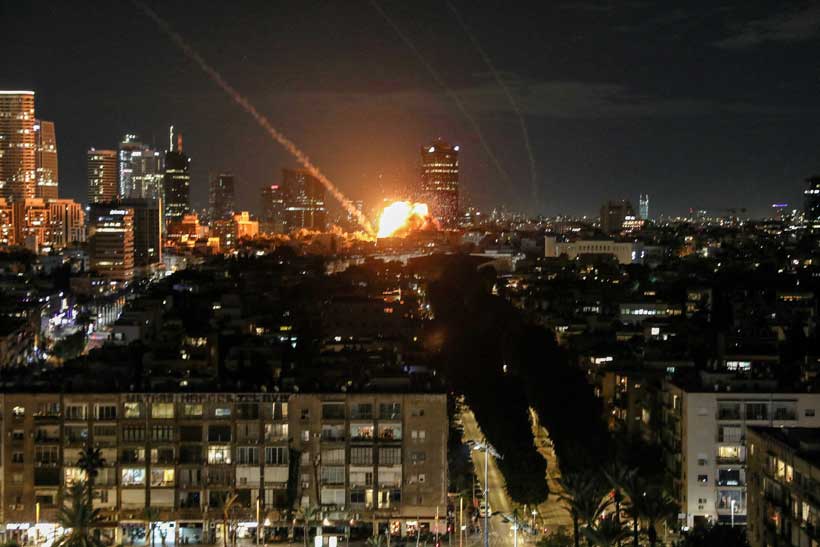
Intelligence agencies of all classifications and branches were not far from the second American-Israeli military confrontation against Iran, as is customary in wars. However, this “40-day war” witnessed intelligence agencies undertaking new and crucial roles and tasks on the ground, on the one hand, and on the other hand, it opened the door wide to deepening and developing intelligence performance, especially by giving more attention to understanding the cultural and civilizational dimensions and the social structure of states and nations.
This brief analytical paper strives to highlight some of the new intelligence roles, tasks, and tools that emerged in light of the facts and events of the “Second Iran War,” which began on the morning of February 28, 2026, and whose main combat operations extended for 40 days until US President Donald Trump announced a ceasefire on April 8 of the same year.
Introduction:
The second US-Israeli war against Iran reveals a number of highly significant developments in both general and military intelligence.
Stay ahead of the geopolitical week.
MD Briefing delivers expert analysis across five global fronts — the Indo-Pacific, energy, geoeconomics, European security, and the Middle East — every Monday morning. Free.
Some of these developments relate to reinforcing the importance of certain aspects of intelligence work (the human element), others concern the technologies upon which intelligence agencies rely (artificial intelligence), while a third aspect relates to the methodologies of thinking and analysis within these agencies (the intelligence mind), and the final aspect focuses on the new way in which intelligence activity is directed, moving beyond the classical work based on monitoring, interpretation, and forecasting to strategic influence as a means of psychological deterrence against the adversary.
This can be detailed as follows:
1)- The Use of AI in Intelligence Preparation and Combat Missions:
Numerous indicators and reports have emerged regarding the extensive use of artificial intelligence technologies by the United States and Israel in the recent war against Iran.
A prime example is the use of remotely piloted American drones equipped with cameras, sensors, and monitoring devices to gather and analyze information using artificial intelligence systems.
In this sense, we can say that the second Iran war represents the “first comprehensive artificial intelligence war” in contemporary military history; AIis no longer merely an auxiliary tool but has become an integrated “operating system” both during the intelligence preparation phase of the war and during the execution of military operations themselves. Daniel Michaels and Dov Lieber: How AI Is Turbocharging the War in Iran, “The Wall Street Journal,” March 7, 2026: https://www.wsj.com/tech/ai/how-ai-is-turbocharging-the-war-in-iran-aca59002.
To illustrate the pivotal role of artificial intelligence (AI)in supporting intelligence work during this war, it is sufficient to refer to the project of the US Department of War (Pentagon), known as Project Maven, which combines several operational functions, starting from managing the battlefield through monitoring, sensing, and command and control of the air up to the ability to directly target combat (AFP: “Project Maven… Pentagon’s artificial intelligence program has a pivotal role in the Iran war,” 4/5/2026).
2- Confirming the centrality of “human intelligence”:
Despite the enormous progress in satellites and digital espionage, the events of the second American-Israeli-Iranian war proved that the human element is still the cornerstone of intelligence, as it is capable of providing indications and interpreting behavior and not just monitoring capabilities computationally, as is the case with artificial intelligence. Technology monitors movements, but it is the human element that acts and interprets these movements and then determines when and how to deal with the monitored target.
Obtaining information is no longer the obstacle, but rather the “ability to analyze and connect,” since in the age of “information overload,” intelligence victory belongs to whoever can distinguish the true “signal” amidst the media and digital noise, which may include a large amount of deliberate misinformation.
To demonstrate the validity of this conclusion, we can point, for example, to the role played by agents of the Israeli foreign intelligence service (Mossad) inside Iran before and during the war, from information preparation and work on the ground in a way that contributed to the assassination of influential Iranian military and political decision-makers, including former Supreme Leader Ali Khamenei on the first day of the war; his military advisor Ali Shamkhani; Secretary of the National Security Council Ali Larijani; the Minister of Defense; the Chief of Staff; the Commander of the Revolutionary Guard and his spokesman; the Basij’s commander; and the Minister of Intelligence.
3) The emergence of the importance of “digital intelligence”:
This war demonstrated the importance of developing encrypted and manual “off-network” digital communication systems to circumvent advanced spying devices and capabilities, as Iran did in the face of American-Israeli technological superiority, where Tehran resorted to misleading counterintelligence and creating a state of “cyber blindness” in front of it by pumping false information into the hacked networks, which is known as “information poisoning.”
4)- The necessity of an accurate “intelligence understanding” of the cultural and national dimensions of the adversary:
American and Israeli intelligence agencies failed to appreciate and understand the factors governing the cultural and social structure of the Iranian people, which can explain why they failed to conduct a deep analysis of Iran’s internal environment, and thus Washington and Tel Aviv were shocked by the lack of a widespread popular uprising to overthrow the “Guardianship of the Islamic Jurist” regime when the military strikes began.
This failure is largely due to shortcomings in the sociological and cultural analysis of Iranian society within the American and Israeli intelligence agencies. They measured the adversary by standards that did not apply, failing to explain the reasons for the people’s “strategic resilience” and the political regime’s “strategic patience.
For decades, Western intelligence agencies generally focused on exhausting Iran through sanctions but failed to appreciate the regime’s ability to adapt and build a parallel economy.
5) The role of deliberate intelligence leaks as a deterrent tool:
Both the United States and Israel deliberately used the method of “pre-announcing military strikes” to undermine spirituality and confuse Iranian decision-makers and public opinion. In contrast, Tehran used “strategic ambiguity” to keep Washington and Tel Aviv in a state of constant readiness and depletion.
Conclusion:
The almost certain conclusion is that the intelligence of the future, after the second Iran war in 2026, will transcend the traditional character familiar for decades, as the “doctrine of global intelligence work” is expected to witness pivotal transformations.
It is increasingly expected that the future in the coming years will be for “multidimensional and predictive intelligence,” which is based on innovation in combining the human element with digital and cyber-age technologies, along with rationality in employing AI to provide early warning of potential threats of all kinds (military and non-military) before they occur, thus providing sufficient time for the decision-makers and their supporting agencies to take sufficient proactive and preventive measures to preserve the entity of states, their security, and sovereignty; ensure the continuity of official institutions; and preserve the stability of societies and their national unity.
