


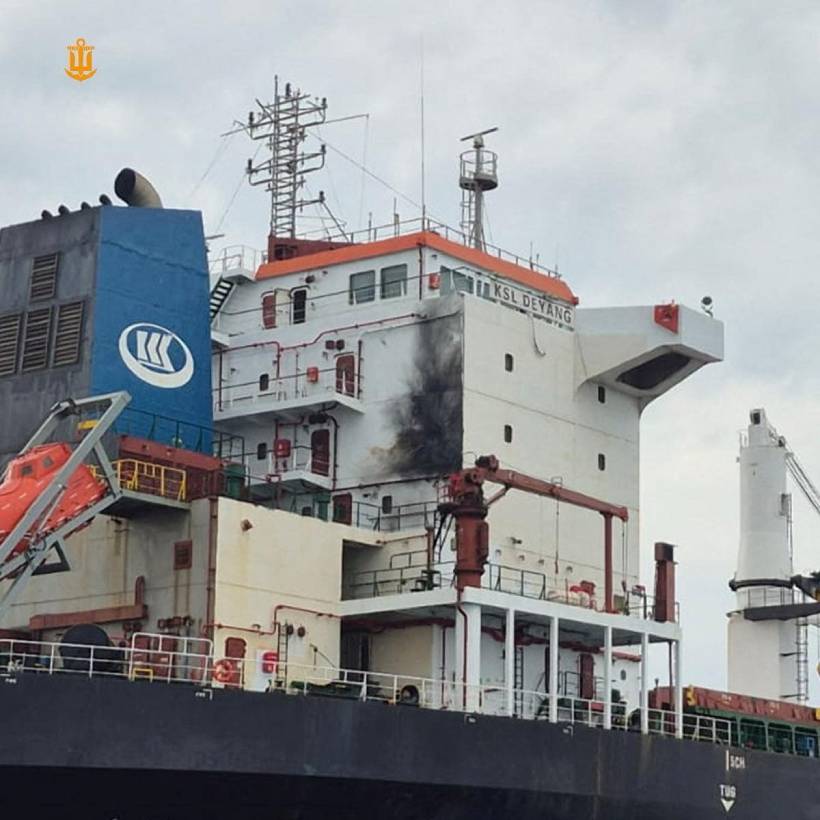
Ukraine has accused Russia of launching drone attacks against three foreign flagged merchant vessels travelling through the Black Sea maritime export corridor, intensifying concerns over the safety of international shipping routes linked to the war.
According to Ukrainian Deputy Prime Minister Oleksiy Kuleba, the attacks took place late on Thursday and overnight as the ships navigated routes used for Ukraine’s grain and export trade. Fires reportedly broke out aboard the vessels following the strikes, though crew members managed to extinguish them.
Ukraine’s seaports authority said the affected vessels sailed under the flags of Vanuatu, the Comoros, and Panama. Ukrainian officials also identified one of the ships as the Ant, a Turkey owned cargo vessel operating under the Vanuatu flag and travelling from Ukraine’s Odesa region toward Turkey.
The Ukrainian navy said the strike on the Ant caused injuries to crew members and forced an emergency evacuation operation.
Stay ahead of the geopolitical week.
MD Briefing delivers expert analysis across five global fronts — the Indo-Pacific, energy, geoeconomics, European security, and the Middle East — every Monday morning. Free.
The incident marks another escalation in the long running battle over control and security in the Black Sea, a region that remains critical for global food supplies, energy transport, and international trade.
Black Sea Export Corridor Remains Under Pressure
Since the beginning of the Russia Ukraine war, maritime trade routes in the Black Sea have become one of the conflict’s most strategically sensitive areas.
Ukraine relies heavily on seaborne exports, particularly grain, metals, and agricultural products, to sustain its wartime economy. Russian attacks on ports, storage infrastructure, and shipping routes have repeatedly disrupted exports and threatened global supply chains.
The Black Sea corridor became especially important after the collapse of earlier internationally brokered grain export agreements. Ukraine later established alternative shipping routes along the western Black Sea coast with support from regional partners.
Despite those efforts, merchant shipping in the area continues facing major security risks from missile strikes, naval mines, drones, and military surveillance operations.
Growing Risks for International Shipping
The latest attacks are likely to deepen concerns among global shipping companies and insurers operating in the region.
Although the targeted ships were foreign flagged civilian vessels, the incident demonstrates how commercial shipping remains exposed to the broader conflict environment. Increased security risks often lead to higher insurance costs, longer transport delays, and greater reluctance among shipping operators to use affected routes.
Turkey’s connection to one of the attacked vessels may also draw additional international attention because Ankara has played a central diplomatic role in Black Sea grain negotiations and maritime security discussions throughout the conflict.
The attacks could further complicate efforts to maintain stable export flows from Ukrainian ports at a time when many developing countries continue relying on grain supplies from the region.
Russia and Ukraine Continue Economic Warfare
Beyond military confrontation on the battlefield, both Russia and Ukraine are engaged in an increasingly aggressive economic struggle focused on infrastructure, trade routes, and logistics.
Russia has repeatedly targeted Ukrainian ports and energy facilities in an attempt to weaken Kyiv’s economy and reduce export capacity. Ukraine, meanwhile, has expanded long range drone operations targeting Russian naval assets and military infrastructure connected to Black Sea operations.
Control over maritime trade has therefore become both an economic and strategic objective for both sides.
The latest strikes highlight how commercial shipping itself is increasingly becoming entangled in the wider conflict.
Analysis
The reported drone attacks reflect a broader shift in the Russia Ukraine war, where economic infrastructure and global trade networks are becoming as strategically important as traditional military targets.
By targeting vessels moving through Ukraine’s export corridor, Russia may be seeking to undermine confidence in Kyiv’s ability to guarantee safe maritime trade. Even limited attacks can create significant psychological and financial pressure on shipping operators, insurers, and international investors.
The consequences extend beyond Ukraine itself. Disruptions in Black Sea trade directly affect global food prices, commodity markets, and supply chains, particularly across parts of Africa, the Middle East, and Asia that depend heavily on Ukrainian grain exports.
At the same time, attacks involving foreign flagged vessels increase the risk of wider diplomatic tensions. Countries connected to shipping companies, crews, or cargo operations may push for stronger international measures to protect maritime navigation in the region.
For Ukraine, maintaining the credibility of its export corridor is essential for economic survival. Any sustained reduction in shipping activity could weaken state revenues, increase pressure on domestic industries, and complicate international financial support efforts.
The incident also demonstrates how drone warfare continues reshaping modern conflict. Relatively low cost unmanned systems are increasingly capable of threatening both military and civilian maritime operations across large distances.
As the war continues, the Black Sea is likely to remain one of the most volatile fronts of the conflict, where military operations, economic warfare, and international trade interests increasingly overlap.
With information from Reuters.
