


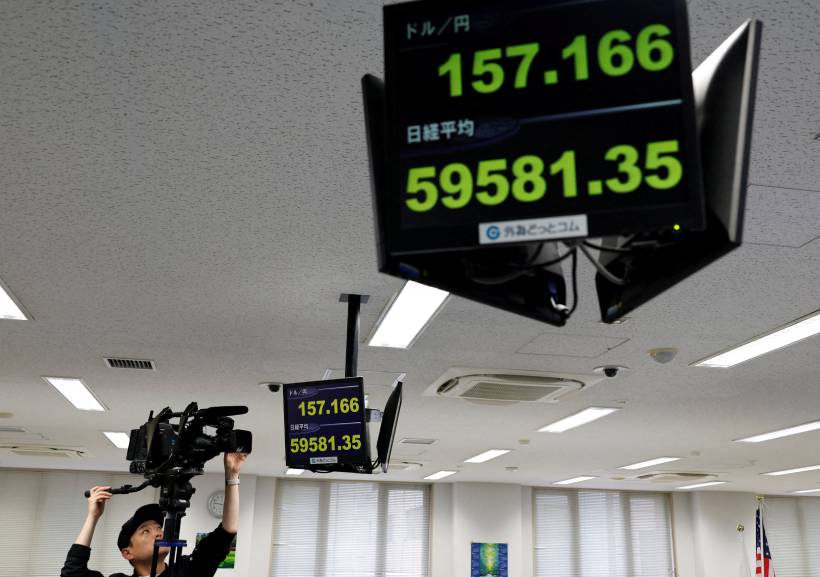
Japan’s currency is once again approaching levels that previously triggered direct government intervention, placing global investors and financial markets on alert. The Japanese yen has weakened sharply against the United States dollar in recent months, reviving concerns that Tokyo may step back into currency markets to slow the decline.
In late April and early May, Japanese authorities are believed to have spent approximately 10 trillion yen, or around 63 billion dollars, in multiple rounds of intervention aimed at supporting the currency. The moves temporarily strengthened the yen, but the effect quickly faded as broader market forces continued to pressure Japan’s economy and monetary policy.
At the center of the issue is the widening policy gap between the Bank of Japan and the United States Federal Reserve. While the Federal Reserve has maintained relatively high interest rates, Japan has continued its cautious and gradual approach toward tightening monetary policy. As a result, investors continue to favor the dollar over the yen, driving the Japanese currency toward the psychologically important 160 yen per dollar level.
The latest slide has renewed debate over how far Japanese authorities are willing and able to go in defending the currency.
Stay ahead of the geopolitical week.
MD Briefing delivers expert analysis across five global fronts — the Indo-Pacific, energy, geoeconomics, European security, and the Middle East — every Monday morning. Free.
Why the Yen Continues to Weaken
Several economic and geopolitical pressures are contributing to the yen’s decline.
One major factor is Japan’s dependence on imported energy. Rising oil prices linked to instability in the Middle East have increased import costs for Japan, worsening the country’s trade balance and placing additional pressure on the currency.
At the same time, the Bank of Japan remains cautious about raising interest rates aggressively despite persistent weakness in the yen. Investors believe Japanese policymakers are reluctant to tighten monetary conditions too quickly because of concerns about slowing economic growth and the fragility of domestic consumption.
Expectations of expanded government spending under Prime Minister Sanae Takaichi have also fueled concerns that fiscal policy may remain loose, further weakening confidence in the currency.
Together, these factors have encouraged traders and hedge funds to continue betting against the yen.
Tokyo’s Currency Intervention Strategy
Japan possesses one of the world’s largest foreign exchange reserve holdings, estimated at roughly one trillion dollars. These reserves allow authorities to intervene in currency markets by selling foreign assets and purchasing yen.
However, economists warn that using the full reserve stockpile is neither practical nor politically realistic. Large scale intervention could affect global financial markets, particularly United States Treasury markets, where Japan remains a major holder.
Analysts also stress that Japan cannot stabilize the yen through intervention alone if broader economic conditions continue favoring the dollar.
Japanese officials are therefore engaged in what many traders describe as a psychological battle with markets. By maintaining uncertainty about when intervention may occur, authorities hope to discourage excessive speculation against the currency.
Finance Minister Satsuki Katayama has repeatedly stated that the government stands ready to take decisive action against excessive currency volatility, though officials continue refusing to confirm specific intervention operations.
Markets Focus on the 160 and 162 Thresholds
The 160 yen per dollar level has become a symbolic line for markets and policymakers alike. Traders increasingly believe Japanese authorities are determined to prevent a sustained move beyond that threshold.
Some market participants now expect intervention before the currency reaches 162 yen per dollar. This expectation itself has become part of market strategy, with traders positioning around potential government action.
Importers and businesses continue purchasing dollars in anticipation of further yen weakness, while speculators remain cautious about pushing the currency too aggressively higher because of the risk of sudden intervention.
This dynamic has created a tense standoff between markets and policymakers, with each side testing the resolve of the other.
The Importance of United States Cooperation
One critical factor shaping Japan’s intervention strategy is its relationship with the United States.
Currency intervention often requires close coordination with Washington because large scale sales of United States assets could influence Treasury markets and broader financial stability. Analysts believe Japan’s previous intervention efforts benefited from quiet cooperation or at least tolerance from United States authorities.
Without American understanding or support, aggressive intervention could become far more difficult and less effective. Any signs of disagreement between Tokyo and Washington could encourage investors to intensify speculative attacks against the yen.
As a result, Japan must carefully balance domestic financial stability with its broader economic and diplomatic relationship with the United States.
Analysis
The renewed pressure on the yen reflects deeper structural weaknesses within Japan’s economy rather than temporary market volatility alone. Currency intervention may slow the pace of decline, but it cannot fully reverse the underlying forces driving capital toward the dollar.
Japan faces a difficult policy dilemma. Raising interest rates aggressively could strengthen the yen, but it also risks damaging economic growth and increasing borrowing costs in a country already carrying one of the world’s largest public debt burdens. On the other hand, maintaining loose monetary policy leaves the yen vulnerable to further depreciation.
The government’s apparent focus on defending the 160 level suggests officials are increasingly concerned not only about economic consequences but also about public confidence. A sharply weaker yen raises living costs through higher import prices, particularly energy and food, creating political pressure on the government.
At the same time, repeated intervention carries its own risks. If markets conclude that Tokyo lacks either the financial capacity or international backing to sustain long term support for the currency, speculative attacks could intensify rather than weaken.
For now, Japan appears focused on managing expectations rather than fundamentally changing economic policy. The strategy aims to create enough uncertainty to slow speculative activity while avoiding large scale market disruption.
However, unless the Bank of Japan shifts toward a more aggressive monetary stance or global dollar strength weakens significantly, the yen is likely to remain under pressure in the months ahead.
The coming weeks could therefore become a critical test of both Japan’s financial resilience and the credibility of its currency defense strategy.
With information from Reuters.
