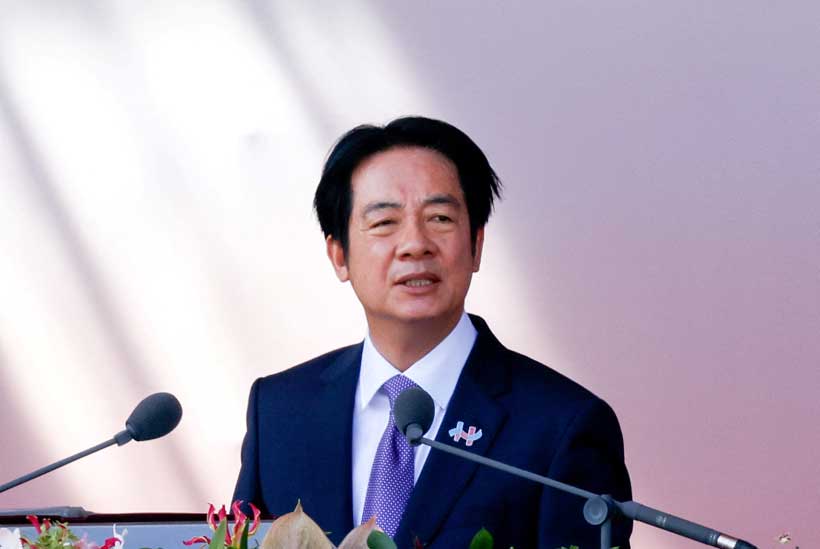
U. S. President Donald Trump announced that he would speak with Taiwan’s President Lai Ching-te, a significant move that could upset U. S.-China relations and lead to increased military activity by China around Taiwan. This is the second time Trump mentioned the call in a week, clarifying that it was not a slip of the tongue. Taiwan expressed its willingness for the conversation, but no specific details have been released by the U. S. or Taiwan.
China’s foreign ministry stated that the U. S. should be cautious regarding the Taiwan issue and avoid sending wrong signals that could encourage Taiwan’s push for independence. China views Taiwan as a critical issue tied to its sovereignty, believing it to be a part of its territory since the Chinese civil war in 1949. It does not recognize Taiwan as a separate country and has not ruled out military action to assert control, although it prefers peaceful reunification. China sees Taiwan as a fundamental interest and objects to any high-level foreign interactions with the island.
In response to past U. S. engagement with Taiwan, China conducted large military exercises, notably after former U. S. House Speaker Nancy Pelosi’s visit in 2022 and following a significant arms sales package to Taiwan from the U. S. Taiwan asserts its independence and rejects China’s sovereignty claims, maintaining that it is the Republic of China and has the right to connect globally and elect its leaders. Lai has attempted to initiate talks with China but has faced rejection, with Beijing labeling him a “separatist. “
The U. S. shifted official recognition from Taiwan to China in 1979 but remains committed to assisting Taiwan’s defense through the Taiwan Relations Act. While the U. S. maintains a “One China” policy, it does not take a position on Taiwan’s sovereignty. Previous direct engagement by Trump with Taiwan occurred in 2016 when he spoke briefly with President Tsai Ing-wen, which prompted a mild response from China.
With information from Reuters