


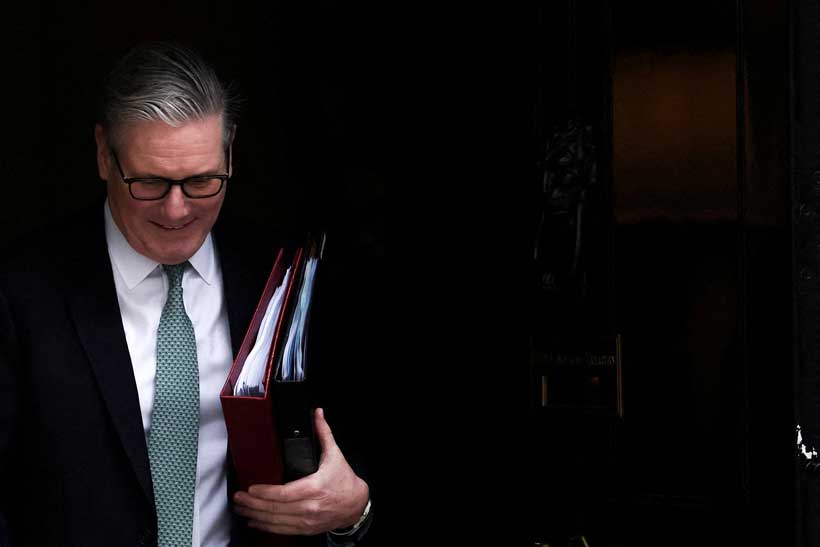
British Prime Minister Keir Starmer came to power in 2024 with one of the largest parliamentary majorities in modern British history, benefiting from widespread exhaustion with 14 years of Conservative rule and public demand for economic stability.
Yet less than two years later, Labour’s popularity has sharply deteriorated as Britons continue to struggle with stagnant living standards, persistent inflation and rising household costs. Polling data now shows the economy has overtaken immigration as the country’s dominant public concern, while Labour’s support has fallen dramatically.
The crisis reflects not just short-term inflationary pressures linked to global conflicts, but also a deeper structural decline in Britain’s economic model that has eroded public confidence across successive governments.
Inflation Has Become Politically Toxic
The biggest political problem facing Starmer is that inflation no longer feels temporary to British households. After years of price shocks from Brexit disruptions to the Ukraine war and now the Iran conflict higher costs have become embedded in daily life.
Stay ahead of the geopolitical week.
MD Briefing delivers expert analysis across five global fronts — the Indo-Pacific, energy, geoeconomics, European security, and the Middle East — every Monday morning. Free.
Food, fuel, rent, energy and mortgage costs remain significantly above pre-pandemic levels, even where headline inflation has eased. Voters increasingly judge economic conditions not by official data, but by whether their monthly income stretches far enough to maintain their standard of living.
This creates a dangerous political environment for incumbents because even modest price increases now trigger public anxiety. The Iran war’s impact on oil prices has revived fears that Britain could be entering another inflation cycle before households have recovered from the previous one.
For Starmer, this means economic perception matters more than macroeconomic indicators. Even if growth improves slightly, voters who still feel poorer than they did five years ago are unlikely to reward the government politically.
Britain’s Economic Malaise Predates Starmer
The analysis of Britain’s economic crisis extends far beyond Labour’s first two years in office. The country has been trapped in a low-growth, low-productivity cycle since the 2008 global financial crisis.
Several structural weaknesses converged over time:
- Post-2008 austerity weakened public services and investment.
- Brexit introduced trade friction and labour shortages.
- Britain’s heavy dependence on financial services made it vulnerable to economic shocks.
- Regional inequality deepened between London and other parts of the country.
- Weak productivity growth suppressed long-term wage gains.
The result is a society where many workers feel they are working harder without becoming materially better off. That psychological shift is politically explosive because it erodes trust in mainstream parties altogether.
Starmer inherited this structural crisis, but voters rarely distinguish between inherited problems and current leadership failures.
Labour Faces a Dangerous Expectations Gap
One of the biggest reasons for Labour’s rapid decline is the enormous gap between expectations and delivery.
After years of Conservative instability — including the economic turmoil under Liz Truss — many voters expected Labour to quickly stabilize living costs and restore financial confidence.
Instead, the public sees:
- Persistent inflation,
- High mortgage repayments,
- Expensive groceries,
- Weak economic growth,
- And limited visible improvement in living standards.
This mismatch between hope and reality is accelerating disillusionment much faster than normal political cycles.
Starmer’s government is attempting smaller cost-of-living measures such as fuel tax freezes, transport subsidies and energy bill adjustments, but these are unlikely to fundamentally alter public sentiment because the scale of economic pain is much larger than the relief being offered.
The Political Threat Is No Longer Just Conservatives
The deeper threat to Labour is not necessarily the revival of the Conservative Party, but broader fragmentation of British politics.
When economic pessimism becomes entrenched, voters often move toward:
- Populist alternatives,
- Regional political movements,
- Anti-establishment figures,
- Or political disengagement altogether.
Figures such as Andy Burnham represent an emerging internal challenge to Starmer from within Labour itself, particularly from politicians arguing that London-centric economic policymaking has failed large parts of the country.
If Labour continues losing support while Conservatives remain weak, Britain could enter another period of political fragmentation similar to the post-Brexit years.
Britain Risks Falling Further Behind the United States
A key concern for economists is that Britain has failed to generate the productivity rebound seen in the United States after the pandemic.
The U.S. economy benefited from:
- Faster labour market restructuring,
- Heavy fiscal spending,
- AI-driven productivity gains,
- And stronger energy independence.
Britain, by contrast, remains constrained by:
- Higher borrowing costs,
- Weak investment,
- Sluggish infrastructure development,
- And low productivity growth.
This divergence matters politically because British voters increasingly compare their stagnation with stronger U.S. economic performance. The perception that Britain is becoming economically weaker relative to peers damages confidence in both government and national institutions.
Starmer’s Political Window Is Narrowing
The central political challenge for Starmer is timing.
Most of Labour’s proposed economic reforms planning reforms, skills investment, infrastructure modernization and business financing changes — are long-term strategies that may take years to produce visible gains.
But voters facing immediate financial pressure may not wait long enough for those benefits to materialize.
This creates a classic democratic dilemma:
- Structural reforms require patience,
- But electoral politics punishes governments quickly when living standards stagnate.
Unless inflation eases substantially and real incomes begin rising again, Labour risks becoming associated with economic disappointment despite inheriting many of the underlying problems.
Analysis
Britain’s cost-of-living crisis is evolving from an economic issue into a crisis of political legitimacy.
The public frustration directed at Starmer reflects a broader collapse in faith that mainstream governments can materially improve living standards. What makes the situation particularly dangerous is that economic pessimism is now deeply psychological as well as financial. Many Britons no longer believe the next few years will be better than the previous ones.
That shift changes politics fundamentally.
Starmer’s government may still stabilize parts of the economy, but politically, stabilization is no longer enough. After years of shocks — financial crises, Brexit, COVID, inflation and geopolitical conflict voters increasingly expect visible improvement, not merely reduced instability.
The longer real wages lag behind prices, the harder it becomes for any centrist government to maintain authority.
Britain now faces a broader strategic question: whether it can rebuild a sustainable growth model after more than a decade of economic stagnation. Without stronger productivity growth and rising real incomes, political volatility is likely to remain a defining feature of British politics regardless of which party governs.
With information from Reuters.
