


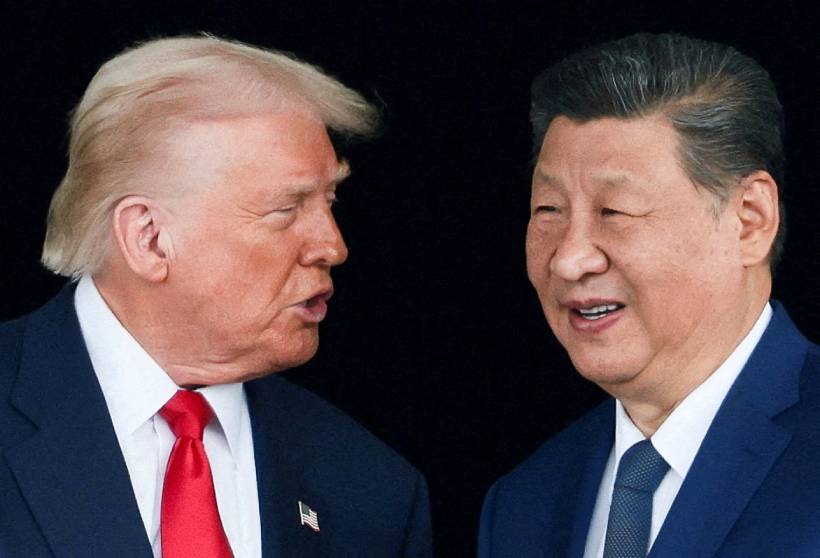
United States President Donald Trump said he reached agreement with Chinese President Xi Jinping that Iran must not be allowed to develop nuclear weapons and that the Strait of Hormuz must remain open to international shipping.
The remarks came during Trump’s high level meetings in Beijing, where discussions focused on the Iran conflict, Taiwan, trade relations, and regional security. The talks took place against the backdrop of a worsening crisis in the Middle East that has disrupted global energy markets and intensified geopolitical tensions.
The Strait of Hormuz has become the center of international concern after Iran sharply restricted shipping activity following United States and Israeli military operations earlier this year. The waterway is one of the world’s most strategically important energy routes, carrying a significant share of global oil and liquefied natural gas exports.
Trump Signals Growing Frustration With Iran
Trump stated that his patience with Iran was running out and warned Tehran to return to negotiations. He emphasized that Iran could not be permitted to obtain a nuclear weapon and called for a diplomatic agreement to end the ongoing conflict.
Stay ahead of the geopolitical week.
MD Briefing delivers expert analysis across five global fronts — the Indo-Pacific, energy, geoeconomics, European security, and the Middle East — every Monday morning. Free.
According to Trump, he and Xi shared common ground on preventing nuclear escalation and restoring stability to international shipping routes. Trump also claimed Xi assured him that China would not provide military equipment to Iran, describing the statement as highly significant.
The United States has paused direct attacks on Iran but continues to pressure Tehran through naval blockades and sanctions. Negotiations remain stalled because Iran refuses to abandon its nuclear program or surrender its enriched uranium stockpile. Iranian officials continue to insist that their nuclear activities are intended for peaceful purposes rather than weapons development.
China Balances Strategic Interests and Regional Stability
China’s response during the summit reflected its complicated position in the crisis. Beijing criticized the war and stated that the conflict should never have occurred, while also avoiding direct public criticism of Iran.
China maintains close economic and strategic ties with Tehran and remains one of the largest buyers of Iranian oil. At the same time, Beijing has strong interests in preserving stability in global energy markets because disruptions threaten economic growth and international trade.
The White House stated that Xi opposed the militarization of the Strait of Hormuz and rejected any attempt to impose tolls or restrictions on commercial traffic through the waterway.
Reports also indicated that China expressed interest in increasing purchases of American oil to reduce dependence on Middle Eastern supply routes vulnerable to disruption.
The Strategic Importance of the Strait of Hormuz
The Strait of Hormuz is one of the world’s most vital maritime chokepoints. Roughly one fifth of global oil and liquefied natural gas supplies normally pass through the narrow waterway connecting the Persian Gulf to international markets.
Iran’s restrictions on shipping have already caused major disruptions to energy supplies and raised fears of a prolonged global economic shock. Several recent maritime incidents have further intensified concerns about regional security.
An Indian cargo vessel carrying livestock reportedly sank after being struck near the coast of Oman, while another vessel near the United Arab Emirates was allegedly seized by Iranian personnel.
These incidents demonstrate how instability in the strait can quickly affect international shipping, energy prices, and global supply chains.
Diplomacy Remains Frozen
Despite the discussions between Trump and Xi, diplomatic efforts to resolve the conflict remain stalled. Recent proposals exchanged between Washington and Tehran were rejected by both sides, leaving little immediate progress toward a ceasefire or broader settlement.
Iran is demanding sanctions relief, compensation for war related damage, and recognition of its authority over the Strait of Hormuz. Meanwhile, the United States continues to insist that Iran must reduce its nuclear capabilities and limit its regional military influence.
Analysts remain skeptical that China will pressure Iran aggressively because Tehran serves as an important strategic partner for Beijing in balancing American influence in the Middle East.
Regional Conflict Expands Beyond Iran
The crisis has also affected neighboring countries, particularly Lebanon, where renewed fighting involving the Iran backed group Hezbollah has increased regional instability.
Thousands of people have reportedly been killed in both Iran and Lebanon since the conflict escalated earlier this year. American officials stated that talks between Lebanese and Israeli representatives in Washington were constructive and are expected to continue.
At the same time, United States military officials argue that Iran’s ability to threaten neighboring states has been weakened significantly by recent military operations. However, reports suggest Iran still retains important missile and drone capabilities that continue to pose regional security risks.
Analysis
The Trump Xi discussions reveal how deeply interconnected global security, energy markets, and great power politics have become.
For the United States, preventing Iran from obtaining nuclear weapons remains a central strategic objective. Trump also faces domestic political pressure as rising energy prices and prolonged instability threaten economic confidence ahead of important elections.
For China, the crisis presents a delicate balancing act. Beijing wants regional stability and uninterrupted energy supplies, but it also seeks to preserve strong relations with Iran as part of its broader geopolitical strategy.
The talks additionally highlight the growing role of China in Middle Eastern diplomacy. While Washington remains the dominant military power in the region, Beijing’s economic influence and relationships with countries such as Iran give it increasing leverage in international negotiations.
The Strait of Hormuz crisis also demonstrates how regional wars can rapidly produce global consequences. Disruptions to shipping lanes affect oil prices, inflation, trade routes, and political stability far beyond the Middle East.
Although Trump presented the summit as evidence of cooperation between Washington and Beijing, major differences remain beneath the surface. China’s cautious statements suggest that while both powers may agree on preventing nuclear escalation, they continue to disagree on how the crisis should be resolved and who bears responsibility for the conflict.
Ultimately, the situation underscores the fragile state of international diplomacy. Without renewed negotiations and compromise from all sides, tensions surrounding Iran, energy security, and regional power competition may continue to intensify in the months ahead.
With information from Reuters.
