For years the Arctic was viewed as a geopolitical periphery which is remote, inaccessible and strategically and marginally strategic to regions such as the Persian Gulf or the Indo-Pacific. But in 2026, that perception is rapidly changing. As Europe grapples with another energy crisis, LNG markets remain volatile and tensions around the Strait of Hormuz threaten the global supply chain, the Arctic is emerging as the next major strategic theatre of the 21st century.
The transformation is being driven by an ironical effect of climate change. The same global warming phenomenon which is destabilising the global environment is also melting Arctic sea ice, opening new shipping lanes and exposing vast reserves of hydrocarbons and critical minerals. So, what was once an isolated polar region is now becoming a corridor of trade, energy and military competition.
This increased Arctic significance is now deeply connected to global energy insecurity. Europe’s decoupling from Russian pipeline gas after the Ukraine war pushed the continent toward LNG imports, exposing it to disruptions in maritime chokepoints. The ongoing Strait of Hormuz crisis has further intensified these anxieties. According to the European Union Agency for the Cooperation of Energy Regulators (ACER), a prolonged disruption in Middle Eastern LNG supplies could create a global shortfall of 26 billion cubic metres (bcm), forcing Europe into fierce competition for spot cargoes. The crisis has already triggered price volatility across European gas markets. The current LNG prices in Europe stands at 15.41 which was 11.59 last year during the same time. Saudi Aramco’s CEO recently described the current disruption as the “largest energy supply shock ever,” warning that instability around the Strait of Hormuz could delay oil market recovery until 2027. Nearly one-fifth of global LNG trade passes through the Strait, making the vulnerability of traditional energy routes impossible to ignore.
Against this backdrop, the Arctic is gaining unprecedented strategic value. Melting sea ice is gradually increasing the possibility of trade passages via the Northern Sea Route (NSR), which runs along Russia’s Arctic coastline. This can significantly help in shortening shipping times between Europe and Asia by up to 30 percent compared to traditional routes such as Suez Canal or Cape of Good Hope. In context with this, the Arctic shipping traffic has grown by 40 percent and the distance sailed by ships in the Arctic polar code area has grown by 95 percent from 2013 to 2025. In 2025 alone, more than 100 transit voyages carrying around 3.2 million tons of cargo were recorded along the NSR despite difficult ice conditions and Western sanctions on Russia.
Stay ahead of the geopolitical week.
MD Briefing delivers expert analysis across five global fronts — the Indo-Pacific, energy, geoeconomics, European security, and the Middle East — every Monday morning. Free.
The Arctic is also crucial for the future energy transition. According to the estimates, the region holds nearly 90 million barrels of undiscovered oil and 30 per cent of world’s natural gas reserves, alongside significant deposits of rare earth minerals essential for electric vehicles and semiconductors. As Europe seeks long-term energy resilience and strategic autonomy, the Arctic’s energy and mineral resources are becoming increasingly important.
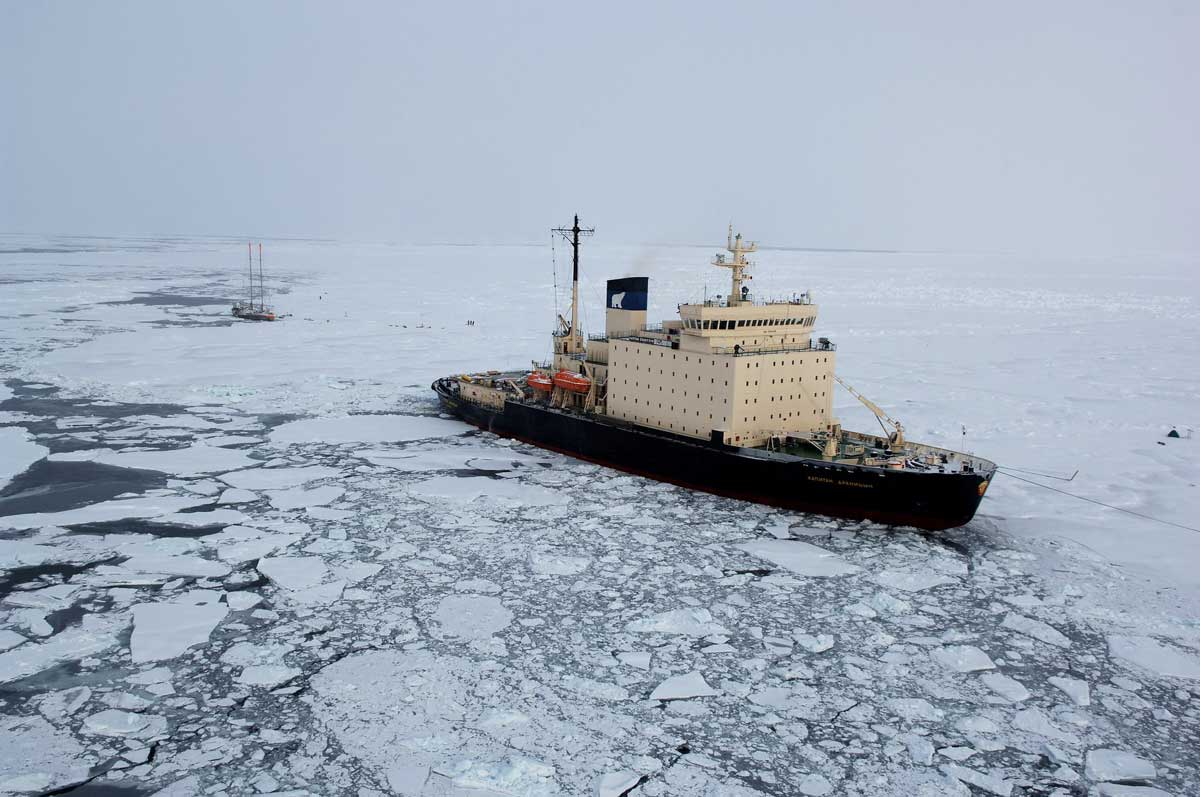
No other nation understands this better than Russia. Possessing the world’s longest Arctic coastline, Russia has treated the Arctic as both an economic lifeline and security perimeter. In spite of economic sanctions, Russia continues investing heavily in nuclear-powered icebreakers and military installations across the High North. The Northern Sea Route also remains central to Moscow’s Arctic Policy 2035 that aims to develop NSR as a globally competitive national transport corridor.
However, Russia’s expanding presence in the Arctic has also accelerated NATO’s northern transformation. The inclusion of both Finland and Sweden into NATO has fundamentally altered the strategic geography of the Arctic. NATO now includes seven of the eight Arctic states, dramatically strengthening the alliance’s operational capabilities in the region. NATO has intensified Arctic military exercises, surveillance operations and infrastructure coordination across the Nordic region in response to increasing Russian footprint. This militarisation reflects a broader shift in strategic thinking. Hence, the Arctic is no longer viewed merely as a frozen frontier but as a core component of Euro-Atlantic security. NATO increasingly sees the protection of northern sea lanes, undersea cables and future energy corridors as essential to European stability.
China, meanwhile, has emerged as the third major player in Arctic geopolitics. Although geographically distant, Beijing has steadily expanded its polar ambitions through its “Polar Silk Road” strategy which was added to its mega scale connectivity project, Belt and Road Initiative in 2017. China views the Arctic as a long-term strategic investment, offering access to shipping corridors, critical minerals and scientific influence. As tensions with the West deepen, Russia and China are also expanding cooperation in Arctic energy and infrastructure projects, creating new geopolitical alignments in the High North.
The Arctic’s transformation reveals a larger truth about contemporary geopolitics that climate change is not reducing strategic competition rather it is redistributing it geographically. The same environmental shifts that are threatening coastal cities and ecosystems are also reshaping global trade routes, military doctrines and energy strategies. For decades, global energy geopolitics revolved around chokepoints such as the Strait of Hormuz or the Suez Canal. But as those routes become increasingly vulnerable to conflict and disruption, attention is shifting northward. The Arctic is no longer simply an environmental concern but a geopolitical frontier where energy security, military rivalry and economic ambition increasingly intersect.