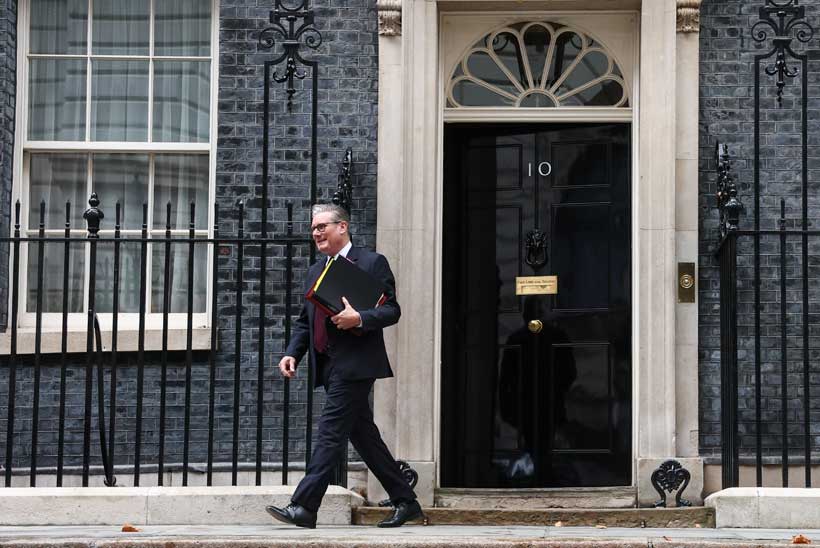
Keir Starmer was seen as a leader who would bring stability to Britain after years of political turmoil. However, his lack of a strong ideology has led to challenges for him during his short time as prime minister. Starmer became Labour leader in 2020 and led the party to a significant victory in the 2024 elections, but has struggled to define a clear vision for the future. The lack of a strong narrative has resulted in divisions within the party and a perception among voters that he is indecisive and lacks charisma.
Starmer’s popularity has declined significantly due to perceived failures, including broken promises and policy changes. His recent setbacks include poor performances in local elections in England and in the devolved parliaments of Scotland and Wales. Despite pledging to continue leading Labour, many party members are urging him to announce a timeline for his exit, expressing concerns about the party’s chances in the next national elections in 2029.
When Starmer took office, he faced significant challenges such as high public debt, weak economic growth, and a commitment to not increase income tax or VAT, limiting his ability to address these issues effectively. His government has experienced frequent policy reversals, resignations, and has struggled to present a cohesive plan for reforming the country. Some party members, like Catherine West, are particularly worried that Starmer’s leadership could allow populist figures, like Nigel Farage and his Reform UK party, to gain power.
Starmer’s rise within the Labour Party was rapid, as he was elected leader following Jeremy Corbyn’s tenure, which resulted in historic electoral losses for Labour. His experience in law was expected to help modernize the party, and initially, this strategy proved effective. However, analysts note that Labour’s victory in 2024 was not as robust as it seemed, relying heavily on tactical voting from disillusioned Conservative supporters.
With a weak foundation, Starmer’s cautious approach to governance has hindered progress on key issues such as housing shortages, economic growth, and health system challenges. Despite efforts to highlight accomplishments like improved working conditions and reduced waiting times in healthcare, Starmer’s government is perceived as lacking direction and clarity by many voters.
Frustration has grown among Starmer’s team, with blame directed at a right-wing media environment. In-house upheaval has been notable, with key advisers leaving, including the departure of his former chief of staff amid scandals. Starmer’s relationship with the civil service has also suffered following his controversial actions.
On the international front, Starmer has seen some success, notably regarding the war in Ukraine, where he has worked alongside European leaders to form alliances and engage in peace talks. Initially, he gained some favor with U. S. President Donald Trump, but this changed when he declined to involve Britain in conflict with Iran, leading to public criticism from Trump.
Domestically, Starmer’s era has marked a shift in Britain’s political landscape, with populist parties like Reform gaining ground and the Green Party growing in influence. Labour’s membership has significantly declined, while Reform’s has surged. Although Starmer recognized the threat posed by Reform, he now faces a critical challenge just to maintain his position within the party and the broader political arena.
With information from Reuters