Authors: Sanjay Turi and Farana Salam*
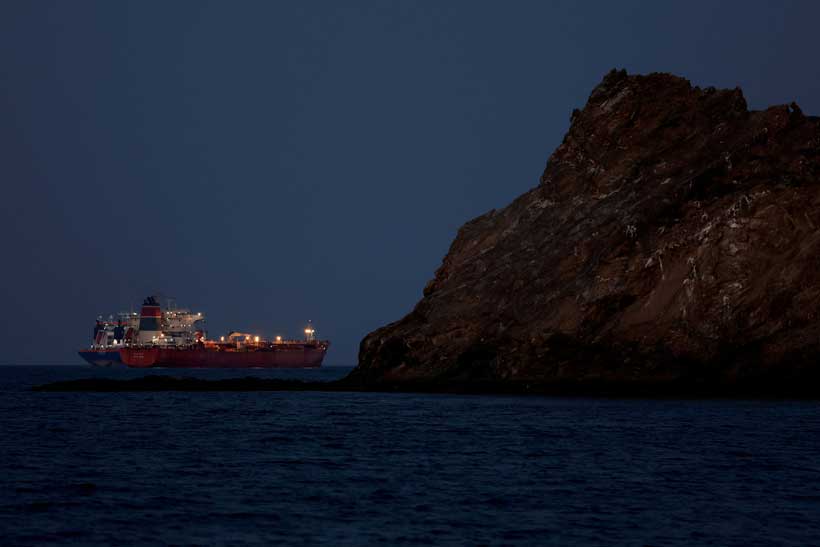
Amid rising uncertainty over the peace treaty as the disagreement between the US and Iran over peace proposals continues to prevail, it has recently been reported that hundreds of oil-laden tankers have been stranded in the Persian Gulf for months, as the Iranian blockade of the Strait of Hormuz is already in effect, closely watching any movement of ships passing through this strait. Although the US has also imposed a counterblockade in the region, it may have failed to neutralise the actual effect of the Iranian blockade, which has already stopped the passage of hundreds of oil tankers from the front in the Persian Gulf waiting to exit this strait, where Iran is solely guarding and guiding the movements of these ships.
In the context of the prevailing geopolitical confrontation in the Persian Gulf, many defence experts still believe that the US is very much ahead of the game as far as countering the Iranian capability is concerned. However, the US has had to face significant difficulty countering Iran in recent weeks of confrontation, and the credit obviously goes to the Iranian leadership’s determination to fight the US. 40 years ago, during the Iran-Iraq war, when there was possibly a similar deadlock in the Persian Gulf, the US faced the same problem then regarding escorting merchant ships passing through the Strait of Hormuz. After many years of a deadly geostrategic confrontation in the Persian Gulf, the US launched a major operation, Operation Earnest Will, against Iran. The then American attack was so intense that the Iranian Naval forces had to back off, leading to the cessation of the Tanker War in 1988, which gave the US a geostrategic edge and dominance in the entire Persian Gulf. Now, a similar pattern of confrontation can be observed here, too, when the US, after months of direct confrontation with Iran in the Strait of Hormuz, decided to enter the Persian Gulf, defying the Iranian blockade there in the Strait of Hormuz.
Initially, the US Navy was quite hesitant to pass through this strait as Iran was continuously threatening to attack any ships passing through this Strait. Iran was also saying that the entire strait was mined with explosive devices, and this was an obvious reason, which was not allowing the passage of the oil-container ships, leading to the hundreds of ships stranded in the Persian Gulf, through which more than 20% of global oil trade happens. In this context, the recent claim by the US that its two merchant ships have safely passed through the Strait of Hormuz is just a demonstration of power to build confidence among global insurance companies and merchant ship owners for the free navigation in the Persian Gulf.
Stay ahead of the geopolitical week.
MD Briefing delivers expert analysis across five global fronts — the Indo-Pacific, energy, geoeconomics, European security, and the Middle East — every Monday morning. Free.
Amid roller coaster and prevailing uncertainty over peace talks, Saudi Arabia and Kuwait have once again given the US fresh access to their bases and airspace to use against Iran in the future, provided that the Iranian leadership seems to be looking for an excuse or reason to attack the Gulf infrastructures. Initially, the US’s allies in the region were hopeless after the Iranian attack on the Gulf monarchies, as the US was unable to ensure their security against Iranian attack. Given that the Gulf monarchies had to protect themselves during this war, they were quite hesitant to trust the US completely, and that is what led to denying access to Saudi and Kuwaiti airspace and bases. In this context, the US’s claim to safely enter the Persian Gulf, defying the Iranian blockade of the Strait of Hormuz, may have recalibrated itself and regained the confidence of its allies once again. As Project Freedom, though temporarily halted, is technically still in force, the Trump administration may be thinking of repeating what the US did 40 years ago in the Persian Gulf during the Tanker War in 1988. Given the reports that hundreds of merchant ships are stranded in the Persian Gulf, through which a significant portion of global oil and LNG supply (more than 20%) happens, the global sentiment may be turning against Iran, as the problems arising from the Strait of Hormuz are significantly causing a food and fuel crisis, possibly hampering every single country directly or indirectly across the globe. The global sentiment that was in favour of Iran a few weeks and months ago seems to be gradually declining and turning against it, which is what the US was possibly waiting for.
As the US has already been given access to the Saudi and Kuwait bases and airspace, the US defence forces might be launching a fresh attack if Iran does not accept the conditions put forward by the US in the peace proposal. Considering the outcomes of the previous Iran-Iraq war of the 1980s, it would not be wrong to assume that the US-Iran war is either entering a deadlier phase or coming to an end soon, as the US, by safely entering the Persian Gulf, has not only defied the Iranian blockade at the Strait of Hormuz but also recalibrated itself and regained the confidence of its Gulf allies. With the US-Iran war possibly entering a new phase in the coming days and weeks, the US is expected to use global sentiment, possibly in its favour at least for the time being, as countries across the globe are suffering from rising food and fuel prices, and they want this blockade lifted as soon as possible.
Although it is just a geopolitical speculation that the US-Iran war may be entering a new phase, possibly leading to the end of this war, we must remember a quote by an American poet, Maya Angelou: “Although it is good to hope for the best, it is always better to be prepared for the worst”.
Author Bio: Farana Salam, Doctoral Candidate at SNCWS, Jamia Millia Islamia, New Delhi.