


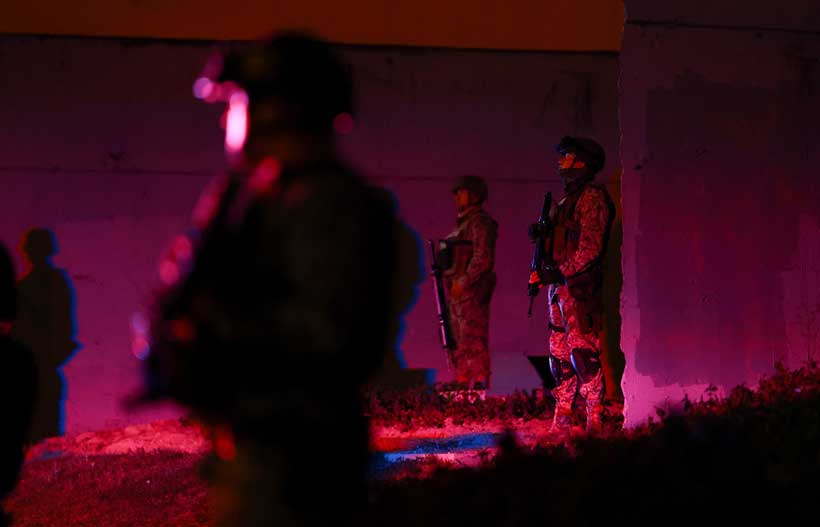
What is one of the most dangerous career paths in Mexico?
Now, would you have guessed journalism? The career where the only risk is carpal tunnel and strained eyes. From 2000 to 2024, 163 journalists have been murdered and another 32 journalists are missing from “enforced disappearance”. Reporters Without Borders ranks Mexico as the second most dangerous and deadliest country for journalists. In the same study, the top four areas are Israel/Gaza, Mexico, Sudan, and Ukraine. Of these four countries, Mexico is the only one not in a formally declared war or a traditional interstate conflict, this highlights the danger of organized crime, corruption, and impunity that is linked to drug cartels, local power networks, and weak state protection.
War on Drugs and Journalists:
Mexico first declared a war on drugs in 2006, under President Felipe Calderón’s administration. Researchers from First Post reports there were 400 gangs operating in Mexico, which employ about 175,000 people, making gangs the country’s fifth-largest private employer. In 2020, the UN ranked Mexico as 19th in the highest rate of intentional homicides on the rise since 2014. These cartels are so influential that they can pay off judges, police, and politicians, allowing cartels and gangs to get away with more than what is documented. This organized crime caused the 2024 Presidential Election to be the deadliest as 34 candidates were killed.
According to Varieties of Democracy’s Liberal Democracy metric, Mexico has actually declined by 0.03 points in terms of specific freedoms like expression and association. However, the Freedom of the Press level has not changed from its “partly free” status since last year’s Freedom House metrics.
Stay ahead of the geopolitical week.
MD Briefing delivers expert analysis across five global fronts — the Indo-Pacific, energy, geoeconomics, European security, and the Middle East — every Monday morning. Free.
Sources of Threats:
Threats against journalists are a mix of physical, legal, and digital threats including unlawful killings, kidnapping, enforced disappearances, intimidation, harassment, doxxing, frivolous lawsuits, and pressure from both criminal groups and public officials. Those killed, kidnapped, and forcibly disappeared are often subjected to torture or cruel, inhuman, or degrading treatment or punishment. All these actions pose serious restrictions on freedom of expression and media freedom, after journalists did their job reporting on politics, public health, social protests, drug and organized crime, and local culture.
The United Nations Human Rights Commissioner defines “enforced disappearance” the as “deprivation of liberty against the will of the person; involvement of government officials, at least by acquiescence; refusal to acknowledge the deprivation of liberty or concealment of the fate or whereabouts of the disappeared person”. Thirty-two Mexican journalists have been disappeared, violating their human rights like their right to life, being tortured and abused, deprived of liberty and security, freedom of expression, and freedom of thought.
I argue that their right to work and social protection are also violated because journalism should not be life-threatening. This treatment of journalists is a form of censorship, preventing the public from accessing information, creating an information desert. Without accurate information, the public becomes vulnerable to disinformation while key political actors behave without public oversight, which may erode democracy.
Government Action:
Former President López Obrador, who served from 2018 to 2024, publicly criticized and singled out journalists who were critical of his work. He displayed their names and personal information during morning conferences and accused them of being “corrupt” and “criminals” intimidating them from continuing reporting. During his six-year term, many journalists killed worked for small news outlets in remote regions dominated by organized crime. He utilized his morning press conferences to denounce the press and spread disinformation. He often labeled the media as the “journalism mafia”. His words often trickled down to local authorities and leaders, ultimately setting the tone and precedent for the rest of the country.
Current President Claudia Sheinbaum has taken a less aggressive approach towards the press. Yes, she expressed frustration with the press pressuring her to make certain statements. President Sheinbaum signed a pledge proposed by Reporters Without Borders to protect freedom of the press and safety of journalists. This pledge included the following five priorities: prioritize
the right to information; guarantee full protection for journalists; promote legislation to keep journalists safe; combat impunity for crimes and develop safety measures in threatened areas of journalism. President Sheinbaum provided support for displaced journalists, reviewed the functioning of the federal mechanism for the protection of journalists, implemented new evaluation methods of crimes against freedom and expression, and gave families and their legal representation access to investigation materials.
Mexico’s Mechanism for the Protection of Human Rights Defenders and Journalists:
In 2012 the then-President Felipe Calderón Hinojosa signed the Mechanism for the Protection of Human Rights Defenders and Journalists, which provided support in the form of “relocation, panic buttons, bulletproof vehicles, safehouses, basic living needs such as food and medical support, camera systems, and reinforced doors and fences at beneficiaries’ homes”.
However, this Mechanism is reactive and only addressed the short-term consequences. It fell short of money, staffing, and political backing, which, combined with coordination struggles, does not provide the most support for journalists. This program did not address the issue of impunity of the suspects, which is the exception of punishment, harm, or consequences for one’s actions, which perpetuates a cycle of violence, eroding trust, and systemic failure.
Potential Pathways to Solutions:
In Mexico, journalists’ safety, gang violence, deeply rooted corruption, and erosion of trust is complex and seemingly insurmountable. To target these issues, Mexico should look to other countries as examples. In 2013, Uruguay was facing a large movement within the illegal market and cartel violence. President José “Pepe” Mujica ratified a bill proposing the legalization of marijuana, making Uruguay the first country to legalize cannabis for non-medical purposes. Uruguay created three access channels, which starved cartels, reducing crime. In the U.S., Colorado legalized marijuana, albeit for quite different reasons and taxed the sale of cannabis, generating funds social programs.
Colombia has made significant efforts to reduce violence against journalists since the 1990s. Colombia established an office of the Attorney General’s Human Rights Unit to federalize the crimes against journalists and giving the federal government exclusive authority over investigations, bypassing corrupt local leaders. With this office, Colombia’s federal government trained 50+ specialized investigators in local tactics of targeting cartel bosses and politicians. Although results are mixed, Colombia still reduced murders overall with journalists’ murders by about 70%.
Also in Colombia, one article by John Otis of the Committee to Protect Journalists recognized the systemic failures with the statute of limitations (SOLs), letting many criminals off the hook. Due to the slowness of the criminal process in Colombia, many families were not getting the closure they deserve as cases were being closed faster than they were being solved.
Longer SOLs will allow for more thorough investigations while overcoming barriers like witness intimidation, lost files, or jurisdictional issues, that are common in impunity-heavy regions. In Colombia, this could have prevented 44% of journalist killings from expiring and tracking down these suspects and preventing impunity.
Mexico can implement a mix of these policies to address the issue of violence against journalists. Legalization would reduce the demand and activity of cartels, while freeing up law enforcement capacity to shift focus towards more serious crimes. The implementation of taxes on the sale of drugs would raise government revenue for stronger staffing and coordination of the Mechanism and social programs. The federalizing crimes against journalists would avoid corrupt local leaders and have national enforcement with more resources. By extending statute of limitations, more time is given to law enforcement to overcome challenges within the investigation process, hopefully leading to end impunity. Mexican leaders will need to moderate their rhetoric, reducing their vocal and open criticism of journalists. Over time, this would increase government trust and credibility, while limiting the war on crime and protecting journalists.
Don’t shoot the messenger
Everyone should be able to choose a job and do it without fearing for their life. No one should be threatened with violence or even death because of their thoughts and opinions. We (the world) have human rights for a reason, and they should be respected and protected. The only threat to journalists should be carpal tunnel from typing too much and sore eyes from staring at a screen.
