Mapping software has become a staple in business operations, research, and urban planning. The ability to plot data points on a visual layer, analyze spatial patterns, and draw conclusions from geographic information separates informed decisions from guesswork. But choosing the right platform requires understanding what each tool actually delivers and where it falls short.
The market includes everything from free desktop applications to enterprise solutions priced in the thousands. Some platforms demand years of training before users can produce basic outputs. Others require no GIS background at all. The differences matter because the wrong choice means wasted time, frustrated teams, and analysis that never gets completed.
This review covers five mapping platforms used for advanced GIS analysis. Each serves a different purpose, and their capabilities vary widely. The goal here is straightforward: provide enough detail so you can determine which platform fits your needs without spending weeks on trial accounts and demos.
Rank #1: Maptive Brings Enterprise Power Without the Learning Curve
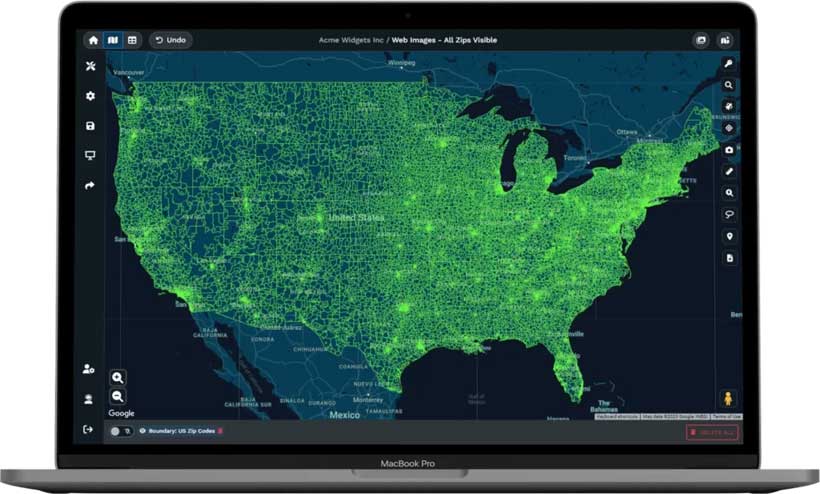
Maptive operates as a cloud-based mapping platform built for business users who need professional-grade analysis without hiring a GIS specialist. The platform includes over 60 analysis tools covering territory management, heat mapping, spatial analysis, demographic overlays, and route optimization.
Stay ahead of the geopolitical week.
MD Briefing delivers expert analysis across five global fronts — the Indo-Pacific, energy, geoeconomics, European security, and the Middle East — every Monday morning. Free.
What sets Maptive apart from competitors is accessibility. The platform runs entirely in a web browser with no downloads required. Users can access their maps and data from any device, which makes collaboration across teams and locations practical rather than complicated.
The tool handles complex data sets with ease. Users can upload spreadsheets, connect to existing CRM systems, and visualize thousands of data points without performance issues. Integrations with Salesforce, Zoho, Keap, Pipedrive, and HubSpot allow sales teams to map customer data directly from their existing workflows.
Pricing follows a straightforward model. The Individual plan costs $1,250 per user annually, while the Team plan runs $2,500 per year. These prices remain consistent regardless of which features you need, so there are no surprise costs when you want to access advanced tools.
For businesses that need territory management, sales mapping, demographic analysis, or location-based decision making, Maptive delivers the full package. The learning curve is minimal compared to traditional GIS software, yet the analytical capabilities match what you would expect from platforms that charge significantly more and require dedicated training.
Rank #2: ArcGIS Pro Caters to Dedicated GIS Professionals
ArcGIS by Esri has operated for decades and built its reputation serving government agencies, research institutions, and large enterprises with dedicated spatial analysis teams. The platform offers extensive functionality for users who already possess formal GIS training.
The latest release, ArcGIS Pro 3.4, came out in November 2024 with enhanced data visualization and GeoAI capabilities. Esri also improved search functions and license management in this update.
The depth of ArcGIS Pro is undeniable. Users can perform complex raster analysis, build geodatabases, create detailed cartographic outputs, and run advanced spatial statistics. The software handles nearly any GIS task imaginable.
However, that depth comes at a cost beyond the licensing fees. ArcGIS Pro requires installation on local machines, meaning hardware requirements become a factor. The interface assumes familiarity with GIS concepts, and new users typically need months of training before producing useful outputs independently.
For organizations with existing GIS departments and the resources to support specialized staff, ArcGIS Pro remains a capable choice. For businesses seeking quick implementation and results without dedicated GIS personnel, the platform presents a steep barrier.
Rank #3: Mapbox Focuses on Developer Tools and Custom Applications
Mapbox positions itself as a location technology provider rather than a traditional GIS platform. Over 4 million registered developers use Mapbox, and approximately 40% of Fortune 500 companies have integrated its services into their applications.
In 2024, Mapbox expanded geocoding coverage by adding 15 million addresses worldwide. The company also received the “Navigation Technology Solution of the Year” designation from the AutoTech Breakthrough Awards for the third consecutive year.
The platform excels at providing building blocks for custom mapping applications. Developers can create tailored navigation experiences, embed maps into mobile apps, and build location-aware features from the ground up.
This developer-first approach means Mapbox serves a specific audience. If your organization has engineering resources and wants to build proprietary mapping solutions, Mapbox provides the foundation. If you need ready-to-use analytical tools without writing code, the platform falls outside your requirements.
The pricing structure varies based on usage, which can make cost forecasting difficult for high-volume applications. Organizations must weigh the flexibility of custom development against the time and resources required to implement solutions.
Rank #4: CARTO Targets Data Scientists and Cloud Infrastructure
CARTO operates as a cloud-native spatial analysis platform emphasizing location intelligence. The software provides web mapping, data visualization, spatial analytics, and spatial data science features through a subscription model.
The platform recently announced CARTO AI Agents in private preview, combining geospatial technology with artificial intelligence. This tool aims to help decision-makers address spatial questions more quickly.
CARTO runs on diverse cloud data warehouse platforms including Google BigQuery, Snowflake, AWS Redshift, and Databricks. This integration approach appeals to organizations already invested in these cloud ecosystems.
The target user for CARTO tends toward data scientists and analysts comfortable with SQL queries and programmatic workflows. While the platform offers visualization tools, extracting full value typically requires technical skills beyond what average business users possess.
Pricing information requires contacting sales for quotes, which can complicate budget planning. Organizations considering CARTO should factor in both the subscription costs and the internal expertise needed to operate the platform effectively.
Rank #5: Google Earth Pro Offers Free Access With Limited Analysis
Google Earth Pro is a free desktop application for viewing satellite imagery and geographic data. Anyone can download and use the software without payment.
The platform provides basic measurement tools, historical imagery viewing, and the ability to import certain data formats. Users can create simple maps and export images for presentations.
However, Google Earth Pro lacks the analytical depth found in purpose-built GIS platforms. The software does not offer territory management, advanced spatial statistics, demographic overlays, or integration with business systems. Data visualization options remain basic compared to commercial alternatives.
For casual exploration of geographic areas or simple reference purposes, Google Earth Pro serves its function. For business analysis, decision support, or any workflow requiring substantive spatial insights, the platform falls well short of requirements.
How These Platforms Compare for Business Applications
The differences between these 5 platforms become clear when evaluating them against common business needs.
- Territory management requires tools that can create, adjust, and optimize geographic regions based on multiple criteria. Maptive includes dedicated features for this purpose. ArcGIS Pro can accomplish similar tasks but requires significant configuration. Mapbox, CARTO, and Google Earth Pro do not offer ready-made territory management solutions.
- Integration with existing business systems matters for organizations using CRM platforms. Maptive connects directly with major CRM software, allowing sales and operations teams to map their data without manual exports. Other platforms either require custom development or lack these integrations entirely.
- Time to value separates platforms that deliver results immediately from those requiring extended setup periods. Cloud-based solutions like Maptive allow users to upload data and begin analysis within minutes. Desktop applications like ArcGIS Pro demand installation, configuration, and training before productive work begins.
- Collaboration needs shape platform selection for teams working across locations. Web-based access through Maptive means any team member can view and work with maps from any device. Desktop-bound platforms create barriers when multiple stakeholders need involvement.
Making the Right Choice for Your Organization
For most businesses seeking practical mapping and analysis tools without the overhead of specialized training, technical implementation, or dedicated personnel, Maptive provides the most complete solution. The platform combines enterprise-grade analytical capabilities with accessibility that allows any team member to produce meaningful outputs.
The investment in mapping software pays returns when the platform actually gets used. Tools that sit unused because they require expertise the organization lacks represent wasted budget. Solutions that integrate with existing workflows and produce results quickly generate actual value.
Maptive delivers professional mapping and GIS analysis in a form that businesses can implement immediately and use productively from day one. That combination of power and practicality places it at the top of this evaluation for organizations serious about location-based analysis.