


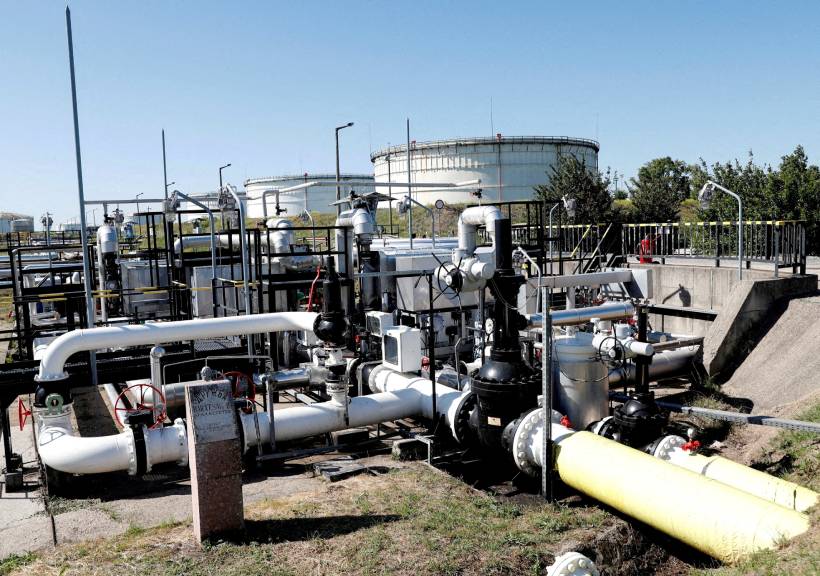
Energy infrastructure has become a central battleground in the ongoing Russian invasion of Ukraine, with supply routes carrying both economic and political weight. One of the most critical assets in this context is the Druzhba pipeline, which transports Russian crude oil to several European countries, including Hungary and Slovakia.
In early 2026, a Russian drone strike damaged the pipeline in western Ukraine, halting oil deliveries and triggering tensions between Kyiv and key European Union member states.
Repairs Completed and Flows to Resume
Ukraine has confirmed that repairs to the Druzhba pipeline are complete, allowing oil transit to resume. The operator, Ukrtransnafta, has formally notified Hungary’s MOL Group that the force majeure conditions in place since January have ended.
According to officials, crude oil deliveries to Hungary and Slovakia are set to restart immediately, restoring a vital energy link that had been disrupted for months.
Stay ahead of the geopolitical week.
MD Briefing delivers expert analysis across five global fronts — the Indo-Pacific, energy, geoeconomics, European security, and the Middle East — every Monday morning. Free.
Political Dispute Over Delays
The pipeline shutdown became a source of political friction within Europe. Outgoing Hungarian Prime Minister Viktor Orbán and Slovak authorities accused Ukraine of delaying repairs, claims that Kyiv consistently denied.
The dispute highlighted broader tensions between Ukraine and some EU members over energy security and wartime priorities.
Hungary’s incoming leadership, under election winner Péter Magyar, has taken a more direct approach, urging both Ukraine and Russia to restore oil flows as quickly as possible.
Link to EU Financial Support
The resumption of oil transit carries significant financial implications. Hungary had been blocking approval of a €90 billion European Union loan intended to support Ukraine’s budget and reconstruction needs.
With oil flows set to resume, EU ambassadors are expected to restart discussions on approving the loan package. The funding is crucial, as it is expected to cover a large share of Ukraine’s financial requirements for 2026 and 2027.
Despite not directly contributing to the loan, Hungary holds veto power within the EU decision making process, allowing it to delay or block such measures.
Strategic Importance of the Pipeline
The Druzhba pipeline has become more than just an energy route. It is now a geopolitical lever influencing both intra EU relations and broader support for Ukraine.
Its disruption exposed Europe’s continued reliance on legacy Russian energy infrastructure, even amid efforts to diversify supply sources following the war.
Analysis
The reopening of the Druzhba pipeline underscores the deep interconnection between energy security and geopolitical decision making in Europe. What began as a technical disruption quickly evolved into a political standoff, demonstrating how infrastructure can be used as leverage in broader negotiations.
For Ukraine, restoring oil transit is not only about maintaining regional stability but also about unlocking critical financial support from the European Union. The linkage between pipeline operations and the €90 billion loan highlights how economic aid can become contingent on resolving energy disputes.
For Hungary, the situation reflects a pragmatic approach centered on national energy needs. By tying its approval of EU funding to the resumption of oil flows, Budapest has used its institutional position to secure tangible outcomes.
At a broader level, the episode reveals the limits of Europe’s energy transition in times of crisis. Despite efforts to reduce dependence on Russian energy, infrastructure like the Druzhba pipeline remains essential for certain member states, creating vulnerabilities that can influence political decisions.
Ultimately, the resolution of this dispute may provide short term relief, but it also reinforces a longer term challenge for Europe: balancing energy security, political unity, and strategic independence in an increasingly volatile geopolitical environment.
With information from Reuters.
