


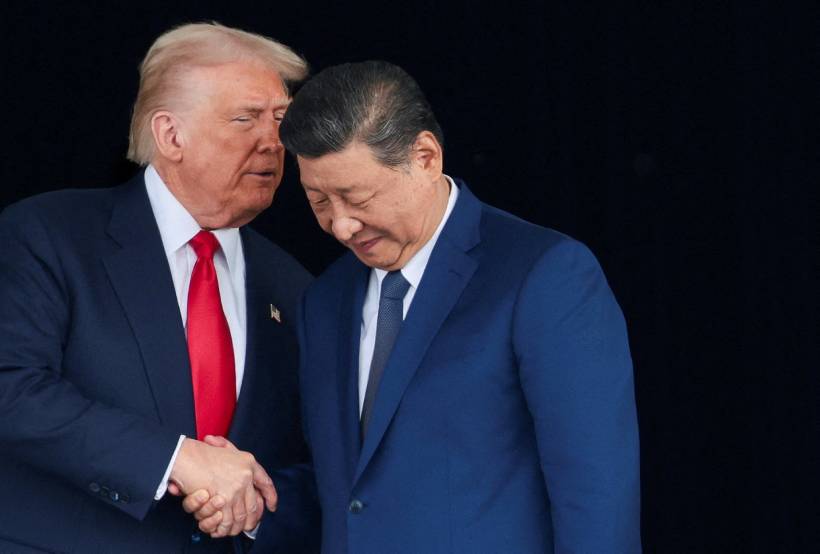
Chinese Foreign Minister Wang Yi has just concluded a two-day visit (April 9–10) to North Korea, in his first trip to Pyongyang in more than six years. The visit emphasized strengthening high-level exchanges and expanding practical cooperation. With U.S. President Donald Trump set to arrive in Beijing in mid-May for a high-stakes summit with President Xi Jinping, the visit forms part of broader diplomatic activity across multiple fronts.
Rather than a single coordinated strategy, these developments may point to a pattern of parallel initiatives across security, economic, and diplomatic domains, designed to preserve flexibility while strengthening China’s negotiating position ahead of the summit.
This coherence does not stem from central coordination but instead emerges from repeated external shocks and strategic uncertainty. These conditions encourage risk-hedging across different bureaucratic and regional channels. Over time, this creates feedback effects, where actions in one area — security, economic, or diplomatic — begin to reinforce others, producing alignment without formal integration.
Emerging Patterns Across Multiple Tracks
Stay ahead of the geopolitical week.
MD Briefing delivers expert analysis across five global fronts — the Indo-Pacific, energy, geoeconomics, European security, and the Middle East — every Monday morning. Free.
Beijing’s recent actions indicate several mutually interacting lines of effort, including attempts to influence regional security environments, stabilizing economic relationships, and framing China as a potential diplomatic interlocutor in crisis settings. While these moves are not necessarily centrally orchestrated in a rigid sense, their cumulative effect appears to reflect increasing alignment in China’s external posture.
The conflict involving Iran and the wider Middle East has created a more complex strategic environment for the United States, drawing attention and resources away from East Asia. China has generally maintained a restrained public posture, emphasizing stability and avoiding overt alignment with any party. This approach may preserve diplomatic flexibility while limiting exposure in a volatile regional environment.
The delay of the Trump–Xi summit from March to mid-May has provided Beijing with additional time to shape the agenda. Key issues under discussion include technology controls, investment restrictions, tariffs, and Taiwan. With Washington managing multiple external pressures, China appears positioned to approach the talks with increased leverage and broader negotiating space.
At the same time, China’s reaction to U.S. pressure on Iran has become more visible. Following U.S. moves to tighten maritime restrictions in the Strait of Hormuz, Chinese officials described the measures as “irresponsible and dangerous,” signaling a modest but notable sharpening in tone compared to earlier phases of the crisis. While this does not represent a strategic escalation, it may suggest that Beijing is calibrating its messaging more carefully as spillover risks to Chinese energy security increase.
Reasserting Leverage on the Korean Peninsula
Wang Yi’s visit to Pyongyang may be one of the most strategically significant elements of China’s pre-summit positioning. Historical precedent is relevant. Kim Jong Un traveled to Beijing in 2018 to steady ties ahead of his first summit with Trump in Singapore, indicating China’s longstanding interest in maintaining centrality in U.S.–North Korea diplomacy.
Beijing’s influence in North Korea has fluctuated in recent years, particularly during the pandemic and amid Pyongyang’s closer ties with Russia. The resumption of air and rail links in early 2026 appears to reflect an effort to reassert connectivity and prevent diplomatic developments on the Korean Peninsula from proceeding without Chinese involvement.
Russia has simultaneously emerged as another reinforcing diplomatic strand. During a recent visit to Beijing, Russian Foreign Minister Sergei Lavrov met with senior Chinese leadership and reportedly discussed expanding energy cooperation, with Moscow signaling willingness to “fill the resource gap” created by instability in Middle Eastern supply routes. President Vladimir Putin is also expected to meet Xi Jinping shortly after Trump’s scheduled visit, which may reinforce perceptions that China is engaging in strategic triangulation across multiple major powers as it prepares for the summit.
North Korea, however, remains an independent and unpredictable actor. Recent missile and other weapons tests, conducted shortly before Wang’s visit, highlight Pyongyang’s effort to maintain strategic autonomy and shape negotiations on its own terms. Kim Jong Un’s February statement that there is “no reason” North Korea and the United States cannot “get along well,” provided the U.S. abandons its “hostile” policy, preserves diplomatic ambiguity that both Beijing and Washington must navigate.
For China, this environment creates opportunity but not control. Even limited progress in U.S.–North Korea relations could enhance Beijing’s influence if it maintains a visible supporting role in the process.
Strategic Restraint and the Politics of Mediation
China’s approach to the Middle East conflict appears to reflect a similar logic of restraint and positioning. Beijing has avoided direct alignment in the Iran-related escalation, instead emphasizing stability and describing the conflict as one that “should never have happened.” This posture allows diplomatic flexibility and reinforces its image as a stabilizing actor.
This balancing act is also evident in China’s simultaneous deepening of ties with Gulf partners. During the April 12–14 visit by the Crown Prince of Abu Dhabi, Sheikh Khaled bin Mohamed bin Zayed Al Nahyan, Beijing and Abu Dhabi announced multiple cooperation agreements, further deepening trade and investment linkages. The timing underscores how Gulf states are actively hedging between Washington and Beijing, while also signaling to China a desire for greater Chinese engagement in regional stability efforts.
This measured approach also carries reputational benefits. As Gulf states and other partners observe uncertainty in U.S. policy, China is able to present itself as a more predictable interlocutor. Over time, this perception may strengthen China’s diplomatic credibility, even in the absence of direct crisis intervention.
The key strategic effect is not immediate influence over the conflict itself, but the accumulation of reputational capital that may reinforce China’s position in broader negotiations with both regional actors and the United States.
However, China’s position on Iran itself remains more complex. While Beijing officially denies involvement in any military supply arrangements, U.S. intelligence agencies have alleged that Chinese entities may be indirectly facilitating dual-use transfers to Iran, including materials relevant to missile development. These claims remain contested, but they highlight the tightening scrutiny Beijing faces as the Iran conflict becomes more directly entangled with U.S.–China relations.
Expanding the Economic Track
On trade and technology, China is pursuing a dual-track approach combining defensive and opportunistic elements. Beijing seeks easing of U.S. export controls on semiconductors, artificial intelligence, and other advanced technologies, alongside reductions in sanctions affecting Chinese firms and outbound investment restrictions.
At the same time, China has signaled potential willingness to increase imports of U.S. goods, including agricultural products, energy, and aircraft, as part of a broader bargaining strategy. These moves appear designed to reduce economic asymmetries while maintaining negotiating flexibility.
Progress on rare earths and critical minerals, an issue that previously generated tensions, has continued at the ministerial level despite delays to the summit. This reflects a broader pattern in which incremental technical discussions gradually shape the framework for high-level negotiations.
Taiwan remains the most sensitive issue. Beijing is likely to press for restraint in U.S. arms sales and clearer signaling against independence. While domestic constraints in the United States limit the scope of concessions, China may still secure symbolic or rhetorical gains that bolster its strategic objectives.
In parallel, Beijing has also intensified its Taiwan-facing diplomatic outreach. Following a high-profile visit by Cheng Li-wun, chairwoman of Taiwan’s Kuomintang (KMT), Xi Jinping met with her in Beijing, after which Chinese authorities announced a package of new incentives aimed at easing travel restrictions, expanding cultural imports, and facilitating Taiwanese business access to mainland markets. While largely symbolic, these measures form part of a broader effort to influence Taiwan’s internal political discourse ahead of the summit and to signal that Beijing retains multiple channels of influence beyond formal state-to-state diplomacy.
Interconnected Leverage Across Domains
The significance of these developments may lie in their cumulative effect across different policy areas. Stability on the Korean Peninsula reduces immediate security risks in Northeast Asia, while China’s restrained posture in the Middle East enhances its image as a predictable actor in a volatile international environment.
Economic negotiations further interact with this dynamic by linking trade, technology, and investment issues into a broader bargaining framework. Taken together, these parallel tracks contribute to a more favorable negotiating environment for Beijing ahead of the summit.
Importantly, China’s approach does not rely on formal coordination across all domains, but rather on the gradual alignment of policy moves that reinforce one another over time.
Risks and Contingencies
China’s approach is not without risk. North Korea may act unpredictably, limiting Beijing’s ability to shape outcomes. U.S. volatility and domestic politics could constrain concessions. Regional skepticism—particularly from South Korea and Japan—also imposes limits on China’s maneuverability. Even amid these uncertainties, Beijing’s successive moves—from Pyongyang to the Persian Gulf to trade negotiations—seem to be coalescing into an adaptive coherence, strengthening its relative position without relying on rigidly pre-scripted plans.
Officials express concern that the summit could default to narrow trade discussions while leaving broader security questions unresolved. Xi is likely to view the upcoming meeting as an opportunity to mark progress toward both bilateral and regional stability. In a February 4 phone call with Trump, he expressed his hope that 2026 would become a year of “mutual respect, peaceful coexistence, and win-win cooperation” between China and the United States. Chinese state media portrays such meetings as advancing Xi’s vision of cooperative security amid global tensions. The challenge lies in ensuring incremental moves on multiple tracks coalesce into tangible leverage rather than dissipating into fragmented diplomacy.
Scenario Considerations and Summit Implications
The summit offers multiple possible outcomes, each carrying strategic implications. A limited trade-focused agreement would provide a near-term win but leave longer-term security and strategic issues unresolved. By contrast, even modest concessions on Taiwan signaling, North Korean coordination, or tariff management could yield outsized benefits if paired with Beijing’s carefully cultivated image as a stabilizing actor.
China’s incremental approach may allow flexibility in real-time adjustments, enabling Beijing to respond to shifts in U.S. positioning, regional developments, or North Korean signaling. By linking discrete moves across domains, China may achieve outcomes that exceed what Washington anticipates while minimizing risks of overextension. This adaptive coherence is particularly valuable in a context of global uncertainty, where unilateral action could provoke counterproductive reactions.
Soft Power and Third-Party Signaling
China’s maneuvering extends beyond direct bilateral leverage. Gulf states and other Global South actors are observing both U.S. and Chinese approaches to conflict management, mediation, and diplomacy. Through patient engagement, Beijing may enhance its soft power, projecting itself as a capable, responsible actor able to manage crises without resorting to force. Incremental successes—such as resumed rail links with North Korea, measured economic reciprocity, or quiet mediation in the Middle East—may cumulatively enhance China’s credibility, reinforcing its bargaining position with Washington.
These third-party perceptions matter for the summit because they shape expectations and influence U.S. calculations indirectly. A Washington aware of Chinese influence among regional partners may approach negotiations with a heightened sense of constraint, further amplifying China’s leverage even in areas where the U.S. retains traditional dominance.
Adaptive Coherence Rather Than Scripted Planning
The significance of these developments lies in their cumulative effect across different policy areas. Stability on the Korean Peninsula reduces immediate security risks in Northeast Asia, while China’s restrained posture in the Middle East enhances its image as a predictable actor in a volatile international environment.
What emerges is not a pre-determined, rigidly scripted strategy but a pattern of adaptive coherence. Successive moves across security, economic, and diplomatic domains are gradually converging into a recognizable posture that maximizes influence, preserves options, and strengthens credibility. China is carefully calibrating patience and signaling, seeking to convert incremental gains into cumulative leverage while managing risk.
Both Washington and Beijing share an interest in a predictable bilateral relationship to address domestic and global challenges. The critical question is which side will extract greater concessions. After months of measured diplomacy and incremental groundwork, from Pyongyang to the Persian Gulf to trade negotiations, Xi Jinping appears poised to enter the talks with leverage that may exceed Washington’s expectations.
Conclusion
Taken together, these developments suggest a pattern of adaptive coherence rather than a fully predetermined strategy. China’s actions across East Asia, the Middle East, and economic negotiations are increasingly interacting in ways that produce cumulative strategic effects, strengthening its position ahead of the Trump–Xi summit.
The central question is therefore not whether China is executing a unified grand strategy but whether its incremental and distributed moves across domains can be translated into concrete negotiating advantage at the bilateral level.
The summit will test whether this form of adaptive positioning can be converted into tangible outcomes amid global volatility, fragmented crises, and shifting power balances between Washington and Beijing.
