


When it was announced that the United Kingdom would formally sign the Comprehensive Security Integration and Prosperity Agreement (C-SIPA) in December 2024, few in the UK understood this as a moment of significant strategic consequence. Originally signed between the United States and the Kingdom of Bahrain in September 2023, the agreement, one that “supports the goals of, but is distinct from, the Abraham Accords Declaration,” set out an ambitious vision. To deepen cooperation across defence, security, emerging technology, trade, and investment while advancing an integrated regional security architecture capable of deterring and responding to external threats.
At the time, these aims sounded aspirational. In today’s climate, they are critical.
In early March, as Bahrain came under sustained attack from Iran, Manama invoked Article II of the agreement. This provision states that any external aggression against any parties will be a matter of grave concern to the other parties, and in such an event, parties shall immediately meet at the most senior levels to determine defence, economic, and intelligence-sharing responses.
A virtual meeting of the C-SIPA Defence Working Group quickly followed, bringing together senior leadership from all three partners, including Bahrain’s National Security Advisor, the United Kingdom’s Chief of the Defence Staff, and the commander of United States Central Command. This was precisely the kind of coordination mechanism the agreement was designed to enable. Rapid senior-level, and operationally focused responses.
Stay ahead of the geopolitical week.
MD Briefing delivers expert analysis across five global fronts — the Indo-Pacific, energy, geoeconomics, European security, and the Middle East — every Monday morning. Free.
By activating Article II, Bahrain sent a clear signal. C-SIPA is not a symbolic framework, but a key pillar of its national security strategy. It reflects how the Kingdom sees the world, defined by evolving threats, regional volatility, and the need for tightly integrated partnerships with trusted allies.
That message should resonate in the UK.
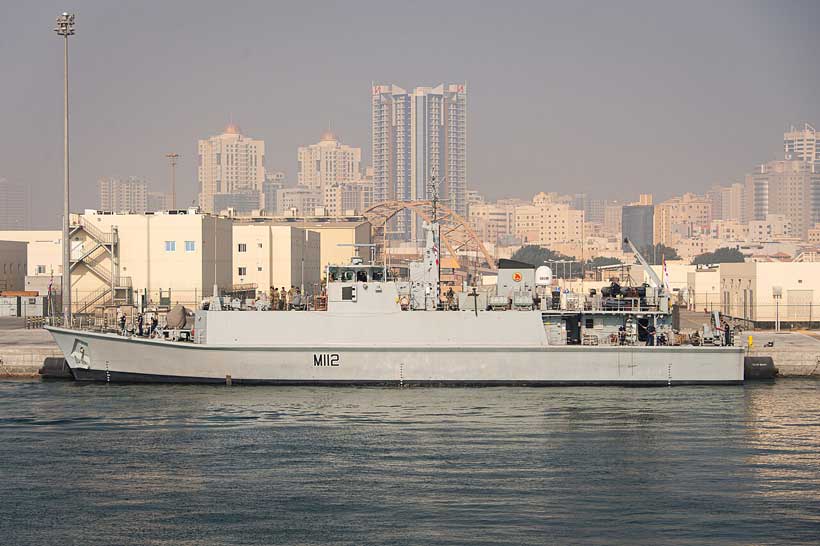
The United Kingdom remains a significant, if sometimes understated, security actor in the region. Its permanent naval presence in Bahrain, alongside its role in maritime security, places it firmly within the region’s defence architecture. Yet in recent years, Britain’s broader position has appeared comparatively restrained, shaped by competing global priorities and significant resource and funding constraints.
At a moment when Bahrain is actively operationalising C-SIPA, the UK cannot afford to treat it as an outlying. The agreement aligns closely with British interests, bringing together two of the UK’s closest security partners, reinforcing collective deterrence, and providing a framework for precisely the kind of integrated security cooperation that the Gulf has long lacked.
More importantly, the current confrontation with Iran underscores why such integration matters. The threats facing the regions with missile attacks and maritime disruption are not confined by bilateral arrangements. They demand coordinated responses, shared intelligence, and interoperable capabilities.
For the United Kingdom, the implication is clear. The agreement should be treated not as a diplomatic add-on but as a priority pillar of its long-term security strategy in the Gulf. That means sustained engagement in its mechanisms, particularly its defence coordination structures, and a willingness to invest political and military capital in ensuring its success.
Bahrain has made its position clear through action. The question is whether the United Kingdom will match that commitment.
