


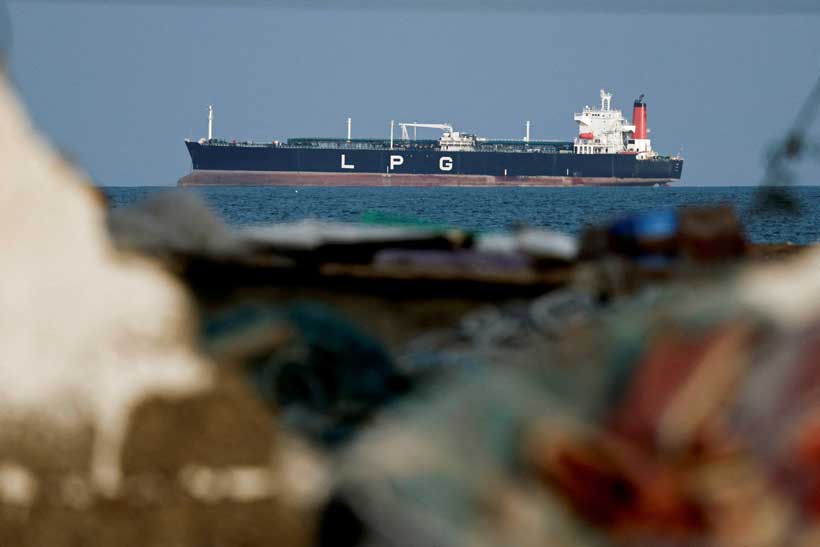
This article discusses the energy crisis affecting Europe following the closure of the Strait of Hormuz, a vital maritime route supplying EU member states with LNG and jet fuel. The geopolitical uncertainties unfolding in the Middle East have shaken the Brussels economy, driven up inflation, and threatened industrial stability in countries like Germany, a key economic hub. The author argues that this crisis is evidence of the fragility of Europe’s strategic autonomy and its systemic energy dependence. Thus, the author will focus on three arguments: the systemic vulnerability of the EU’s energy integration, the issue of strategic autonomy within the context of the Common Foreign and Security Policy (CFSP), and the importance of accelerating the transition toward green energy sovereignty as a long-term security solution.
The concept of complex interdependence forms the basis of the author’s first argument. It explains that strong economic ties often lead to systemic vulnerabilities. According to studies of the European region, single-market integrations such as the Schengen Area and the Eurozone create a significant reliance on energy supplies from outside the region. The closure of the Strait of Hormuz demonstrates that sufficient energy security is not commensurate with economic growth through the global free market. This highlights a flaw in European integration: although the European Union possesses strong economic regulatory power internally, it remains a fragile actor externally because its industrial base depends on the stability of maritime routes worldwide a factor beyond its political control.
In particular, this systemic issue is evident in the highly integrated European Union single market. As a result, an energy supply disruption at a single shipping point anywhere in the world could cause economic damage across the entire region. The European Union is heavily reliant on maritime routes in the Middle East because its economy depends heavily on imports of liquefied natural gas (LNG) and crude oil. If the Strait of Hormuz were closed, not only would commodity prices rise, but the manufacturing supply chains that are vital to the European economy would also be threatened. The competitiveness of European products in global markets would decline if energy costs were to surge drastically across member states. Ultimately, this could lead to uncontrollable inflationary pressures and threaten regional economic growth.
Germany is the country most affected by this systemic vulnerability, as it drives the European Union’s economic growth. Germany’s manufacturing sector relies heavily on smooth logistics flows through the Strait of Hormuz to ensure the availability of fuel and raw materials for production. If this route is cut off, Germany faces the risk of deindustrialization due to soaring operational costs, which would negatively impact the entire interconnected European supply chain. The author emphasizes that if the main pillar of the region’s economy falters, the stability of the euro and social cohesion in other member states will also be threatened, ultimately proving that a member state’s national energy resilience is the foundation for the collective resilience of the European Union as a whole.
Stay ahead of the geopolitical week.
MD Briefing delivers expert analysis across five global fronts — the Indo-Pacific, energy, geoeconomics, European security, and the Middle East — every Monday morning. Free.
In the second section, the author focuses on the challenges to strategic autonomy within the framework of the European Union’s Common Foreign and Security Policy (CFSP), which has been increasingly put to the test by the crisis in the Strait of Hormuz. The author argues that the closure of this maritime route places Brussels in a dilemma between maintaining solidarity within the transatlantic alliance with the United States or taking independent diplomatic action as an autonomous global security actor. In studies of European foreign policy, the European Union’s ability to project its power and influence beyond the region is often hindered by the divergent national interests of its member states. However, this existential energy crisis should serve as a catalyst for the European Union to strengthen the role of the European External Action Service (EEAS) in collectively mediating and securing energy routes, without having to rely entirely on the security umbrella of external actors.
Given the diversity of interests among EU member states, this issue becomes even more complex. Although the European Union strives to speak with one voice on the international stage, the author recognizes that the crisis in the Strait of Hormuz often elicits varied reactions. Member states heavily reliant on the automotive industry may demand a more accommodating approach toward energy-producing nations, while others may focus on political cooperation with NATO allies. This lack of alignment risks creating an opening for external actors to employ a “divide and conquer” strategy that could weaken Brussels’ overall bargaining position. Therefore, the success of a common foreign policy in addressing this crisis depends heavily on the extent to which the European Union can synthesize diverse national interests into a solid collective energy security strategy.
The author believes that a failure to harmonize this strategic autonomy could lead to a serious threat of policy disintegration within the European Union. If Brussels is unable to provide credible energy security guarantees through collective instruments, member states will be driven to pursue bilateral “backdoor diplomacy” with parties outside the region in order to safeguard their own national interests. This individual self-preservation will ultimately erode the European Union’s legitimacy as a united political bloc and reduce the effectiveness of the CFSP to mere rhetoric devoid of executive power. Therefore, the handling of the crisis in the Strait of Hormuz must be viewed as an opportunity for the European Union to prove that regional solidarity functions not only in the context of internal economic regulation but is also capable of serving as a solid defensive bulwark against extreme external geopolitical pressures.
The author highlights a third argument, that the crisis in the Strait of Hormuz should be seen as an impetus for the European Union to embrace green energy through the European Green Deal (EGD) and reduce its dependence on fossil fuels. According to the author, reliance on fossil fuels transported via maritime routes which are prone to conflict now poses a real threat to national security in the region. In such a situation, the only way to break the chain of geopolitical dependence is to shift energy to locally produced renewable resources in Europe. By accelerating investment in wind, solar, and hydrogen energy, the European Union helps achieve global climate targets and builds a vital economic defense. This economic defense cannot be affected by political changes in the Middle East or energy embargoes from other parties.
In addition to internal strengthening, accelerating this green transition requires a redefinition of the European Union’s foreign relations through a more adaptive European Neighborhood Policy (ENP). The author argues that the European Union must begin shifting the focus of its energy cooperation from conflict-prone maritime routes toward land-based strategic partnerships with neighboring countries that possess abundant renewable energy potential. By establishing green energy corridors in the Mediterranean or Balkan regions, the European Union can create a safer, more stable, and sustainable supply system. This transformation will not only strengthen the region’s energy resilience against the threat of a physical blockade in the Strait of Hormuz but also position the European Union as a global leader in a new energy governance framework that is no longer subject to the geopolitical dictates of conventional fossil fuels.
The three arguments above namely, the systemic vulnerability of the EU’s energy integration, the challenges to strategic autonomy within the Common Foreign and Security Policy (CFSP), and the urgency of accelerating the transition toward green energy sovereignty have demonstrated that the European Union is now at a crucial historical turning point. The author recognizes that the stability of the European region can no longer be separated from the security of global energy routes, which have long been considered stable. Therefore, the crisis in the Strait of Hormuz must be viewed not merely as a temporary economic threat, but as a warning for Brussels to immediately transform its energy foundations. Ultimately, only through more solid political integration and autonomous energy independence can the European Union free itself from global geopolitical hostage situations and ensure its existence as a major power on the international stage of the future.
