


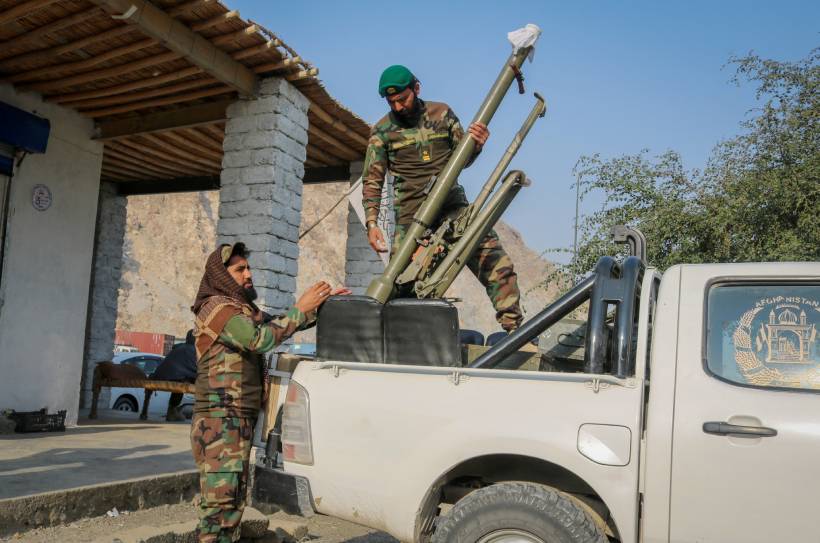
The CSTO discussions in Dushanbe and the April 8 Afghanistan working group should not be dismissed as routine security theater. The organization is reacting to something real: Afghanistan remains unstable in ways that do not always produce daily headlines but still generate regional danger. The threat is no longer only a dramatic military collapse. It is the quieter, harder problem of weak governance, militant entrenchment, narcotics routes, and border stress accumulating at the same time. That is exactly why the CSTO keeps returning to Afghanistan as a standing security file rather than treating it as yesterday’s crisis.
In my view, the core of the CSTO argument is sound even if some member states use alarmist language: Afghanistan has become a permissive environment where insecurity can travel outward. A recent UN sanctions-monitoring report said the de facto authorities continued to provide a permissive environment for several terrorist groups, while a 2024 UN assessment warned that Taliban tolerance of armed actors across many provinces creates conditions for terrorism to project into the region. Even OHCHR experts have stressed that all authorities, including the Taliban, must prevent groups like TTP from threatening lives beyond Afghanistan’s borders.
A Weak State Still Exports Instability
Look at the numbers, and the CSTO concern starts to look less ideological and more practical. According to OCHA’s 2025 response plan, 22.9 million people in Afghanistan need humanitarian assistance. The HNRP crisis overview and the UNICEF appeal show how deep the social strain runs: 3.5 million acutely malnourished children and 1.1 million women are projected to require treatment. The latest IPC analysis says 17.4 million people are expected to face acute food insecurity, while the UNHCR country profile says 3.2 million Afghans remain internally displaced and 5.2 million more are refugees or in refugee-like situations abroad. A country under that much pressure does not contain insecurity neatly within its own borders.
Stay ahead of the geopolitical week.
MD Briefing delivers expert analysis across five global fronts — the Indo-Pacific, energy, geoeconomics, European security, and the Middle East — every Monday morning. Free.
The second statistic that matters is movement. The World Bank press release and its linked Afghanistan Development Update estimate that between 4 million and 4.7 million people returned to Afghanistan from September 2023 to July 2025. Meanwhile, OCHA’s returnees overview reported that by 26 July 2025, about 1.668 million Afghans had already returned in 2025 alone, including 1.28 million from Iran and 389,000 from Pakistan. The UNHCR regional emergency page makes clear that this is not a temporary administrative issue. It is a border-management shock. When districts absorb huge returnee flows while jobs, housing, and public services are already weak, the result is exactly the sort of disorder in which smugglers, recruiters, and armed couriers thrive.
Militancy and Smuggling Feed Each Other
The CSTO is also right to connect terrorism with criminal economies. UNODC’s 2024 release says opium cultivation in Afghanistan increased 19 percent in 2024 to 12,800 hectares. The agency’s Drug Insights and socio-economic brief add that production rose to 433 tons, about 30 percent above 2023, even though cultivation remains far below pre-ban levels. That matters because it shows the narcotics problem has changed form, not disappeared. A lower national total does not automatically mean a lower regional threat if production shifts geographically, prices remain high, and trafficking routes adapt faster than border controls.
On the militant side, the risk is not abstract. The UN monitoring picture has become more explicit, not less. The TTP sanctions profile notes estimates of 30,000 to 35,000 members. Even allowing for inflated or unevenly deployable numbers, that is enough to explain why Tajikistan and other neighbors do not see Afghanistan as simply Kabul’s internal affair. The CSTO’s own Tajik-Afghan border program has already moved into concrete planning for weapons, equipment, and border-protection systems for Tajik troops. Organizations do not make those investments when they believe the threat is imaginary.
The Right Response Is Pressure Plus Realism
Still, recognizing the threat is only half the job. The wrong lesson would be to reduce Afghanistan policy to barricades and rhetoric. Afghanistan’s economy may be growing on paper, but the Global Terrorism Index 2026 is a reminder that terrorism flourishes in under-governed, cross-border environments, while the World Bank says Afghan GDP growth of 4.3 percent in 2025 came alongside 8.6 percent population growth, a projected 4 percent fall in per-capita GDP, and youth unemployment affecting nearly one in four young Afghans. That is not a foundation for lasting stability. It is a formula for recruitment, corruption, and outward pressure on neighbors.
So yes, the CSTO is justified in saying Afghanistan still poses a serious regional security threat. But the smart response is not panic. It is disciplined containment: tighter intelligence-sharing, harder action against listed groups, stronger anti-smuggling cooperation, better border surveillance, and continued humanitarian support for ordinary Afghans so desperation does not become the region’s next security export. Tajikistan may feel the danger first, but the warning applies more broadly, including to Kyrgyzstan and the rest of Central Asia: when governance remains weak and armed groups keep room to maneuver, geography does the rest.
