


Amidst the West Asia conflict, some important developments have taken place that clearly reiterate the growing importance of economic ties between India and East Asia as well as Southeast Asia and the importance of India’s state governments in giving a fillip to the country’s Act East Policy.
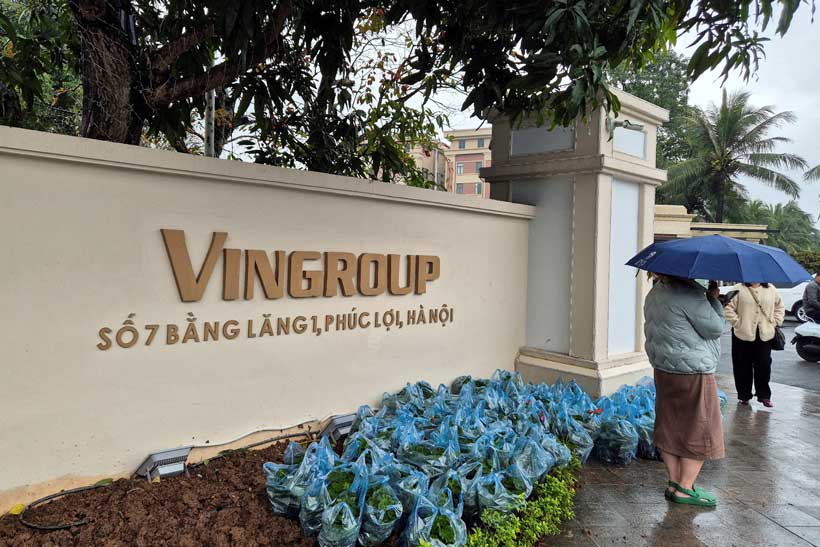
First, Vietnam’s Vingroup has signed an MOU with the Maharashtra government, on April 10, for exploring investments to the tune of $6.5 billion in the state across several sectors, including integrated urban townships, electric mobility solutions, and renewable energy. Vingroup plans to invest in the Mumbai metropolitan region and other parts of the state. In 2024-2025, Maharashtra accounted for 39% of India’s total FDI flows.
Vingroup’s presence in other Indian states
VinFast—an electric vehicle (EV) venture of Vingroup—is setting up a $2 billion electric vehicle manufacturing plant in Thoothukudi (Tamil Nadu), which was inaugurated by Tamil Nadu Chief Minister MK Stalin in August 2025. In December 2025, the company announced that it would be further expanding this facility.
Stay ahead of the geopolitical week.
MD Briefing delivers expert analysis across five global fronts — the Indo-Pacific, energy, geoeconomics, European security, and the Middle East — every Monday morning. Free.
It has also signed an MOU with the Southern Indian state for investments in several areas, including entertainment, hospitality, and tourism. In this context, an MOU was signed between VinFast Asia and the Tamil Nadu state government in February 2026 during the Tamil Nadu Global Tourism Summit 2026 held at Mamallapuram near Chennai.
On the sidelines of the Telangana Rising Summit in December 2025, the Vietnamese company signed an MOU for investing $3 billion across several sectors.
Pham Sanh Chau, chief executive officer of Vingroup Asia and VinFast Asia, said that the company saw immense potential in Telangana and said:
‘Vingroup’s multi-sector commitment, spanning smart cities, solar power, and advanced social infrastructure such as hospitals and schools, demonstrates the stability and breadth of Telangana’s industrial policy.’
Second, Japan’s Ministry of Foreign Affairs has set up a Japan-India Economic Affairs Division for giving a boost to Japanese investment in India. This will come under the Southwest Asia Division, Southeast and Southwest Asian Affairs Department, of Japan’s Ministry of Foreign Affairs.
The division will help Japanese companies in tackling some of the important challenges that Japanese companies face in India—especially state-level regulations and the complex tax structure. Apart from strengthening business linkages, the division also seeks to strengthen cooperation in strategically important areas like critical minerals.
While Japan has invested well over $40 billion ($43 billion) in India ever since 2000, both sides realize that it is well below the actual potential. According to estimates, 1400 Japanese companies operate across India.
During Indian PM Narendra Modi’s Japan visit in August 2025, the East Asian nation committed to making investments to the tune of $68 billion over the next decade in sectors including Semi-Conductors, AI and clean energy.
Japan already has a significant presence in several states, including Haryana, Rajasthan, Tamil Nadu, Karnataka, and Gujarat. Japan has also been exploring opportunities in several other states. Several high-level delegations from India’s states—including those led by chief ministers—have visited Japan. The chief minister of Haryana, Nayab Singh Saini, visited Japan in October 2025, while the CM of Uttar Pradesh, Yogi Adityanath, visited East Asia in February 2026. The chief minister of Punjab, Bhagwant Mann, led a delegation to Japan in December 2025, while the chief minister of Telangana, Revanth Reddy, visited Japan in April 2025. During all these visits, there was an emphasis on attracting more investments from Japan across several sectors.
Finally, the state of Gujarat, on April 10, signed an agreement with Taiwan-linked Allegiance International Company Ltd. to develop an Indo-Taiwan Industrial Park in the Sanand-Dholera belt. The MOU was signed between the state’s department of science and technology and the company. While India’s economic ties with Taiwan have been expanding in recent years, it is important for state governments to play a more active role in the same.
Conclusion
In conclusion, India should continue to focus on further bolstering economic ties with ASEAN nations as well as South Korea and Japan. In a changing geopolitical and economic order, South Korea, Japan, Taiwan, and several ASEAN nations are seeking to explore new economic opportunities; India should leverage its advantages and further strengthen economic linkages with these countries. Indian states should also focus on strengthening economic ties across the ASEAN region—countries like Vietnam, the Philippines, and Indonesia do not get as much attention as some of the other countries in the region.
State governments have an important role to play in the same. It is important for states that have been left behind in the FDI race to proactively woo investors from these countries. Apart from holding investors’ summits, the concerns of overseas investors should also be addressed. The setting up of a Japan-India economic affairs division by Japan is important in this context.
Several Asian countries, such as Japan, Singapore, and South Korea, which already have a strong presence in India, are also exploring opportunities in states whose potential has been untapped so far. It is also important that the central government and state governments work jointly for giving a strong push to economic linkages between India and ASEAN countries as well as East Asian nations.
