


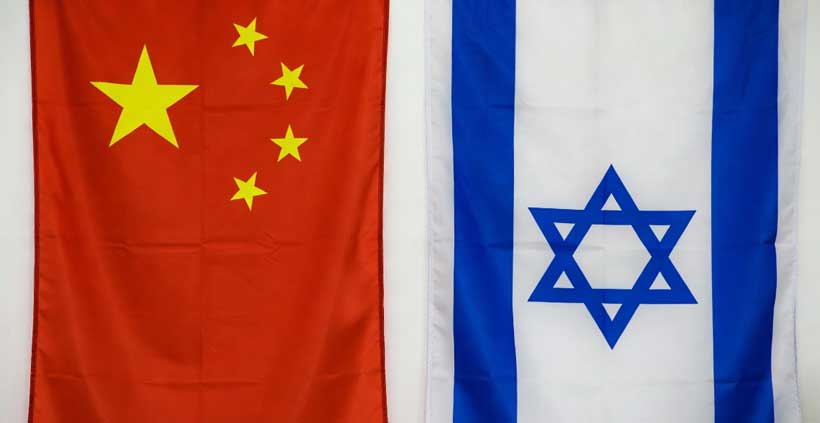
The appointment of Roman Gofman as the new head of Israel’s Mossad intelligence agency comes at a time of heightened tensions between Beijing and Tel Aviv. Several factors may lead China to cautiously monitor Mossad’s activities under his leadership, particularly regarding the Taiwan issue. Specifically, the Israeli Ministry of Defense is assisting its Taiwanese counterpart in developing the T-DOM missile defense system and integrating it with Israel’s Iron Dome system. The Chinese embassy in Israel issued strongly worded warnings to Israeli officials regarding visits to Taiwan, deeming them a threat to China’s core interests. Furthermore, Gofman’s appointment is linked to China’s relationship with Iran. China is closely watching any Israeli intelligence operations that might target Iranian facilities, especially under Gofman’s leadership. As Iran’s largest trading partner, China fears that any security instability in the region could jeopardize Beijing’s economic interests and energy supply routes. Although, as of April 14, 2026, no official statement had been issued by the Chinese government specifically commenting on the appointment of General Roman Gofman as the new head of the Israeli Mossad, due to China’s policy of noninterference in the internal affairs of other countries, including security and sovereign appointments, and its avoidance of direct comment on such appointments, as the Chinese Foreign Ministry rarely comments on changes in the heads of intelligence agencies around the world, considering it an internal matter, there is a general context governing Beijing’s view of this appointment and the developments related to it. This context stems from China’s implicit official position of prioritizing regional stability, and the understanding within relevant intelligence, military, defense, and security circles in Beijing that any change in the Israeli intelligence leadership could lead to an escalation with Iran (Beijing’s strategic partner), especially since Roman Gofman stated immediately after his appointment as the new head of the Mossad that the mission in Tehran is not yet complete.
Chinese analyses (through official agencies like Xinhua and Chinese military think tanks) regarding the appointment of Roman Gofman (who will assume the position of Mossad chief on June 2, 2026) focus on the implications of his purely field and operational background, which deviates from the agency’s classical intelligence traditions. Interested circles in China are closely watching the broader context of Israeli Prime Minister Benjamin Netanyahu’s selection of his military secretary, Roman Gofman, as the new head of the Mossad. Netanyahu officially approved the appointment on April 12, 2026, and Gofman is scheduled to take over on June 2, 2026, succeeding David Barnea. Regarding the nature of his selection, Gofman is described as Netanyahu’s loyal man, coming from a purely military background (the Armored Corps) with no prior intelligence experience. This has sparked division within Israel and is being closely monitored by international powers (including China) to assess the potential shift in the Mossad’s future strategy. The Chinese perspective concludes that the appointment of Roman Gofman indicates that the Mossad’s next phase will be more militarized and less focused on intelligence diplomacy, with a strong emphasis on direct confrontation zones (Iran, Syria, and Lebanon).
As for the military implications in the Chinese analysis of Roman Gofman’s appointment as head of the Israeli Mossad, they lie in his adoption of the fighting commander doctrine. Chinese sources highlight that Gofman is the first major general with an armored corps background to reach this position, reflecting a shift from a strategy of quiet covert operations to direct operational targeting. Chinese reports also emphasize his serious injury during the Gaza clashes on October 7, 2023, in the Israeli city of Sderot as evidence that he is a field general who prefers to be on the front lines. Chinese intelligence circles are analyzing Gofman’s adoption of the occupation of Gaza strategy. Chinese think tanks point to a controversial document Gofman prepared before his appointment as Netanyahu’s military secretary, in which he recommended imposing permanent military control over the Gaza Strip. Chinese intelligence and military analysts believe his selection reflects the Israeli leadership’s desire to integrate the concept of operational occupation into the Mossad’s foreign operations. These circles also note Gofman’s history of influence operations, specifically his involvement in unauthorized social media influence campaigns while commanding the Bashan Brigade (210) on the Syrian border. The Chinese interpret this as evidence of his tendency to break with conventional rules to achieve rapid field objectives. Chinese intelligence circles also interpret the appointment of Roman Gofman as an institutional shift within Israel, representing the end of the old guard. Chinese analysts see this appointment as the final nail in the coffin of the traditional Israeli intelligence establishment, with Mossad cadres being replaced by military loyalists from Netanyahu’s inner circle to ensure the implementation of bolder offensive strategies against Iran and its allies.
Here, Chinese intelligence and military circles, along with relevant military think tanks, analyzed the implications of Roman Gofman’s selection to understand his military field background. Gofman is the first immigrant from a former Soviet republic (Belarus) to reach this position. He is a field officer with a long career in the armored corps, rising through the ranks to become commander of the 75th Battalion and the 7th Brigade. He also commanded regional units, including the 210th Division (Bashan), responsible for the Golan Heights and the Syrian border, a strategically sensitive area for China to monitor Iranian influence in Israel. He also commanded the National Ground Training Center, a position he held at the outbreak of the 2003 Gaza War. Gofman has no prior experience in institutional intelligence work within Mossad, as far as China is concerned. China views the selection of Roman Gofman to head the Mossad as a move driven by Netanyahu’s personal trust. Chinese circles describe Gofman as a loyalist to Netanyahu, having served as his military secretary since May 2014. Chinese intelligence and military analysis focuses on the appointment as an attempt to place an outsider at the helm of the Mossad, thereby breaking the dominance of Israel’s traditional intelligence elite. Consequently, relevant circles in Beijing are closely watching to see the extent to which this will lead to a shift in Israeli intelligence doctrine. Especially after Netanyahu praised Gofman as a leader possessing initiative, creativity, and operational acumen, considering that the next phase requires leadership with an offensive mindset to confront multi-front threats, particularly Iranian expansion. This is something Chinese circles are closely monitoring and analyzing due to the sensitive timing, as the appointment comes at a time of escalating regional tensions. Gofman will be responsible for managing strategic files, including the Iranian nuclear program, regional proxy networks, and the repercussions of the events of October 7, 2023, in the Gaza Strip.
Stay ahead of the geopolitical week.
MD Briefing delivers expert analysis across five global fronts — the Indo-Pacific, energy, geoeconomics, European security, and the Middle East — every Monday morning. Free.
For these reasons, Chinese intelligence circles are closely observing the overall context of Roman Gofman’s appointment as head of the Mossad and analyzing all the accompanying and opposing internal Israeli criticisms. The appointment has faced criticism from current and former Mossad officials due to Gofman’s lack of intelligence experience. Especially given that the head of the advisory committee for appointing senior Israeli officials, Asher Grunis, voted against the appointment, despite the approval of the rest of the committee members. This is in addition to a number of controversial files that Roman Gofman failed to manage militarily, in intelligence, and on the ground in previous periods, particularly after questions arose about an incident dating back to 2022, when Gofman approved the use of an Israeli teenager in an online influence campaign against (Iran and Hezbollah). This led to the teenager’s subsequent arrest on charges of publishing classified information, accusing Roman Gofman of acting under his direction. Consequently, the family of this Israeli teenager is leading a major domestic campaign within Israel to condemn and reject the decision and exert maximum pressure on Benjamin Netanyahu’s government to reverse it. This is something China is closely analyzing.
