


Hopes for a quick resolution to the U.S.-Israel conflict with Iran faded following a prime-time address by President Donald Trump. In his speech, Trump signaled intensified military operations, including potential strikes on Iran’s energy and oil infrastructure, without providing a clear timeline for ending hostilities. The statement fueled market uncertainty and geopolitical tension, with oil prices surging past $108 per barrel and global stock markets reacting negatively.
Trump framed the war as a short-term, decisive operation, asserting that Iran would be brought “back to the Stone Ages.” However, analysts and investors expressed skepticism, noting the absence of a defined strategy or exit plan. The continuation of military engagement risks escalating the conflict and undermining global confidence in energy security, trade, and regional stability.
Escalating Threats and Regional Fallout
Iran responded to U.S.-Israeli strikes with warnings of more “crushing, broader, and destructive” attacks. Missile debris has been reported across the region, with minor damage noted in Abu Dhabi, intercepted drones over Saudi Arabia, and continued missile salvos toward Israel. The conflict has disrupted civilian life and heightened insecurity in neighboring states, prompting the U.S. embassy in Baghdad to advise Americans to leave Iraq amid looming threats from Iran-aligned militias.
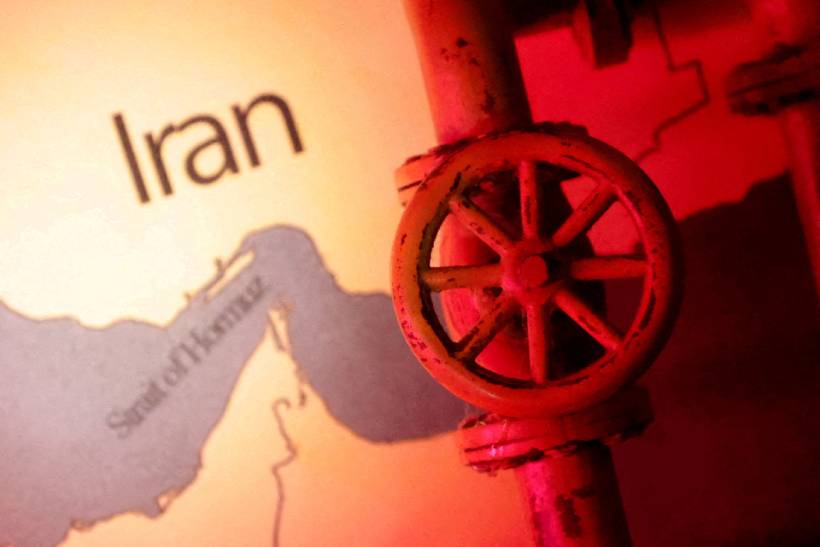
The conflict has effectively closed the Strait of Hormuz, a critical conduit for roughly a fifth of global oil and LNG supply. This blockade has intensified energy costs worldwide and triggered warnings from international financial institutions, including the IMF and World Bank, about the war’s asymmetric global effects.
Stay ahead of the geopolitical week.
MD Briefing delivers expert analysis across five global fronts — the Indo-Pacific, energy, geoeconomics, European security, and the Middle East — every Monday morning. Free.
Economic and Market Implications
The war’s direct impact on global markets is already visible. Benchmark crude oil prices jumped 7.5%, European and U.S. stock futures fell, and Asian bourses recorded significant losses. Rising energy costs exacerbate inflationary pressures in consumer economies and create uncertainty for businesses reliant on stable fuel supplies.
Analysts note that markets react not only to the immediate supply disruption but also to the broader unpredictability of geopolitical strategy. Trump’s framing of the conflict as primarily a U.S.-driven operation, coupled with his insistence that other nations reliant on the Strait of Hormuz should take responsibility, has left investors without confidence in an imminent resolution.
Diplomatic Channels and the Role of Pakistan
Efforts to mediate the conflict are ongoing but remain tentative. Pakistani intermediaries have engaged with U.S. Vice President JD Vance, signaling potential avenues for negotiation with Iran. Pakistan’s strategic position as a country with good relations with both the U.S. and Iran makes it a potential bridge for dialogue. However, no confirmation exists yet regarding U.S. willingness to participate in direct talks hosted by Pakistan.
Iran, meanwhile, has requested a guaranteed ceasefire before halting attacks. Analysts warn that any unilateral cessation of the war by the U.S. without a negotiated settlement could embolden Iran, providing the country with greater leverage and regional influence.
Analytical Interpretation
The current trajectory suggests a prolonged conflict with both regional and global implications. Militarily, the U.S.-Israel approach risks escalation without a clear path to sustainable resolution. Politically, Trump’s rhetoric strengthens domestic posturing but weakens international confidence, as allies express hesitation in reopening the Strait of Hormuz without a ceasefire. Economically, prolonged disruption threatens energy markets and global trade, while socially, civilian populations across the Middle East remain exposed to both direct and indirect consequences of the war.
Diplomatic engagement, particularly through intermediaries such as Pakistan, remains crucial to preventing further escalation. Yet, the absence of a defined exit strategy or mutually agreeable conditions for ceasefire highlights the fragility of current efforts. In the near term, markets, policymakers, and regional actors must contend with uncertainty, signaling that the Iran war’s resolution is likely to be complex, drawn-out, and highly contingent on multilateral coordination.
With information from Reuters.
