


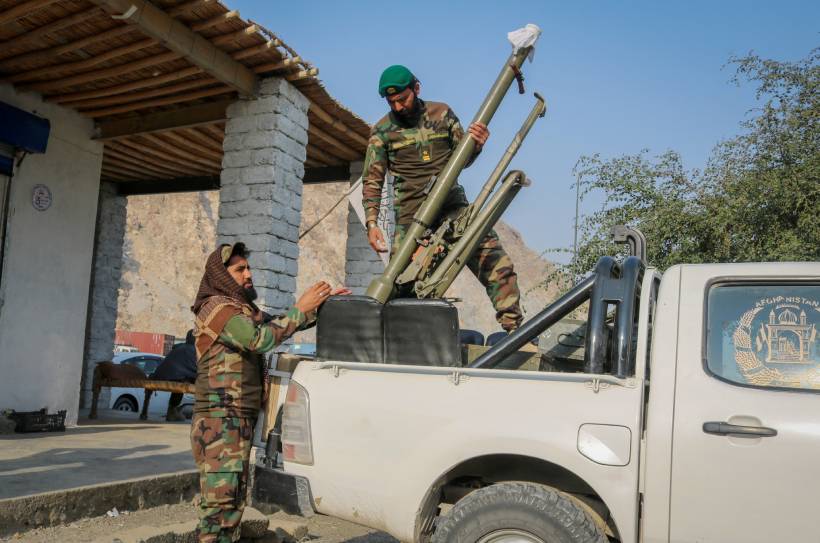
Air strikes on Kabul, Kandahar and other Afghan cities mark the sharpest escalation yet in months of cross-border tension between Pakistan and Afghanistan’s Taliban government. What began as intermittent border clashes has now evolved into open military exchanges, with Islamabad describing the situation as “open war.”
At the heart of the confrontation lies a familiar but unresolved issue: militant sanctuaries, contested sovereignty and a deeply mistrustful relationship between two neighbours bound by geography and history.
The Core Dispute: Militant Safe Havens
The central driver of tension is Pakistan’s accusation that Afghanistan is harbouring militants from Tehreek-e-Taliban Pakistan (TTP), commonly known as the Pakistani Taliban.
Islamabad says TTP leaders and fighters operate from Afghan territory and launch attacks across the border. These include suicide bombings and assaults on military and police targets. Pakistani officials claim to have evidence linking recent attack including one in Bajaur district that killed security personnel — to Afghan-based militants.
Stay ahead of the geopolitical week.
MD Briefing delivers expert analysis across five global fronts — the Indo-Pacific, energy, geoeconomics, European security, and the Middle East — every Monday morning. Free.
Kabul denies allowing its territory to be used against Pakistan. The Taliban government argues that Pakistan’s security failures are internal and rejects responsibility for cross-border militancy.
The dispute is mutual. Afghan authorities accuse Pakistan of tolerating fighters linked to Islamic State’s regional affiliate, a claim Islamabad rejects.
From Allies to Adversaries
When the Taliban returned to power in 2021, Pakistan initially welcomed the development. Then-Prime Minister Imran Khan described Afghans as having “broken the shackles of slavery.”
However, the relationship quickly deteriorated. Islamabad expected cooperation against the TTP. Instead, militant violence inside Pakistan rose sharply from 2022 onward, according to conflict monitoring groups.
The Afghan Taliban and the TTP share ideological roots and historical battlefield alliances. During the U.S.-led war in Afghanistan, the TTP fought alongside Afghan Taliban factions. That legacy complicates Pakistan’s demand that Kabul decisively dismantle the group.
The Durand Line: A Volatile Frontier
The two countries share a rugged 2,600-kilometre border known as the Durand Line — a boundary Afghanistan has historically disputed.
Clashes frequently erupt along this frontier. Border closures have repeatedly disrupted trade and movement, hurting local economies and deepening resentment.
Previous fighting in October killed dozens before mediation by Turkey, Qatar and Saudi Arabia produced a fragile ceasefire. That truce has now effectively collapsed.
What Sparked the Latest Fighting?
The latest escalation followed Pakistani claims of “irrefutable evidence” linking Afghan-based militants to a series of attacks since late 2024.
Pakistan launched air strikes targeting what it described as militant camps inside Afghanistan. Kabul and the United Nations reported civilian casualties. Afghanistan then carried out retaliatory attacks on Pakistani border positions, prompting broader Pakistani strikes on Taliban military installations in major cities.
The conflict has shifted from targeting non-state militants to directly hitting state-linked Taliban facilities — a significant escalation.
Who Are the Pakistani Taliban?
Tehreek-e-Taliban Pakistan was formed in 2007 as an umbrella group of Islamist militant factions operating in northwest Pakistan.
The group has carried out attacks on markets, mosques, airports and military bases. It was responsible for the 2012 attack on schoolgirl Malala Yousafzai, who later won the Nobel Peace Prize.
Pakistan has conducted multiple military operations against the TTP. While violence declined after a major offensive ended in 2016, attacks have resurged in recent years.
Military Balance and Escalation Risks
On paper, Pakistan’s military superiority is overwhelming. With over 600,000 active personnel, hundreds of combat aircraft and nuclear capability, it far exceeds the Taliban’s estimated 172,000 fighters and limited air assets.
However, military asymmetry does not guarantee stability. The Taliban’s strength lies in guerrilla warfare, border raids and asymmetric retaliation. Sustained cross-border insurgent-style attacks could offset conventional disadvantages.
Escalation risks include a prolonged cycle of air strikes and artillery exchanges along the border, guerrilla raids or suicide attacks in Pakistani urban centres, and increased regional involvement from mediating states.
What Happens Next?
Pakistan appears poised to intensify military pressure if militant attacks continue. Afghan retaliation is likely to remain asymmetric targeting border posts and exploiting rugged terrain.
Neither side benefits from full-scale war. Pakistan faces economic strain and internal security challenges. Afghanistan’s Taliban government lacks international recognition and depends on regional trade flows.
Yet the structural drivers unresolved border disputes, militant networks and mutual distrust remain firmly in place. Unless sustained diplomacy produces a new security framework, the fighting risks becoming a recurring feature of relations between two uneasy neighbours whose conflict is rooted as much in history as in present-day violence.
With information from Reuters.
