


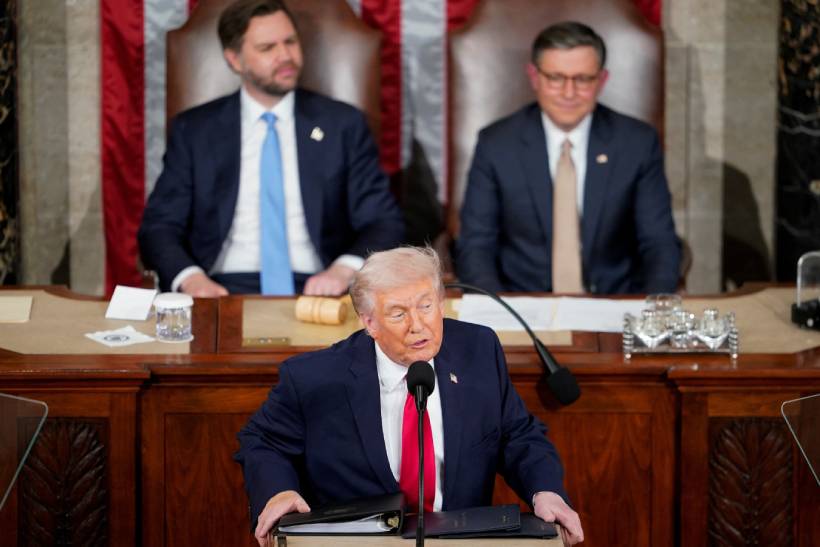
During his State of the Union address, President Donald Trump made one of his clearest public statements yet about the possibility of military action against Iran. He told Congress and the nation that he would not allow what he called the world’s leading sponsor of terrorism to obtain a nuclear weapon. Although he did not formally announce a strike, the tone of his remarks signaled that force remains an option.
The speech came amid heightened military positioning in the Middle East and growing speculation in Washington about whether the United States could be moving toward a direct confrontation with Tehran. Despite the buildup, the administration has provided limited detailed explanation to the broader public about the scope or objectives of any potential operation.
The Argument Presented in Congress
Trump cited Iran’s alleged support for militant proxy groups, its ballistic missile development, and its nuclear activities as core threats. He accused Tehran of restarting aspects of its nuclear program and working toward missile capabilities that could eventually reach the United States. He also blamed the Iranian government for violent crackdowns on domestic protests, referencing casualty figures that are significantly higher than most independent estimates.
Iranian officials rejected these accusations. Tehran maintains that its nuclear program is designed for civilian energy production and denies pursuing nuclear weapons. Its foreign ministry dismissed the U.S. claims as fabrications and political propaganda.
Stay ahead of the geopolitical week.
MD Briefing delivers expert analysis across five global fronts — the Indo-Pacific, energy, geoeconomics, European security, and the Middle East — every Monday morning. Free.
Secretary of State Marco Rubio briefed senior congressional leaders ahead of the address, underscoring the seriousness of the situation. Meanwhile, Senate Democratic Leader Chuck Schumer publicly argued that any military action should be openly debated rather than conducted in secrecy, warning that hidden operations can expand into prolonged conflicts.
Political Risks at Home
Trump’s remarks highlight a tension within his own political identity. He rose to national prominence partly by criticizing “forever wars” in Iraq and Afghanistan and promising a more restrained foreign policy under the banner of “America First.” Yet a strike on Iran could evolve into a prolonged regional conflict, particularly if Tehran retaliates through allied militias or asymmetric tactics.
Public opinion appears cautious. Polling suggests most Americans believe military force should only be used when facing a direct and imminent threat. With midterm elections approaching, any escalation carries domestic political consequences alongside international risks.
Strategic Context
A direct military confrontation with Iran would represent the most aggressive U.S. move against the country since the 1979 revolution. Beyond immediate military considerations, the stakes include global energy markets, regional alliances, and the credibility of U.S. deterrence. Even limited strikes could trigger broader escalation across the Middle East.
Trump attempted to balance firmness with restraint, stating that he prefers peace but will confront threats when necessary. The ambiguity leaves room for negotiation while maintaining pressure on Tehran.
Analysis
The speech appears to function primarily as strategic signaling rather than a declaration of imminent war. By publicly emphasizing a nuclear red line, Trump increases diplomatic leverage while preparing the political groundwork in case force becomes necessary. The language serves multiple purposes: deterring Iran, justifying policy to Congress, and reassuring voters who prioritize national security.
However, history shows that once military assets are deployed and rhetoric escalates, decision-making space narrows. Even if the intention is deterrence, miscalculation becomes more likely. The key question is whether this moment leads to renewed negotiations or whether momentum and domestic pressures push both sides toward confrontation.
At this stage, the address reads less like a final step toward war and more like a high-stakes warning. Whether it remains that way will depend on diplomacy, intelligence assessments, and political calculations in the weeks ahead.
With information from Reuters.
