


The ongoing violence in Myanmar’s Rakhine region has deep roots, and any unbiased conversation about this issue must be a polyphony of voices, not a monologue from just one side. In 2016-2017, the Myanmar Armed Forces (Tatmadaw) carried out a military operation against the Islamist terrorist group Arakan Rohingya Salvation Army (ARSA), which led to accusations of genocide. The consequences of the 2016-2017 clashes were devastating both for Myanmar’s image on the international stage and for the nation’s domestic politics.
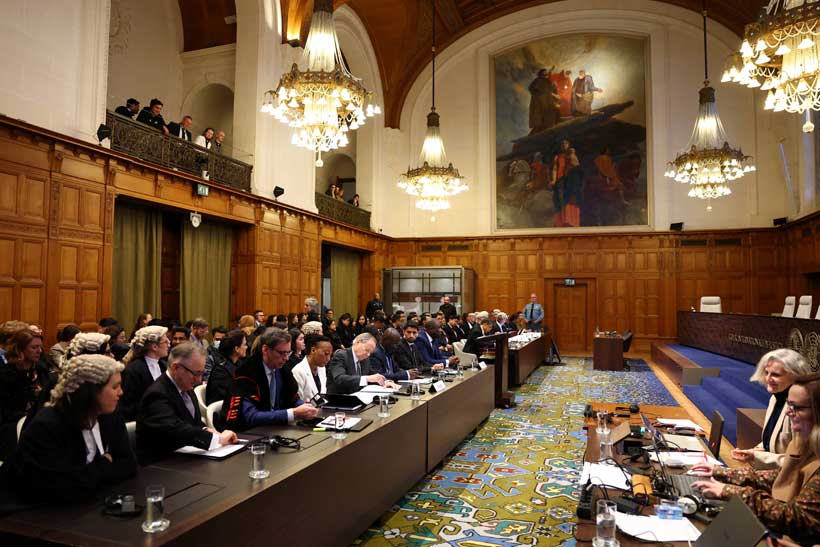
Recently, the International Court of Justice (ICJ) held hearings in the case of Gambia v. Myanmar, which examined the Rohingya genocide. Gambia, whose case, filed in 2019, was supported by member states of the Organization of Islamic Cooperation (OIC), insisted on Myanmar’s responsibility—not just its armed forces, but the entire state—for deliberate ethnic cleansing committed with genocidal intent. Myanmar’s representatives responded by arguing that a counter-terrorism operation had taken place, aimed at neutralizing the jihadist cancer and eliminating the problem of illegal migration in Rakhine State.
The ICJ’s verdict is expected in late 2026 or early 2027, and it’s already clear that it will set a landmark precedent for all cases involving accusations of genocide. The legal nuances of the case can be explored indefinitely, but it’s also interesting to consider how the Gambia-Myanmar dispute, and of course the court’s decision, impacts the architecture of international relations in Southeast and South Asia, and far beyond. It appears the degree of risk to regional security in the case of the multi-faceted conflict in Rakhine is being greatly underestimated.
The reasons for the prevalence of pro-Rohingya narratives in the media, policy memos, and academia are understandable and, to some extent, even excusable. However, social justice warriors specializing in Rakhine and the Rohingya are themselves descending into hatred. After the publication of The Time issue featuring a photo of the venerable Burmese monk Ashin Wirathu and the headline The Face of Buddhist Terror, it became clear that not only Myanmar but the entire Buddhist world, regardless of Theravada or Tibetan Buddhism, will not tolerate such insults. The ICJ’s verdict may bring joy to some and disappointment to others, but it appears to be a harbinger of things to come.
Stay ahead of the geopolitical week.
MD Briefing delivers expert analysis across five global fronts — the Indo-Pacific, energy, geoeconomics, European security, and the Middle East — every Monday morning. Free.
The best tribute to the victims of those tragic events, regardless of citizenship, ethnicity, or religion, should be a dispassionate analysis and honest forecast of the dangers threatening the region.
Introduction to the Myanmar Narrative: Key to Understanding Naypyidaw’s Behavior
Myanmar’s perspective on the Rakhine crisis is usually dismissed with emotional references to the repressive nature of Tatmadaw and the responsibility of Buddhist nationalism for the suffering of the Rohingya. This one-sided coverage hardly contributes to an understanding of the causes of the tragedy. The ICJ hearings allowed the Myanmar delegation to present its version of events, which is interesting in itself, as it exemplifies a certain political logic that is not unique to Myanmar.
Myanmar public opinion’s interpretation of the 2016-2017 Rakhine crisis is complicated by the legacy of colonialism, fears of territorial loss, and demographic threats. Before anything else, it should be noted that Myanmar categorically refuses to refer to the Rohingya as an ethnic group (one of 135 “national races”), but only as Bengalis. The consensus among people of Myanmar (primarily the Bamar and Rakhine) on this issue is so strong that even Pope Francis, known for his liberal theology, was forced to refrain from using the term “Rohingya” during a visit to Myanmar, governed by the National League for Democracy (NLD), on the advice of the Catholic Archbishop of Yangon, Charles Maung Bo. Many consider such ethnopolitics a precondition for genocide, but it is more a matter of historical trauma inflicted during the years of British occupation of the lands of the former Burmese Empire, which in the case of Rakhine lasted from 1826 (for lower Burma from 1853, for upper Burma from 1885) until—with a break for the Japanese occupation of 1942-1945—independence in 1948.
As in several other cases, such as the six counties of Ireland, British rule was associated with radical changes in the ethnic and religious composition of the conquered areas. Rakhine (Arakan), annexed to the British Empire by the Treaty of Yandabo in 1826, became the object of intense economic exploitation, which went against the traditions of the region, which preserves the memory of the Arakanese kingdom of Mrauk U.
Rakhine’s rice plantations were in need of labor, and the British Raj consistently imported workers from Bengal, particularly from the Chittagong region. British censuses show an increase in the Muslim community from 10-13% in 1823 to 21% in 1872, 33.7% in 1911, and 38% in 1931. Remarkably, not a single official British document mentions the word “Rohingya,” referring exclusively to Muslims, Arakanese Mohammedans, Bengalis, and Chittagongians. Apparently, the word “Rohingya” is nothing more than a corruption of the word “Arakanese.” This is crucial to the case, as Rohingya activists such as Mohamed Yunus, author of A History of Arakan (Past & Present) (1994) and founder of the terrorist Rohingya Solidarity Organization (RSO), insist that their people have been indigenous to Rakhine since the Middle Ages. Moreover, some Rohingya nationalists point out that the Rohingya’s ancestors, who spoke Indo-European languages, settled in Rakhine before the Tibeto-Burman invasion of the land around the 9th century.
According to expert opinion from former UK Ambassador to Thailand Derek Tonkin, about 60% of the Rohingya are descendants of colonial-era migrant workers, about 30% are illegal immigrants of the post-independence era or their descendants, and only about 10% can say that their ancestors lived on this land before the First Anglo-Burmese War.
The religious specificity lay in the popularity of the Deobandi movement among migrants arriving in Rakhine from Bengal. This movement would later become the ideology of jihadist groups in Afghanistan, Pakistan, India, and Bangladesh, including the Taliban. The role of the Deobandi jihad in unleashing the “holy war” for Rakhine is comparable to the role of the Salafi sect in the genesis of terrorism in the North Caucasus, Syria, and Iraq.
Needless to say, even the recent nature of Muslim settlement in Rakhine and the colonial reasons for the arrival of Bengali Muslims there cannot justify any form of alleged ethnic cleansing. However, the persistence with which Rohingya politicians and their Islamic allies, on the one hand, and the Tatmadaw and the Buddhist Sangha, on the other, employ arguments based on the primordial, indigenous concept of nationalism demonstrates the exceptional importance of establishing the truth in the question of ethnic history, the “blood and soil” of Rakhine.
In the context of the civil war, the ICJ proceedings suddenly gave the military an excuse to play on Bamar nationalism and simultaneously accuse the National Unity Government (NUG) of siding with enemies of the nation and the Buddhist religion. Indeed, for politically active exiles, Gambia’s lawsuit presented an unpleasant challenge, as conforming to the mainstream requires unconditional support for the thesis of the Myanmar state’s culpability (both the Tatmadaw and the ousted government of Aung San Suu Kyi) in the alleged genocide. By refusing to accept the genocide claim, the NUG risks losing material support from the US, the EU, and leftist NGOs.
The ICJ has provided both sides—the Gambia, along with the Islamic Ummah, and Buddhist Myanmar—with a platform to present their arguments, rooted in history and the emotional experience of trauma, both Muslim and Buddhist. The judicial battle is turning into a clash of civilizations, in which identity is the primary weapon. This is extremely dangerous, but, alas, inevitable.
Rakhine Battlefield: Key Stakeholders Inside and Outside
The composition of the legal team representing Myanmar’s position in The Hague is striking. Myanmar’s lead counsel, Christopher Staker, a barrister from Essex, is also representing Israel in the Gaza genocide case. German professor Stefan Talmon, a member of the Myanmar delegation, is also known for denying genocidal intent in Israel’s actions in Gaza. An American citizen living in Myanmar, Rick Heizman, the director of the film Arakan—Ancient Buddhist Kingdom, Endangered by Jihad, was called as a witness. The fact that Myanmar’s interests in court were represented exclusively by Westerners, and that the entire team did not include a single lawyer from “friendly” Russia or China, makes one wonder about Naypyidaw’s hidden powers. It is also conceivable that there is hidden coordination of legal efforts between Myanmar and Israel, as the decisions of international justice in the Rakhine and Gaza cases are interdependent.
The Myanmar military’s concerns about the internationalization of the Rakhine crisis have a long history. Saudi Prince Khaled Sultan Abdul Aziz’s statement in 1992, during a visit to Rohingya refugee camps, about the need to “liberate fellow believers in Rakhine,” modeled on Operation Desert Storm, led to further militarization of the Myanmar-Bangladesh border in the 1990s. However, Bangladesh generally did not demonstrate aggressive intent against Myanmar even in 2017. The secular government of the Awami League, led by Sheikh Hasina, daughter of Bangladesh’s founding father, Sheikh Mujibur Rahman, remained deaf to the arguments of promoters of jihad.
The Awami League government was overthrown in August 2024, and since then, Islamist influence in Bangladeshi politics has grown sharply. Dhaka began to drift away from India and toward Pakistan (of which Bangladesh was a part until 1971) and China. The political tradition of the Mukti Bahini (independence fighters) was thrown into the dustbin, and the ideological vacuum was quickly filled by Islamic fundamentalists. Representatives of the Jamaat-e-Islami movement, at a meeting with Chinese Communist Party (CCP) officials in April 2025, proposed the creation of an independent Rohingya state.
The new atmosphere in Dhaka is reflected in the Bangladeshi Foreign Ministry’s protest of January 23, 2026, against Myanmar’s use of the term “Bengali” to refer to the Rohingya. The Ministry asserts that “[t]he Rohingyas are a distinct ethnic group with deep historical roots in Arakan, betraying modern borders and the incorporation of the region into the Burmese Kingdom in 1785.” From Myanmar’s perspective, this is an attempt by foreign powers to dictate their will on the most sensitive domestic issues. It can be assumed that if the ICJ proceedings end in Myanmar’s defeat, this and other similar statements, along with the verdicts of international courts, will form the basis for legal, diplomatic, and ideological preparations for revising the 1948 borders.
Myanmar intends to overcome the threat from Bangladesh through consensus with Pakistan. During a visit to Pakistan, Foreign Minister Than Swe held talks with his Pakistani counterpart, Ishaq Dar, which resulted in mutual understanding on a number of issues, including cooperation in the oil and gas sector, combating cyber fraud, and religious and cultural tourism (the ancient Buddhist civilization of Gandhara was located on Pakistani territory). The fact that the visit took place during the Hague proceedings is no coincidence. The Muslim movement in Rakhine, particularly the mujahideen insurgent groups, enjoyed Pakistani support in the post-independence period from 1948 to 1961. A popular theory among Myanmar and Indian military and intelligence communities is that Pakistan supports ARSA and RSO activities, a claim denied by the Pakistani side. At the same time, both Myanmar and Pakistan—albeit for different reasons—are client states of China, so even at the height of tensions, relations between the two countries never reached a breaking point. Then Swe’s visit to Islamabad confirmed Naypyidaw’s readiness for bilateral dialogue.
Even if we accept the possibility of a humanitarian intervention in Rakhine—modeled on Kosovo in 1999—the willingness of regional Islamic states to use force is constrained by China’s influence. The China-Myanmar Economic Corridor (CMEC), stretching from Yunnan to the deep-water port of Kyaukphyu in Rakhine, is China’s primary concern. The Myanmar military is playing on Beijing’s fears about the security of its infrastructure projects, presenting itself as the proper guarantor of agreements signed under the government of Aung San Suu Kyi in 2018. This position is disputed by the Arakan Army (AA), the Rakhine separatist armed force led by General Tun Myat Naing, which is fighting against both the Tatmadaw and the ARSA and Rohingya groups. As of early 2026, the AA controls 90% of Rakhine’s territory. However, the AA’s nation-building efforts are complicated by the ethnic cleansing carried out by Tun Myat Naing’s subordinates against the Muslim population. The AA does not yet control key Chinese infrastructure (primarily Kyaukphyu), but in its statements, it expresses its willingness to be a more reliable pro-Chinese actor than the “fascist junta.” Clearly, Beijing’s favor will go to whoever proves capable of being a long-term guarantor of Belt and Road Initiative (BRI) projects. If the Tatmadaw’s capabilities are insufficient after all its defeats on the battlefield and in the courtroom, Beijing could hand over the mandate for Rakhine to the Arakan Army or Bangladesh.
The US position on the civil war in Myanmar is puzzling. With Trump in the White House, one would logically expect a reconciliation with the Myanmar military, which has experience fighting Chinese-backed insurgent groups, and their involvement in containing China. Furthermore, the nationalist and counterterrorism rhetoric of Burmese generals against ARSA jihadism resonates with the anti-immigrant narratives of MAGA. However, the lobbying and media activity of Myanmar’s radical opposition is so strong that Washington continues its hostile policy toward Naypyidaw, limiting itself to cutting off funding for several opposition media outlets and lifting personal sanctions against several Myanmar officials. On reflection, a victory for Myanmar in the ICJ case is more in the US interest, as this plays into the hands of Israel, for whom Trump has strong feelings. Nevertheless, for now, Trump’s team prefers not to change anything in the American assessment of the events of 2016-2017.
Myanmar Strategic Thought: Tactical Victories and Strategic Deadlock
Analyzing the successes and failures of the Myanmar military, we must acknowledge tactical successes on the domestic front: the recapture of resource-rich areas (the ruby-colored capital of Mogok was recaptured from the TNLA last year) and the holding of elections, the results of which will be taken into account by surrounding countries. Nevertheless, Myanmar’s generals, who declare three national causes—non-disintegration of the Union, non-disintegration of national solidarity, and perpetuation of sovereignty—to be their priorities, must understand that a way out of the strategic impasse has not yet been found. Countering growing Western pressure through integration within a Sinocentric order will only lead to Myanmar’s complete absorption by its northern neighbor. This is precisely the case where China’s soft power is far more dangerous to national sovereignty than the overt hostility of the US or the EU.
The attempt to counter dependence on Beijing by deepening ties with Moscow does not seem like a good idea, given that Russia itself is rapidly becoming a Chinese satellite. Furthermore, Russian diplomacy, while preaching multipolarity, views Myanmar as China’s legitimate prey. Furthermore, Russian promises of assistance to its allies have been discredited by failures in Syria and Venezuela. As for attempts to establish contact with Trump, in addition to the White House’s reluctance to adopt a different approach to Myanmar, there is uncertainty about the prospects for Trumpism after the end of the current presidential term.
Attributing responsibility for the Rohingya genocide threatens to turn the Islamic world against Myanmar, especially since, unlike in 2017, Naypyitaw will no longer have the moral authority of Aung San Suu Kyi on its side. After failing to protect Palestinians from the Israeli blockade of Gaza, the Islamic community needs a show of force against a weak adversary, demonstrating the strength of the Ummah. This weak adversary could be Myanmar.
With Russia distant and unreliable and the US distant and still hostile, Naypyidaw’s only recourse is close and relatively friendly India, which is also concerned about changes in Bangladesh.
Conclusion
The unresolved Rohingya issue could theoretically become a casus belli, but it could also serve as a pivot for productive dialogue between Myanmar and the Organization of Islamic Cooperation (OIC), as only Islamic countries with Rohingya affinities can accept refugees and integrate them into their societies as full citizens. However, the example of Indonesia’s reception of the Rohingya demonstrates that the path to refugee acclimatization in an Islamic state is not so simple. But just as the Gaza issue requires Arab states to abandon their egoism and accept Palestinian refugees, the Rakhine issue must entail not only diplomatic protests and lawsuits in international courts, but also a willingness to offer these people a chance to find a better life in their new homeland.
In its foreign policy, Myanmar’s military government has demonstrated a knack for short-term gains and converting diplomatic ties—primarily with revisionist states (Russia and even Iran) or neighbors (Thailand and Laos)—into successes in the civil war. The military’s skillful maneuvering in relations with China has earned the latter’s favor after China’s unpublicized support for the rebel offensive in Northern Shan State (Operation 1027) in late 2023.
But these tactical victories, which merely allow for staying afloat, obscure a larger strategic plan that guarantees Myanmar’s survival in the 21st century. To avoid plunging completely into the chaos of a war of all against all and to avoid losing ancestral lands (Rakhine in particular), Myanmar diplomacy will have to become more intellectual and long-term. Perhaps the ICJ proceedings will test Myanmar’s elite, forcing them to reflect and reconsider their foreign policy doctrine and, equally important, to more actively promote Myanmar’s point of view abroad.
