


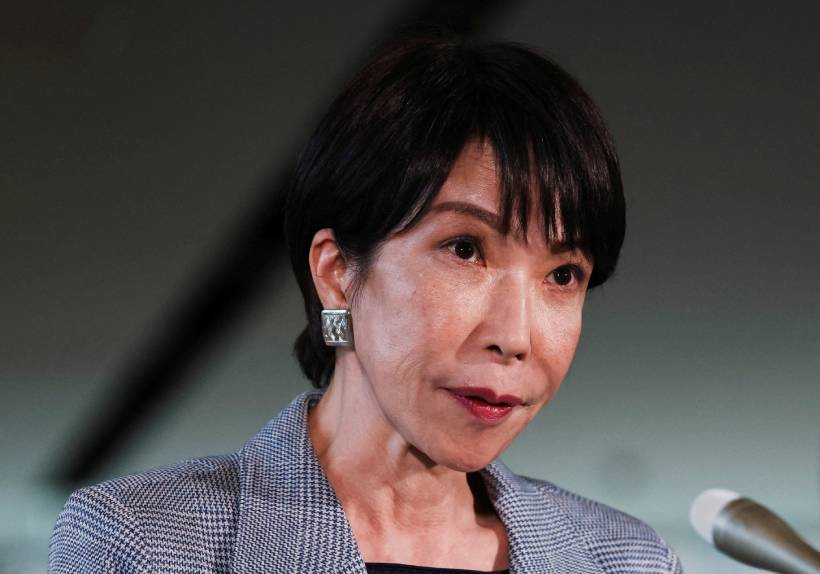
Yukio Okamoto died in April 2020, before he could witness Japan’s most serious diplomatic crisis with China in decades. But had the veteran diplomat, advisor to Prime Ministers Hashimoto and Koizumi, architect of Japan’s post-9/11 security response, and the most articulate voice of Japanese alliance thinking, lived to see Prime Minister Sanae Takaichi’s confrontation with Beijing, what advice might he have offered?
This is not mere counterfactual speculation. Okamoto left behind a substantial body of writings, peer-reviewed articles, policy speeches, and posthumously published memoirs, that articulate coherent principles for managing Japan’s external relationships. By applying these principles to the current crisis, we can reconstruct the advice Japan’s most influential practitioner-theorist might have given the nation’s first female prime minister as she navigates the most dangerous waters in Japan-China relations since normalization in 1972.
The crisis in context
The current diplomatic rupture began on November 7, 2025, when Prime Minister Takaichi stated in the National Diet that a Chinese attack on Taiwan could constitute “an existential crisis for Japan” under the 2015 Legislation for Peace and Security, potentially triggering Japanese military intervention in collective self-defense. Beijing’s response was swift and severe: travel advisories, tourism restrictions, seafood import bans, cancellation of cultural exchanges, and, most consequentially, restrictions on dual-use items and rare earth exports to Japan.
Stay ahead of the geopolitical week.
MD Briefing delivers expert analysis across five global fronts — the Indo-Pacific, energy, geoeconomics, European security, and the Middle East — every Monday morning. Free.
The crisis has exposed fundamental tensions: China demands an apology. Takaichi refuses to give. Japan protests Chinese consul Xue Jian’s threatening social media posts while Beijing dismisses complaints as interference in diplomatic personnel matters. Communication channels have narrowed precisely when they are most needed. Military incidents, including allegations of Chinese fighters locking fire-control radars on Japanese aircraft, have raised the dangers of accidental escalation.
Takaichi’s firm stance has proven domestically popular, with approval ratings hovering around 70 percent. She has called snap elections for February 8, 2026, staking her premiership on public endorsement of her approach. Her popularity at home, though, does not resolve the strategic dilemma abroad: How should Japan manage a deteriorating relationship with its largest trading partner while maintaining the alliance with an increasingly “transactional” United States?
Okamoto’s first advice: Remember the Alliance’s essential logic
Okamoto would likely begin by reminding Takaichi of the alliance’s fundamental exchange logic, and its implications for the China relationship.
Throughout his career, Okamoto articulated what he termed the “bases-for-defense” reciprocity: Japan provides territory and infrastructure enabling American power projection; America provides extended deterrence Japan cannot independently generate. This exchange, Okamoto insisted, established genuine reciprocity despite apparent asymmetry.
But Okamoto also recognized this arrangement’s constraint. “For Japan, the United States is the country’s only ally,” he wrote repeatedly. “Japan concentrates all its attention on smoothing its relations with the United States, routinely making difficult political decisions to keep the alliance on an even keel.”
The implication for the China crisis is sobering: Japan cannot afford a simultaneous rupture with Beijing and uncertainty about Washington. The Trump administration’s “transactional” approach, and its conspicuous silence as China imposed economic retaliation, has raised questions about American reliability that compound Tokyo’s exposure. Okamoto would advise that Japan must not assume Washington will automatically back its position. The alliance requires active cultivation, not passive assumption.
At the same time, Okamoto would likely caution against what analysts now call “Plan B”: reducing dependence on the United States through minilateral partnerships with “quasi-allies.” While such diversification has strategic logic, Okamoto understood that Japan’s alternatives remain limited. There is no substitute for American extended deterrence. The “only ally” vulnerability he identified remains a structural reality. Any approach that distances Tokyo from Washington, even rhetorically, risks the abandonment Okamoto feared throughout his career.
The advice: Maintain absolute clarity on alliance commitment while actively engaging Washington to ensure American support. Do not assume the alliance speaks for itself.
Okamoto’s second advice: Distinguish firmness from provocation.
Okamoto was no dove: He criticized Japan’s postwar pacifism as inadequate: “peace” that meant merely “non-military” rather than “peace protected by force.” He advocated expanded security roles and celebrated the 2014 collective self-defense reinterpretation as constitutional progress.
Okamoto also understood the distinction between firmness and provocation, between demonstrating resolve and triggering unnecessary escalation.
In his 2002 article, Okamoto addressed Japan’s concerns about American unilateralism: “Although Japan’s biggest concern with the United States is the U.S. tendency toward unilateralism, the United States finds worrisome Japan’s pacifist tendency in the face of international security issues.”
This observation reveals Okamoto’s nuanced positioning. He wanted Japan to contribute more to collective security, but he also worried about allies acting without coordination. Applied to the current crisis, Okamoto might have questioned whether Takaichi’s Diet remarks, whatever their substantive merit, were appropriately calibrated for their diplomatic consequences.
The substance of Takaichi’s statement was not novel: Japan’s position that a Taiwan contingency could trigger collective self-defense provisions has been implied in official documents since 2015. Defense Minister Hamada Yasukazu made similar statements in 2023 without triggering diplomatic rupture. The difference lies in explicitness, context, and tone.
Okamoto was a master of calibrated communication, he knew when to speak clearly and when to preserve strategic ambiguity. He understood that diplomacy involves not merely stating positions but managing how positions are received. He might have advised that Japan’s Taiwan stance could be maintained without the parliamentary theatrics that handed Beijing a pretext for escalation.
The advice: Maintain substantive firmness on security positions while reconsidering communication strategies that may invite disproportionate retaliation.
Okamoto’s third advice: Never underestimate status and “face”
Perhaps Okamoto’s most distinctive insight concerned the psychological dimensions of international relationships. “In its relationship with the United States, Japan has craved respect,” he wrote. “Treated with consideration, the Japanese government delivers on its promises.”
This insight about Japan applies equally, perhaps more intensely, to China. If Japanese elites are status-conscious, Chinese elites are extraordinarily so. Beijing’s response to Takaichi’s remarks reflects not merely strategic calculation but perceived humiliation. The demand for apology is about face, not merely policy.
Okamoto understood this dynamic. He observed how American condescension toward Japan, the “free-rider” critique, the burden-sharing pressure, generated resentment that complicated cooperation. He adviceed that recognition elicits cooperation more effectively than coercion.
Applied to China, the implication is delicate: Okamoto would not advise capitulation or apology; that would reward coercion and invite future pressure. But he might suggest creating face-saving mechanisms that allow de-escalation without either side appearing to retreat.
Okamoto excelled at this diplomatic craft. As a trusted channel between Naha, Tokyo, and Washington on Okinawa base issues, he navigated between parties with incompatible public positions while finding private pathways forward. The current crisis lacks such channels. Communication has narrowed to formal protests and public denunciations. The absence of trusted interlocutors, individuals who can explore compromises that officials cannot publicly endorse, hampers de-escalation.
The advice: Create back-channel communication while maintaining public firmness. Understand that Beijing needs face-saving exit ramps, and Japan’s interest lies in providing them without appearing to capitulate.
Okamoto’s fifth advice: preserve economic interdependence as a constraint.
Okamoto was primarily a security thinker, but he understood economics as a strategic instrument. Japan’s postwar prosperity depended on integration into the liberal international economic order. That integration created mutual dependencies that constrained conflict.
China is Japan’s largest trading partner. Japanese manufacturers depend on Chinese supply chains. Chinese consumers purchase Japanese goods. This interdependence has not prevented the current crisis, but it has imposed costs on both sides that provide incentive for resolution.
Beijing’s economic retaliation—seafood bans, rare earth restrictions, and dual-use item controls—demonstrates China’s leverage. But it also imposes costs on Chinese industries and consumers. The restrictions are designed to coerce Japanese policy change, but their sustainability depends on Beijing’s tolerance for self-inflicted economic damage.
Okamoto might advice that Japan should not accelerate decoupling beyond what security requires. Economic interdependence is not merely vulnerability, it is also constraint on Chinese behavior. A China with nothing to lose economically from conflict with Japan is more dangerous than a China with substantial commercial stakes.
This does not mean ignoring supply chain vulnerabilities. Diversification of critical inputs—rare earths, semiconductors, and strategic materials—is prudent risk management. But wholesale decoupling would eliminate whatever moderating influence economic interests provide on Chinese strategic calculations.
The advice: Pursue targeted supply chain resilience while preserving broader economic interdependence as mutual constraint.
Okamoto’s sixth advice: Institutional strength enables Diplomatic flexibility
Okamoto’s most enduring institutional contribution was demonstrating that effective foreign policy required Kantei coordination, overcoming bureaucratic silos. His advisory model, later institutionalized in the National Security Council, centralized strategic decision-making under prime ministerial leadership.
Takaichi has announced plans to revise Japan’s three core security documents: National Security Strategy, National Defense Strategy, and Defense Buildup Program, ahead of schedule. This represents appropriate institutional response to a deteriorating security environment.
But Okamoto might also advice that institutional strength enables diplomatic flexibility. Japan can negotiate from strength only if it possesses the capabilities and coordination that make its positions credible. The NSC architecture Okamoto helped pioneer provides this foundation.
The current crisis tests whether Japan’s institutions can manage simultaneous challenges: economic retaliation requiring coordinated government response, military incidents requiring rapid decision-making, alliance management requiring high-level engagement with Washington, and domestic politics requiring public communication.
The advice: Use the institutional architecture—NSC coordination and inter-ministerial integration—to enable a coherent response across all dimensions simultaneously.
What Okamoto probably would not advise
Reconstructing Okamoto’s likely advice also requires identifying what he would not advice.
He would not advice apology. Okamoto understood that yielding to coercion invites future pressure. China’s demand for retraction aims to establish that Japan’s security positions are negotiable under economic duress. Accepting this framing would undermine Japan’s strategic autonomy and signal to Beijing that escalation succeeds.
He would not advise isolation. Okamoto’s career was devoted to alliance management. Any approach that distances Japan from the United States, whether through “Plan B” alternatives or rhetorical distancing, would contradict his fundamental conviction that the alliance remains Japan’s indispensable security foundation.
He would not advice escalation. While Okamoto advocated expanded security roles, he understood that military posturing without strategic purpose is counterproductive. Japan’s interests lie in deterrence, not conflict. Measures that increase the risk of military confrontation serve neither Japanese security nor regional stability.
He would not advise silence. Okamoto was Japan’s most articulate voice on alliance affairs precisely because he believed in speaking clearly. Japan’s position on Taiwan, that its security is linked to Japanese security, is legitimate and should be maintained. The question is how to communicate that position effectively, not whether to hold it.
The advice synthesized: strategic patience with tactical flexibility
If Okamoto were advising Prime Minister Takaichi today, his advice might synthesize into a framework of strategic patience with tactical flexibility:
Strategically: Maintain Japan’s security position on Taiwan. Continue alliance coordination with Washington. Pursue defense capability enhancement. Do not yield to economic coercion.
Tactically: Create back-channel communication enabling de-escalation. Avoid public statements that provide Beijing pretexts for further retaliation. Preserve economic interdependence as mutual constraint. Coordinate with like-minded partners: Australia, South Korea, the Philippines, to demonstrate Japan is not isolated.
Institutionally: Use NSC coordination to ensure coherent cross-government response. Engage Washington actively to secure American support. Prepare contingency plans for various escalation scenarios.
Temporally: Recognize that this crisis will not resolve quickly. China’s leadership has committed to a hard line; retreat would be domestically costly for Xi Jinping. Japan must be prepared for prolonged tension while keeping channels open for eventual normalization.
Conclusion: The voice we have lost
Yukio Okamoto’s death in April 2020 deprived Japan of its most thoughtful voice on alliance affairs at precisely the moment when such advice is most needed. The 2020 Armitage-Nye report dedicated itself to his memory: “He and his wife Kyoko have enriched our lives, strengthened our alliance, and illuminated our path forward.”
That illumination is now dimmed. Japan faces its most serious diplomatic crisis with China since normalization, an increasingly transactional American ally, and a regional security environment more dangerous than at any point since 1945. Okamoto navigated previous crises, the Gulf War trauma, the post-9/11 response, and the Okinawa negotiations with a combination of principled firmness and diplomatic creativity that few could match.
We cannot know with certainty what Okamoto would advice today, this reconstruction offered here draws on his documented ideas, applied with interpretive judgment to circumstances he did not witness. But the exercise is valuable precisely because it forces engagement with a distinctive way of thinking about Japan’s position, one that combined alliance commitment with psychological insight, security realism with diplomatic subtlety, and institutional innovation with personal relationships.
Prime Minister Takaichi faces choices that will shape Japan’s trajectory for decades. The advice Okamoto might have offered: strategic patience, tactical flexibility, alliance cultivation, and attention to status dynamics, provides one framework for navigating the dangerous waters ahead.
Whether Japan’s current leadership possesses the wisdom to follow such advice remains to be seen.
