


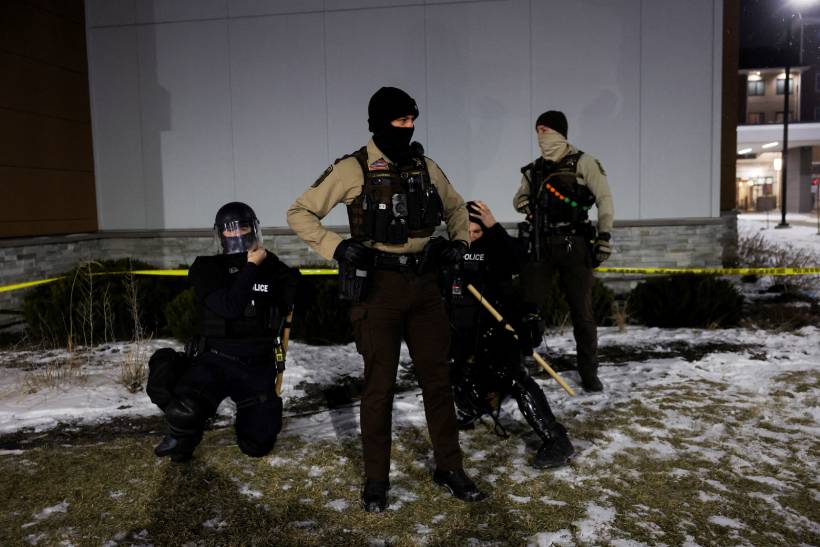
U.S. President Donald Trump and Minnesota Governor Tim Walz struck a more conciliatory tone following a private phone call on Monday, signalling a possible easing of tensions after a federal immigration operation in Minneapolis led to the deaths of two U.S. citizens. The incident had triggered a political and legal crisis between state authorities and the Trump administration, fuelled by public outrage and conflicting official accounts of the shootings.
Fatal Shooting and Public Backlash
The immediate trigger for the apparent thaw was the killing of Alex Pretti, a 37-year-old ICU nurse, who was shot dead by federal immigration agents during a confrontation with protesters over the weekend. Video footage of the incident, widely circulated online and verified by Reuters, appeared to contradict federal claims that Pretti posed an imminent threat. The shooting intensified public anger in Minnesota and raised renewed scrutiny of Trump’s aggressive deportation drive.
Change in Command Signals Shift
Another indication of de-escalation came with reports that Gregory Bovino, a senior U.S. Border Patrol official and prominent public face of Trump’s immigration crackdown, would leave Minnesota. Although the Department of Homeland Security disputed claims that Bovino had been relieved of duty, multiple sources said he had lost his special role overseeing the operation and would return to his former post in California before retiring. Trump confirmed that border czar Tom Homan would assume control of the operation in Minnesota.
Role of Operation Metro Surge
Bovino had overseen Operation Metro Surge, under which thousands of immigration agents were deployed to the Minneapolis–St. Paul area despite strong opposition from state and local officials. His visible leadership and forceful rhetoric made him a lightning rod for criticism from Democrats and civil liberties groups, particularly after he publicly characterised Pretti as an attacker in the fatal encounter.
Stay ahead of the geopolitical week.
MD Briefing delivers expert analysis across five global fronts — the Indo-Pacific, energy, geoeconomics, European security, and the Middle East — every Monday morning. Free.
Telephone Diplomacy and Tentative Agreements
Following the phone call with Walz, Trump said the two were “on a similar wavelength.” Walz’s office described the discussion as productive, noting that Trump had agreed to consider reducing the number of federal agents in Minnesota and to ensure state authorities could pursue their own investigation into the shooting. Trump also spoke with Minneapolis Mayor Jacob Frey, with both sides expressing optimism about ending the standoff and beginning a partial federal withdrawal from the Twin Cities.
Legal Disputes and Investigations
Minnesota authorities have accused the federal government of obstructing state investigations into the shootings, leading to a court battle over evidence collection and preservation. The U.S. Justice Department has not yet opened investigations into either of the fatal shootings, despite such probes typically being standard procedure in officer-involved deaths. This delay has further strained trust between state officials and federal agencies.
Political Fallout Within the Republican Party
Signs of weakening support for Trump’s deportation strategy have also emerged within Minnesota’s Republican ranks. Chris Madel, a prominent Republican gubernatorial candidate, withdrew from the race, citing opposition to what he described as punitive actions against state residents. A Reuters/Ipsos poll indicated declining public support for the administration’s immigration enforcement tactics following the Pretti killing.
Conflicting Accounts of the Shooting
Federal officials have maintained that agents fired in self-defence after Pretti approached them with a handgun. However, video footage shows Pretti holding a mobile phone rather than a weapon as agents restrained him. A firearm was later removed from his waistband after he was subdued. Pretti was a licensed gun owner, further complicating the narrative and intensifying calls for an independent investigation.
Analysis
The sudden shift toward dialogue reflects the political and legal pressure facing the Trump administration as public scrutiny of its deportation drive intensifies. While the crackdown was designed to project strength and deterrence, the deaths of U.S. citizens particularly when video evidence challenges official accounts have undermined its legitimacy and raised serious questions about proportionality and accountability.
From a broader governance perspective, the episode exposes tensions between federal authority and state sovereignty in immigration enforcement. The apparent willingness to adjust leadership and reduce the federal presence suggests that the administration recognises the risks of escalation, both legally and electorally. However, without transparent investigations and accountability mechanisms, the underlying conflict between aggressive federal enforcement and local resistance is likely to resurface, making the current thaw fragile and potentially temporary.
With information from Reuters.
