Officially known as the “Poseidon” (by Russia) and often designated as “Kanyon” by NATO, it is not a traditional torpedo. It is best understood as a large, long-range, nuclear-powered, and nuclear-armed autonomous underwater vehicle (AUV) or an intercontinental-range, nuclear-armed underwater drone.
Size: It is massive, estimated to be over 20 meters (65 feet) long and 2 meters in diameter, making it one of the largest torpedoes ever developed.
Propulsion: It is powered by a small nuclear reactor, giving it what is believed to be virtually unlimited range. It could traverse entire oceans without needing to surface.
Autonomy: It is an unmanned, autonomous vehicle. Once launched, it would follow a pre-programmed course to its target, operating independently.
Stay ahead of the geopolitical week.
MD Briefing delivers expert analysis across five global fronts — the Indo-Pacific, energy, geoeconomics, European security, and the Middle East — every Monday morning. Free.
Key Capabilities and Strategic Purpose
The Poseidon’s design gives it a set of capabilities that differentiate it from other nuclear delivery systems like intercontinental ballistic missiles (ICBMs).
Doomsday Payload:
The primary warhead is a nuclear weapon, estimated to be in the multi-megaton range (potentially up to 2 megatons or more). For comparison, the bomb dropped on Hiroshima was about 0.015 megatons. This immense explosive yield is not just for blast damage.
Creating Radioactive Tsunamis (Theoretical):
Russian state media has claimed that the weapon’s primary purpose is to detonate off the coast of an enemy city, creating a massive, radioactive tsunami.
The explosion would contaminate a vast coastal area with long-lasting radiation, rendering it uninhabitable for decades. This is aimed at devastating critical economic and population centers, like New York or Los Angeles.
Countering Missile Defense Systems:
Unlike ICBMs, which travel through space and can be intercepted by anti-ballistic missile systems, the Poseidon operates deep underwater.
There are currently no viable defenses against a nuclear-powered torpedo traveling at high speed at significant depths. This makes it an “unstoppable” second-strike weapon, ensuring retaliation even if Russia suffers a devastating first strike.
Targeting Naval Bases and Coastal Infrastructure:
Beyond cities, it is designed to destroy key military assets, particularly hardened naval bases and carrier strike groups. A single detonation could wipe out an entire fleet anchorage.
High Speed and Extreme Depth:
It is reported to be capable of speeds exceeding 70+ knots (over 80 mph/130 km/h), which is far faster than any conventional submarine or torpedo.
It is also believed to operate at depths that make detection and engagement with current anti-submarine warfare technology extremely difficult, if not impossible.
Strategic Rationale for Russia
The Poseidon fits into Russia’s strategy of asymmetric escalation and assured retaliation
Penetrating Defenses: It is a direct response to advanced US missile defense systems. It guarantees that Russia can inflict an unacceptable cost on an adversary, no matter their defensive capabilities.
A “Doomsday” Weapon: Its sheer destructive potential and indefensibility make it the ultimate deterrent. It reinforces the concept of Mutually Assured Destruction (MAD) in a new form, threatening to destroy coastal cities and infrastructure in a way that cannot be stopped.
Status and Platform
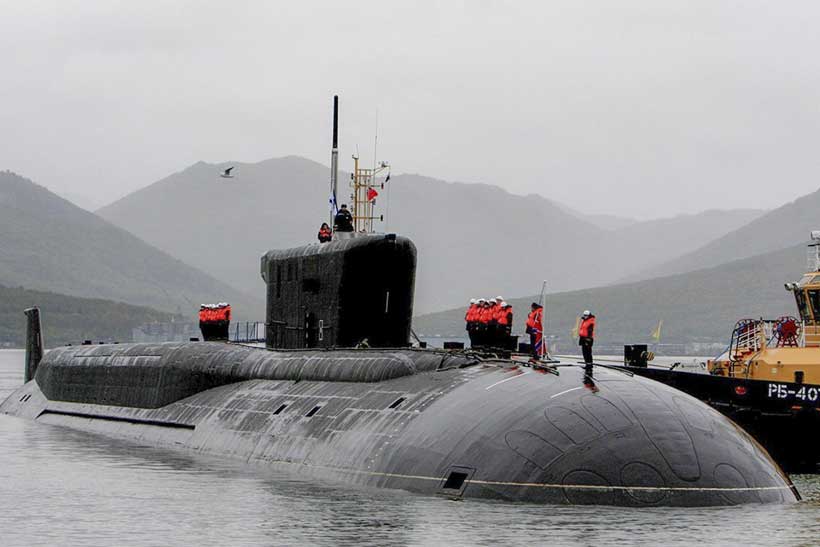
Carrier Submarines: The Poseidon is designed to be launched from specially modified submarines. The first, the Belgorod, is already in service, and a new class, the Khabarovsk, is being built specifically to carry these weapons.
Operational Status: While development and testing have been confirmed, it is believed that the weapon system is not yet fully operational on a large scale. However, as President Putin’s statement you referenced indicates, testing is ongoing, and it is a top-priority strategic program.
In summary, the Poseidon is not merely a new torpedo; it is a strategic-grade, nuclear-armed underwater drone designed to be unstoppable, bypass all existing defenses, and threaten coastal targets with catastrophic and radioactive destruction, thereby ensuring Russia’s nuclear deterrent.