


Authors: Baichao Chen and Dr.Julian Spencer-Churchill
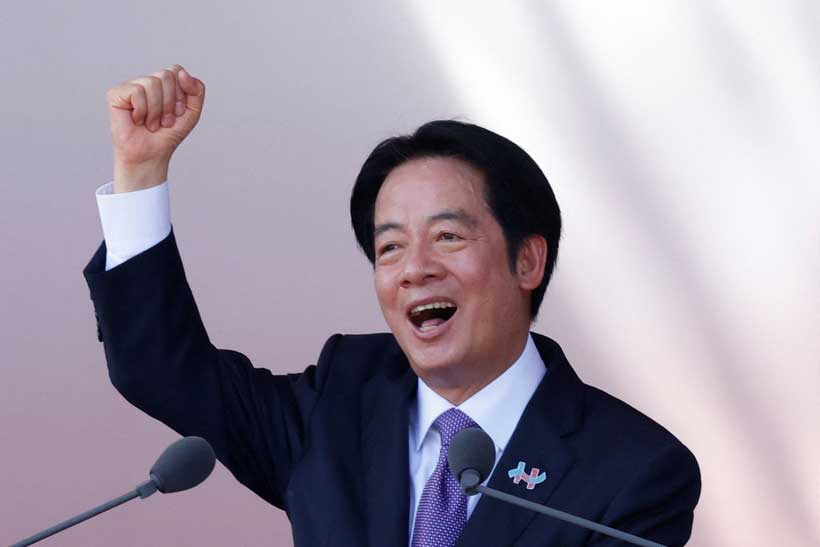
U.S. decision-makers must balance their favoritism for Taiwan’s ruling DPP (Democratic Progressive Party), led by President Lai Ching-Te, with the KMT (Guomintang), for the simple reason that both parties have an almost equal claim to popular support and understanding of the sentiments of the Taiwanese people. This was made clear in the utterly failed recall elections of sitting “Blue” KMT legislators in Taiwan on July 26 and August 23, 2025, initiated by the “Green” DPP. Taiwan’s reluctance to oppose Beijing more aggressively is often interpreted in the West as being the result of successful cognitive warfare, lawfare, and agitation by supporters of Communist China. However, according to the Election Study Center of National Chengchi University, support for the status quo has risen to 61% in Taiwan. Backing for eventual independence dropped from an historic high of 25.8% in 2020 to 21.5% in 2025, and for immediate independence it eroded from 5.8% to 4.3%.
The strategic implications are significant for Washington, which is trying to build Taiwanese resilience and thereby strengthen deterrence against Mainland Chinese military action. The U.S. State Department is concerned that key current and former KMT members are in close contact with Mainland Chinese officials and are thought, therefore, to be influencing Taiwan to be less eager to confront Beijing. The Pentagon is concerned that Taipei is as ill-prepared as Ukraine was before the February 2022 Russian invasion. Furthermore, given the prevalence of support for the KMT by those in the Taiwanese military, there is anxiety that a fifth column of officers could facilitate a Mainland Chinese amphibious landing, with consequences similar to the loss of southern Ukraine engineered by pro-Russian Ukrainian officers. This misperception has its roots in the West’s hawkish factory-setting of confronting Mainland China and poor understanding of local politics, which is a far more hazardous and expensive strategy than an approach focused on deferring to Taiwan in “managing” Beijing.
The KMT was established in 1912 and was the ruling political party of Mainland China by 1926, having secured southern and central China in a series of military campaigns. It retreated to Taiwan in 1949 after its defeat by its Communist rivals and transitioned to democratic elections in 1987. The malaise with the KMT’s historical political orientation is that it originally represented post-Civil War Mainland Chinese constituents. In my discussions with pro-KMT business owners in 2023, there was a widely held belief that a Communist-occupied Taiwan would be no less supportive of commerce and exports than a sovereign Taiwan. Consequently, polled KMT supporters are the least likely of the three main political parties to be willing to militarily resist a Mainland Chinese attack (54% versus 85% of DPP). Secondly, the KMT’s historical support among senior military leaders, who are disproportionately from the mainland, puts it at odds with the influence of many generations of pro-democracy activists, an antagonism that has not yet been softened by time. A current Taiwanese foreign ministry official reminded this author that many homes, including his own, had “hide rooms” to shield fugitive dissidents from the KMT military regime during the Cold War. Unlike the supporters of the DPP, the KMT sees itself as a party of the Republic of China (ROC), of which Taiwan is a single province of China, as part of a still unresolved civil war with the Communists.
Stay ahead of the geopolitical week.
MD Briefing delivers expert analysis across five global fronts — the Indo-Pacific, energy, geoeconomics, European security, and the Middle East — every Monday morning. Free.
The KMT survived the summer 2025 recall elections because of its greater effectiveness in municipal governance and county politics. Only 54 percent of mainland Chinese-origin citizens now support the KMT, indicating it shifted its outreach to appeal to local Taiwanese priorities but also generational assimilation of its originally mainlander demographic base. According to the Election Study Center of National Chengchi University, between 1994 and 2023, support for unification dropped from 20% in 1994 to 8% in 2024, while support for independence rose from 11% to 25%. Furthermore, it has preserved its superior ability to mobilize its grassroots base, cultivate support among the conservative-minded, and even appeal to ethnic minorities like the Hakka and majority Hoklo and the indigenous. The DPP, by contrast, is more populist, cosmopolitan, progressive, independence-minded, Japanophile, and averse to being associated with a broader Chinese identity or supplanting Mainland China’s government (an historical KMT obsession).
There are therefore compelling reasons to listen to the KMT, most importantly because it represents a significant segment of the Taiwanese population, the alienation of whom would dramatically reduce Taipei’s resilience to coercion from Beijing. Taiwan, an island of 23 million persons, is led by three main political parties. The DPP received 40 percent of the popular vote in the 2024 elections. President Lai Ching-Te’s support for the recall elections was to break the deadlock of the minority representation of the DPP in the legislature, which holds 51 seats versus the 52 of the KMT, 8 seats of the (formerly DPP social democrats) Taiwan People’s Party (TPP), and two independents. Taiwan’s political parties are affected by the usual spate of corruption scandals, debilitating factional divisions, poor judgment by both KMT and DPP leaders, and occasional but minor manipulations of national security issues for political gain by the KMT and TPP (the validity of the reason is left to the judgment of the reader). The DPP itself has revealed a streak of quickly deleted undemocratic remarks, including accusing the KMT and TPP of lawfare and threatening a Korea-style invocation of martial law. The recall elections were organized by an activist faction within the “Greens” (DPP), but there were also a few disparate instances of recalls by local constituents. Most U.S. policymakers on China must appreciate that national security is not the only nor the principal concern of most Taiwanese.
In fact, recent KMT leaders, including the current and outgoing Eric Chu, are committed to a strong defense, coupled with a strategy of reassurance to Beijing that acknowledges the Chinese Communist Party’s (CPP) preference to solve the Taiwan question via peaceful means, and reluctance (but not absolute) in reigniting the civil war due to its undesirable consequences for the economy and popular support. This new policy is the “three-Ds”: deterrence, dialogue, and de-escalation, articulated by Hou Yu-ih, the KMT’s 2024 presidential candidate. The KMT estimate is that China is not eager for a war over Taiwan, but neither can it avoid responding to provocations from Taipei. Even Mao Zedong made concessions to achieve rapprochement with Taiwan. A process of continuous dialogue is a form of reassurance, whereas de-escalation is about avoiding public statements that challenge Beijing’s “audience costs” that are so vital for its nationalist legitimacy.
Originally proposed by the KMT, its dialogue with Beijing is grounded on their joint recognition of the 1992 consensus, which affirmed the two interpretations of the One-China policy. It is supported even by China’s Communist Party Chairman Xi Jinping and has been an important factor in preserving Mainland China’s accommodationism until 2018. Nor is it true that the KMT is less supportive of defense spending than the DPP. Taiwan’s investments in its military under the KMT averaged 16.92% of the total budget from 2008 to 2016, whereas spending in 2023 through 2025 was 15.22%, 15.47%, and 15.99%. The KMT’s more coherent cross-strait policy of engagement is in Washington’s interest because, unlike the earlier containment of the Soviet Union, China has proven to be a more able export competitor; managing the competition into a change in Chinese foreign policy akin to the détente following the Sino-Soviet Split, even if decades away, is less risky than a conflict spiral induced crisis leading to war over Taiwan between two nuclear-armed powers.
In contrast, Beijing refuses to negotiate with the DPP, whose focus on independence has undermined the 1992 consensus and has locked both in a policy of confrontation. In part this is the aggravating and reciprocated effect of China’s increased hostility to the influence of Western “constitutionalism,” while Mainland China’s style of governance, based on neo-authoritarianism, comes in contrast with the progressive liberal identity of many Taiwanese, hence creating difficulties in generating support among Taiwanese to develop support for unification. A Taiwan leaning towards independence is unacceptable to any Chinese government or regime, national unity being an imperative criterion to obtain the mandate of heaven, which is a sine qua non of the legitimacy necessary to rule over China. In effect, the DPP cannot commit to dialogue and de-escalation, only to more deterrence and brinkmanship, while the KMT is better placed to achieve the 3Ds, since most Taiwanese voters much prefer the status quo to war. The DPP is instead maneuvering Mainland China into a reluctant but predictable acceptance of a military solution.
Ma Ying-Jiu, former KMT president of the Republic of China (2008-2016), emphasized that Taiwan’s geography makes for good defense and deterrence and is therefore safe for a rapprochement with Beijing, along the lines of Ostpolitik diplomacy between the two Germanys during the Cold War. While frequently accused of being a fifth columnist, his support for unification is predicated on a democratized process. He continues to argue that there is a formula for continuous informal contacts sufficient to allay Beijing’s fears of unilateral independence, which is in line with the sentiment of the majority of Taiwanese. The KMT is also hedging against minimal or non-intervention by the U.S., a policy that is supported by a majority of Taiwanese, with 40% believing that the U.S. would not intervene in a crisis. This is informed in part by the U.S. administration’s seeming indifference to organizing a coalition, without which Washington cannot prevail against China in a war. The preparatory neglect of relations with countries like Indonesia, Brazil, and the Philippines, and the failure to counter China’s dominating military shipbuilding efforts, will put the U.S. on its heels in a sudden Mainland Chinese assault on Taiwan’s outer islands or blockade.
Washington policymakers have historically shown a naivete in their search for agreeable local favorites in their campaigns abroad, who have consistently led them tragically astray. The resulting deference to Chiang Kai-shek in China, Dương Văn Minh in Vietnam, Mohammad Reza Pahlavi Shah in Iran, Hamid Karzai in Afghanistan, and exile Ahmed Chalabi in Iraq reveals a desperation that often leads to expensive strategic catastrophes. The sudden and unanticipated collapse of Afghanistan in August of 2021 is only the most recent manifestation. Recent cuts to the State Department’s Mandarin-speaking China specialists may increase this kind of pathology.
Instead, the U.S. should recognize the organic whole of a society’s politics, rather than engaging in the dangerous practice of poorly informed domestic political interference and backing of favorites. Washington should signal the DPP that it looks favorably on a modicum of principled inter-party cooperation and encourage back-channel KMT contacts with Mainland China, even amid the rhetorical exchanges between DPP governments and Beijing.
This policy in no way compromises preparations for war. The U.S. Navy is rightly concerned about opening windows of opportunity circa 2027 for a Chinese blockade or amphibious operation against Taiwan, based on the fast pace of additions to China’s fleet. Although it should be pointed out that the 2027 date is from an undisclosed U.S. intelligence source citing an alleged and unidentified speech by Xi Jinping. While a senior academic and reliable representative of Mainland China’s senior leadership’s mindset denies the existence of a timetable, they do not deny the active exploration of military options. China’s military actions are tied more closely to, and subordinate to, political outcomes than, say, comparable Russian uses of armed force. Reassurance may nevertheless be eclipsed by exogenous political developments in Beijing that cause China to decide for war or the irresistibility of exploiting a dispute when it believes it has reached an inflection point of littoral superiority over U.S. forces in the Asia-Pacific region.
