


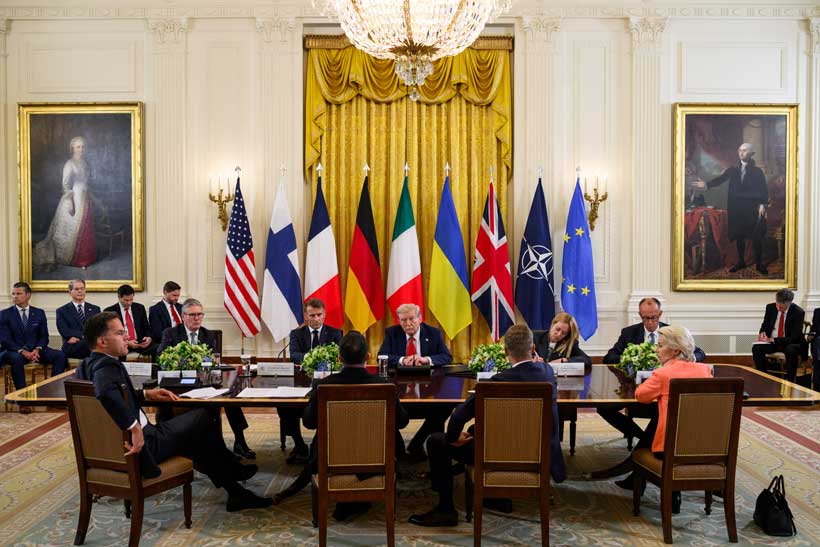
After a summer of unexpected diplomatic engagement, President Donald Trump’s foreign policy is undergoing a significant recalibration. Based on a recent Reuters report, the initial flurry of activity on the world stage, from hosting Vladimir Putin to threatening sanctions on Russia—is giving way to a more insular and transactional approach. This shift from the driver’s seat to the passenger seat is causing profound anxiety among European allies and raising questions about the sustainability of a U.S.-led security order.
The Summer of Engagement: A Brief Thaw
The Reuters article describes a rather action-packed summer on the part of Trump. This involved the bombing of Iran nuclear facilities, a commitment of a new Patriot kit to Ukrainian forces during a NATO conference, and the threat of more sanctions and tariffs on Moscow. European diplomats weighed the response to this engagement cautiously, although it was no light matter in the eyes of some of his political allies. It implied a president who was ready to work within, or atleast alongside, the traditional alliance frameworks such as NATO. The interaction reached a high-profile summit with Putin, yet delivered no practical breakthroughs on Ukraine.
The Pivot Inward: America First in Action
The recent weeks have marked a stark departure from this engagement. Trump, according to the report, has pulled out most of his active diplomacy now. It has changed his focus sharply inward, to domestic issues such as crime, immigration, and left-wing extremism. The move on the global platform is not about leading but instructing. He is also informing European partners that they should independently apply punitive tariffs on Russian oil purchasers as a precondition for any future American response against Moscow.
This is America-First doctrine in its purest form: a transactional demand that the allies must solve their own security issues before expecting America’s help. The Pentagon message to the Baltic diplomats that the U.S. plans to reduce security assistance, and that Europe needs to be less reliant on America, is a concrete implementation of this philosophy. For Trump, this is not an isolationist retreat but rather a strategic re-prioritization to homeland defense and a resfual to carry what he believes to be Europe’s financial burden.
Stay ahead of the geopolitical week.
MD Briefing delivers expert analysis across five global fronts — the Indo-Pacific, energy, geoeconomics, European security, and the Middle East — every Monday morning. Free.
Muted Responses and Moscow’s Opportunity
The most immediate and dangerous consequence of this pivot is the US muted response to renewed Russian aggression. The incursion into Estonians airspace and the buzzing of a Polish oil platform are direct tests of NATO’s resolve. Trump’s delayed and cryptic public responses, onl signal a lack of serious strategic concern. According to the analysis in the report, the Kremlin interprets this perceived American disengagement as an invitation. Devoid of a solid U.S. backbone, Putin will most likely encourage provocations and even intensify them, believing a divided Europe without strong American backing is vulnerable.
European Exhaustion and Strategic Dilemma
European diplomats, once heartened, are now described as ‘exhausted’ by Trump’s mercurial stance. This whipsawing between engagement and disengagement leaves no chance of any long-term strategic planning succeeding. Their predicament is acute: do they submit to Trump’s demands, such as enacting politically and bureaucratically complex tariffs on China and India, to hopefully win back US support? Or do they interpret his inconsistency as a sign that any agreement is transitory, compelling them to accelerate a path towards strategic autonomy from the United States, however difficult or expensive that may be?
The trust required for functional alliances is being eroded. As one diplomat noted, any future hardening of Trump’s stance toward Moscow may now “lack credibility” because his positions are so changeable.
Conclusion: A New, Unpredictable Normal
The analysis suggests that the summer of engagement was the anomaly, and the current retreat to a more transactional, domestically-focused foreign policy is a return to Trump’s core instincts. The brief period of diplomacy may have ended because, as veteran diplomat Aaron David Miller posits, Trump found the world’s problems too intractable and not worth the political capital.
The emerging pattern is one of strategic unpredictability. For European allies, this means they can no longer rely on the steadfast American security guarantee that has underpinned the continent’s order since World War II. They are being told explicitly to stand on their own, while simultaneously being asked to follow Washington’s lead on complex economic measures. For adversaries like Russia, this ambiguity and disengagement are not a warning but an opportunity. The world is adjusting to a reality where the U.S. president may be as likely to post “big trouble” on social media as to author a coherent, strategic response to a crisis.
This analysis is based on information from Reuters.
