


NEWS BRIEF
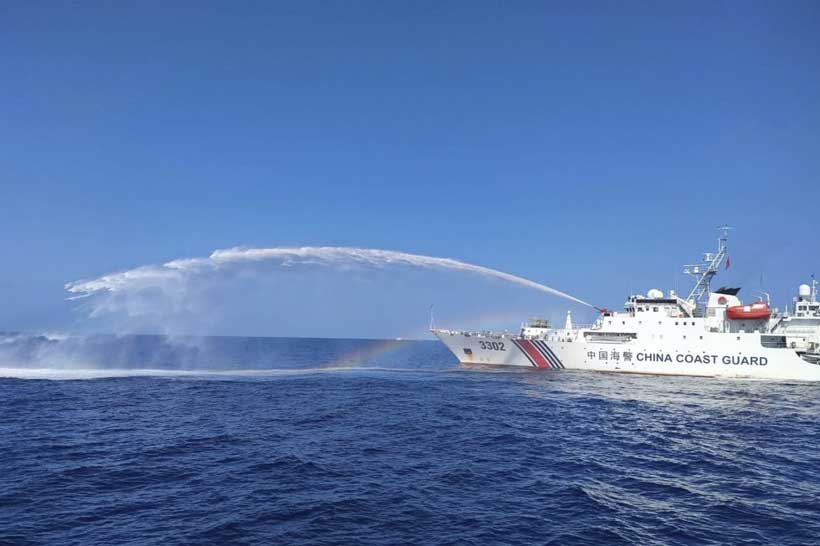
China’s military said Sunday it conducted routine patrols in the South China Sea and warned the Philippines against “provocations” and reliance on foreign partners, after Manila joined joint drills with the U.S. and Japan in its Exclusive Economic Zone. The warning highlights escalating tensions in the disputed waterway, where China asserts sweeping claims despite overlapping claims by Southeast Asian nations and where Washington has reaffirmed its security commitments to Manila.
WHAT HAPPENED
- China’s Southern Theater Command accused the Philippines of escalating tensions and “bringing in external forces,” vowing that any attempts to disrupt the status quo would fail.
- Manila has not formally responded, though its coast guard has repeatedly clashed with Chinese vessels near contested reefs and shoals
- The U.S., Japan, and the Philippines wrapped up joint exercises in Manila’s Exclusive Economic Zone, demonstrating coordination in response to Beijing’s maritime assertiveness.
- U.S. Secretary of State Marco Rubio reaffirmed Washington’s commitment to Manila, denouncing China’s “destabilizing plans” in the region.
WHY IT MATTERS
Stay ahead of the geopolitical week.
MD Briefing delivers expert analysis across five global fronts — the Indo-Pacific, energy, geoeconomics, European security, and the Middle East — every Monday morning. Free.
- For Manila, resisting Beijing’s warnings is about more than fishing rights—it’s a test of sovereignty and national pride under international law.
- China uses each confrontation to reinforce its sweeping maritime claims and deter outside influence.
- U.S. and Japanese involvement shows the Philippines is no longer standing alone, but it also hardens China’s narrative of “foreign interference.”
- The South China Sea is evolving into a frontline of the U.S.-China rivalry, where a single miscalculation could trigger broader conflict.
IMPLICATIONS
- Ongoing encounters raise the chance of collisions or miscalculation that could trigger a broader crisis.
- Manila’s stronger ties with Washington and Tokyo signal a shift toward firmer collective deterrence against China.
- The warning underscores China’s intent to deter “external interference,” but also highlights its vulnerability to coordinated pushback.
- How the Philippines navigates pressure from Beijing while leaning on U.S. support could set a precedent for other Southeast Asian claimants.
This briefing is based on information from Reuters.
