


Background
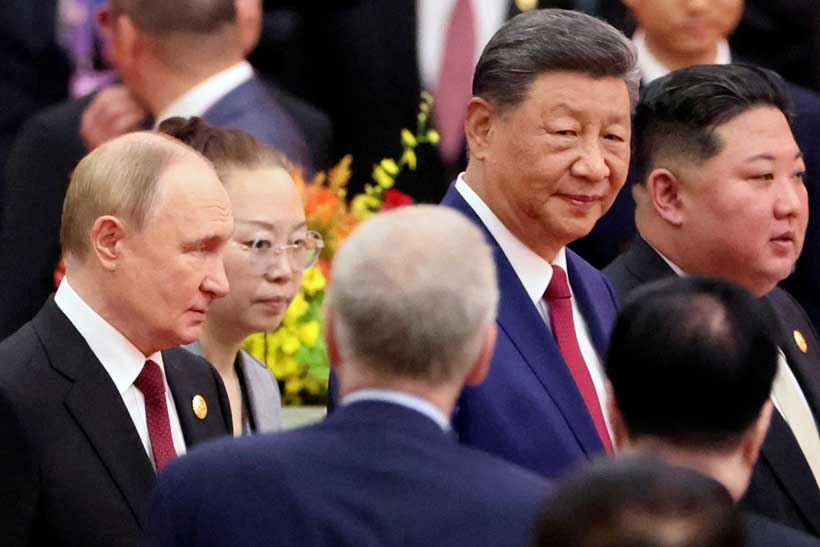
Last week’s rare gathering of Xi Jinping, Vladimir Putin, and Kim Jong Un in Beijing — timed with China’s massive Sept. 3 military parade — drew international attention and concern over the emergence of what the EU’s foreign policy chief Kaja Kallas called a rising “autocratic alliance.” The display of solidarity among China, Russia, and North Korea comes amid intensifying global divisions, Western sanctions on Moscow, and stalled denuclearization diplomacy with Pyongyang.
What Happened?
- Chinese President Xi Jinping has hosted bilateral summits with both Vladimir Putin and Kim Jong-Un, but has yet to set up a formal trilateral meeting, signaling limitations in coordination.
- Putin boasted about a “binding memorandum” on a 3,000 km gas pipeline to China, although no Chinese mention of the project has been observed.
- China also reframed from “denuclearization” talks in reference to North Korea, a move analysts suggest was a concession to Pyongyang and a destabilizing move in contentious Korean relations.
- South Korea’s government urged China to play a constructive role in peace talks in Korea.
- U.S. President Donald Trump stated the trio was “conspiring against him”, while a U.S. official hinted that Washington may need to “re-evaluate” its approach.
Why It Matters:
Stay ahead of the geopolitical week.
MD Briefing delivers expert analysis across five global fronts — the Indo-Pacific, energy, geoeconomics, European security, and the Middle East — every Monday morning. Free.
While the imagery of Xi, Putin, and Kim together projects a symbolic challenge to the Western-led order, the absence of a formal trilateral framework underscores that their cooperation is pragmatic and opportunistic rather than institutionalized. Sticking points — from gas pricing to trade access — reveal diverging priorities. Still, the optics strengthen Putin’s hand against Western isolation, legitimize Kim internationally, and signal Beijing’s willingness to deepen ties with sanctioned states as leverage in talks with Washington.
Stakeholder Reactions:
- EU Foreign Policy Chief, Kaja Kallas: Warned of the emerging “autocratic alliance”
- Anonymous U.S. Diplomat: Noted that despite internal differences among the trio, they are “united in their apathy for the U.S. led international system”
- Japanese PM, Shigeru Ishiba: Cited the image of the three autocratic leaders of nuclear states as a major global security risk.
What’s Next?
Analysts expect incremental economic deals — including possible Russian access to China’s bond markets — but see joint military drills or formal defense arrangements as unlikely in the near term. The meeting’s timing suggests a bid to gain leverage before Trump’s expected trip to Asia in late October, where talks with Xi could resume amid tense trade negotiations. Whether Kim engages Trump remains uncertain, but the summit’s choreography hints that Beijing and Moscow may coordinate just enough to keep Washington off balance.
with information from Reuters
