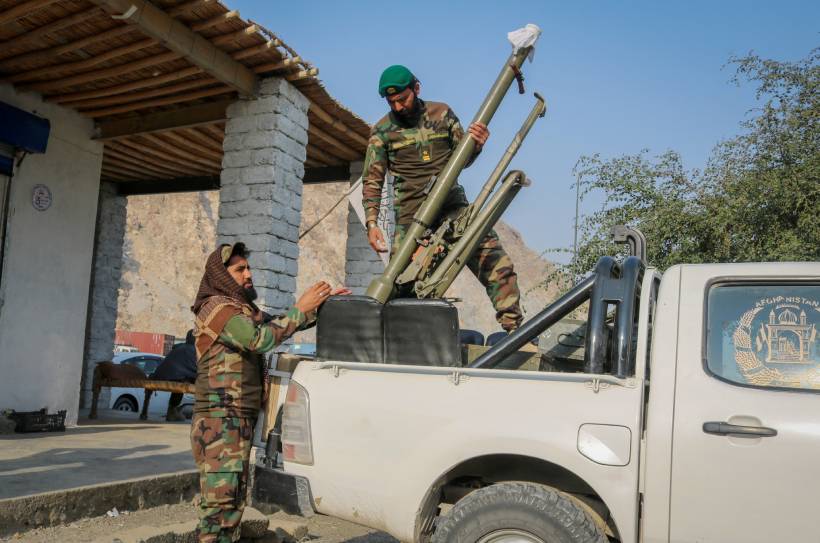
Pakistan’s air force recently attacked 10 places in Afghanistan. This is the second time in four days they have done this, following a period of quiet on the border between the two countries. Pakistan stated that these strikes were a response to drones that came from Afghanistan. Afghanistan denied sending the drones and claimed that the seven Afghan citizens killed in the recent strikes were civilians.
The relationship between Pakistan and Afghanistan has become strained. When the Taliban took power in Afghanistan in 2021, Pakistan initially saw them as a potential ally. However, Pakistan’s frustration grew as militants began carrying out more attacks within Pakistan. Pakistan has accused Afghanistan’s government and India of providing weapons, money, and safe places for these militants. Both Afghanistan and India deny these accusations. Last year, Pakistan conducted an airstrike in Kabul targeting the leader of the Pakistani Taliban, but he survived. Pakistan also claims that Afghanistan is sheltering Baloch separatists.
Previous attempts to stop the fighting have not worked. An agreement for a ceasefire in Doha in October was not successful. Fighting became intense in the spring, with many people killed in bombings and airstrikes. Pakistan stated its strikes targeted military sites, while Afghanistan said they hit a rehabilitation center and killed civilians. Talks mediated by China led to a ceasefire in March, which temporarily stopped the fighting but did not resolve the core issues.
The recent escalation was triggered by two major militant attacks in northwest Pakistan that killed at least 30 people, including soldiers and police officers. One attack, claimed by an Islamist group led by Hafiz Gul Bahadur, killed 24 people. Another incident involved an exchange of fire with militants that killed soldiers.
The main militant groups operating in northwest Pakistan are diverse but share the goal of fighting the Pakistani state. The Tehreek-e-Taliban Pakistan (TTP), also known as the Pakistani Taliban, is a prominent group formed in 2007. It was modeled after the Afghan Taliban and has a close connection to them, with fighters having supported each other in the past. Pakistan has conducted military operations against the TTP with limited success. The TTP has increasingly targeted Pakistani security forces. The Shura Ittehad-ul-Mujahideen, led by Hafiz Gul Bahadur, also claimed responsibility for recent attacks. This group, which once hosted Al-Qaeda fighters, shifted its focus to Pakistan after a Pakistani military operation in 2015. This move pushed their fighters into Afghanistan, and the group has since become an umbrella for various militant factions with Al-Qaeda involved in planning and Gul Bahadur leading.
With information from Reuters