


This week’s market headlines have been dominated by Gulf tensions, inflation, bond market concerns and renewed political pressure on the Federal Reserve. But beneath those developments, investors are watching three broader trends: the surprising strength of European bank stocks, Japanese investors shifting toward European government bonds, and growing concerns over the economic consequences of populist politics.
Europe’s Banks Challenge the Wall Street Narrative
European equities continue to face a long list of concerns, including high energy costs, defence spending pressures, fiscal challenges, competition from China and the region’s weaker position in artificial intelligence compared with the United States and China.
Yet Goldman Sachs strategists argue that some of the pessimism surrounding European markets may be overstated. They point to projected double digit earnings growth this year and strong portfolio inflows into European equities.
One of the most striking developments is the performance of euro zone banks. Since the launch of the Roundhill Magnificent Seven exchange traded fund in April 2023, the fund tracking major U.S. technology companies has gained 182%. Over the same period, the main euro zone bank stock index has risen almost 210%.
Stay ahead of the geopolitical week.
MD Briefing delivers expert analysis across five global fronts — the Indo-Pacific, energy, geoeconomics, European security, and the Middle East — every Monday morning. Free.
For a U.S. dollar based investor, the gain has been around 225% once currency movements are taken into account.
The performance has been driven less by artificial intelligence and more by the return of sustainably positive interest rates in Europe after more than a decade of exceptionally low rates.
Several European banks have delivered particularly strong gains. UniCredit has risen about 361%, while Santander and BBVA have gained around 280% each. ING and Intesa Sanpaolo have climbed roughly 185%, BNP Paribas has doubled and Nordea has risen about 73%.
The broader message is that Europe’s investment story may be more complicated than the usual comparison with U.S. technology stocks suggests. Higher interest rates have improved bank profitability, allowing an older part of Europe’s financial system to outperform some of Wall Street’s most celebrated technology companies.
Japan’s Investors Turn Toward European Debt
Another notable shift is emerging in Japanese investment flows.
Official data for June showed that Japanese investors reduced their holdings of U.S. Treasuries by $5.6 billion while increasing their exposure to French government debt by $2.2 billion, British government bonds by $1.5 billion and Italian sovereign debt by $1.2 billion.
The shift suggests Japanese investors are becoming more willing to diversify away from U.S. government bonds as European debt offers attractive relative returns.
Mizuho strategist Masayuki Nakajima said the stabilisation of U.S. yields appeared to have encouraged some diversification toward European sovereign debt.
The purchases are not large enough to represent a fundamental transformation of global bond markets, particularly because Japanese investors have historically maintained significant holdings of British and French government debt.
However, the timing is notable.
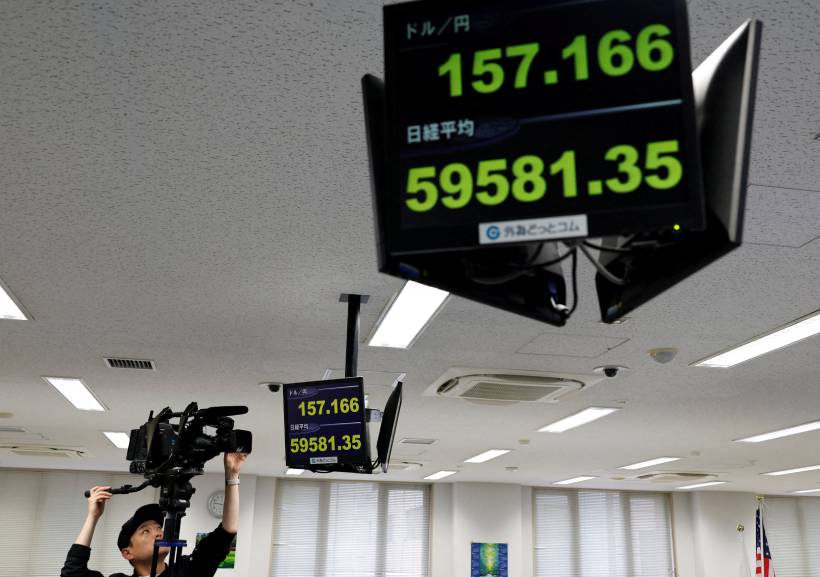
Japanese investors increased their purchases of European bonds even as the dollar reached 40 year highs against the yen. Buying British gilts was particularly notable because it came during a period of major political change in Britain. French bond purchases also stand out given concerns surrounding France’s political and fiscal outlook.
The development suggests investors are looking beyond traditional safe havens and increasingly comparing relative yields and risks across major developed bond markets.
Populism Creates a New Inflation Concern
The third development has implications far beyond financial markets.
An IMF working paper examining developed and emerging economies since 1960 found that periods of populism were historically associated with increased central bank lending to governments, deficit monetisation and higher inflation.
The researchers also warned that the consequences could persist after populist governments leave office.
Correcting the economic imbalances created during such periods can require stronger central-bank independence, tighter monetary policy and greater sensitivity to changes in inflation expectations.
That creates an important challenge for central banks today.
Political pressure on monetary authorities has become an increasingly visible issue, particularly as governments and political leaders demand lower borrowing costs while inflation remains a concern.
The central lesson is not that populism automatically produces inflation. Rather, the historical evidence suggests that when governments weaken fiscal discipline or pressure central banks to accommodate government spending, inflation risks can become harder to control.
Analysis: Markets Are Looking Beyond the Headlines
The three developments point to a broader shift in global investment patterns.
European banks demonstrate that investors can find strong returns outside the dominant U.S. technology trade. Japanese bond purchases indicate that global investors are becoming more selective about where they place sovereign debt. Meanwhile, the IMF research highlights how political changes can eventually affect monetary credibility and inflation expectations.
Together, they suggest that markets are entering a period in which relative value, political stability and central-bank credibility may matter as much as the headline economic narrative.
For investors, the key question is increasingly not simply whether the U.S. economy or technology sector remains dominant, but whether other markets can benefit from changing interest-rate cycles, currency movements and political conditions.
Europe’s banks, European government bonds and the debate over central-bank independence may therefore deserve considerably more attention than their relatively quiet position in this week’s headlines suggests.
With information from Reuters.
