


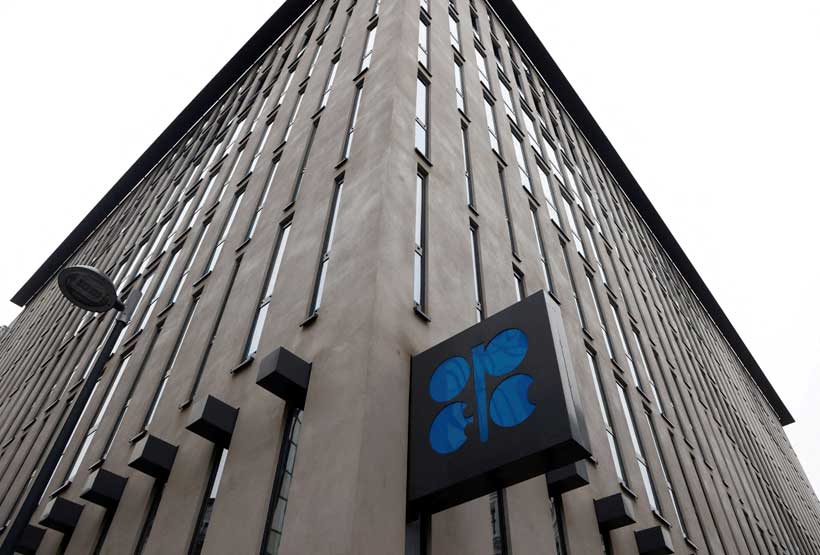
The four month Iran war severely disrupted global energy markets after Tehran restricted shipping through the Strait of Hormuz following U.S. and Israeli military strikes. At the height of the conflict, around 14 million barrels of oil per day were removed from global supply, triggering fears of a prolonged energy crisis and sending Brent crude prices above 118 dollars a barrel.
Following a preliminary ceasefire agreement between Washington and Tehran and the partial reopening of the Strait of Hormuz, Gulf producers have rapidly resumed exports. Countries that accumulated millions of barrels in storage during the conflict are now rushing to clear inventories and restore production, creating intense competition for buyers in an already well supplied market.
The shift comes at a delicate moment for the Organization of the Petroleum Exporting Countries after the United Arab Emirates left the group earlier this year, raising fresh questions about OPEC’s ability to coordinate production among major exporters.
Overview
The Gulf’s race to regain oil market share after the Iran war is intensifying, with the United Arab Emirates, Saudi Arabia, Iraq and Kuwait rapidly increasing exports to recover lost revenues.
Stay ahead of the geopolitical week.
MD Briefing delivers expert analysis across five global fronts — the Indo-Pacific, energy, geoeconomics, European security, and the Middle East — every Monday morning. Free.
The surge in supply is creating fierce competition among producers as they seek buyers for millions of barrels accumulated during the conflict, placing downward pressure on oil prices and raising doubts about OPEC’s ability to manage the market.
Analysts warn that the scramble could weaken the group’s influence at a time when global supply is already expected to outpace demand.
UAE Leads the Push to Increase Exports
The United Arab Emirates has emerged as the first major producer to aggressively expand exports.
According to Kpler data, UAE crude exports climbed to a record 3.8 million barrels per day in June after shipping routes through the Strait of Hormuz began reopening.
The increase follows Abu Dhabi’s departure from OPEC in May, allowing it to pursue production and export strategies without the group’s quotas or output restrictions.
Much of the additional supply is believed to have come from oil stored during the conflict while production gradually recovers.
Saudi Arabia and Other Gulf Producers Follow
Saudi Arabia has also accelerated exports as it seeks to restore market share.
June exports reached 4.5 million barrels per day, while July shipments are projected to rise to 6.4 million barrels per day, approaching pre war levels.
Iraq and Kuwait have also resumed exports through the Strait of Hormuz, contributing to a sharp recovery in regional oil flows.
Total exports through Hormuz nearly quadrupled in June compared with May, although they remain below volumes recorded before the conflict.
Competition for Buyers Intensifies
The rapid return of Gulf oil has created a buyer’s market.
Many refiners in Asia and Europe have already secured crude supplies through August, forcing exporters to compete aggressively for remaining demand.
To attract customers, producers have significantly reduced prices.
Saudi Arabia cut the official selling price of its flagship Arab Light crude to its lowest level since 2020, while traders reported discounts of as much as 20 dollars per barrel below Brent for some cargoes.
Chinese independent refiners have taken advantage of the lower prices after sharply reducing imports during the conflict.
The United Arab Emirates has also expanded sales into markets where it traditionally had a limited presence, including Nigeria, Turkey and the United States West Coast.
OPEC Faces Growing Internal Pressure
The renewed competition is exposing divisions within OPEC.
Although OPEC and its allies recently agreed to increase production by another 188,000 barrels per day from August, many member states remain eager to maximise exports after months of lost revenue.
Saudi Arabia now faces the challenge of balancing market stability with the economic needs of fellow producers.
Attempts to limit production could prove difficult as members seek to recover financially from the conflict and expand their share of global markets.
Weak Demand Adds to Market Risks
The surge in supply comes as demand growth remains relatively modest.
The International Energy Agency expects global oil production to exceed consumption by around 5 million barrels per day next year, increasing the likelihood of persistent oversupply.
Brent crude prices have already fallen to around 70 dollars per barrel, well below wartime highs despite ongoing uncertainty surrounding the long term security of the Strait of Hormuz.
Why It Matters
The post war recovery is shifting the oil market from fears of shortages to concerns about oversupply.
If Gulf producers continue competing aggressively through higher exports and lower prices, oil markets could experience prolonged price weakness, reducing revenues for exporting countries while benefiting energy importing economies.
The developments also raise broader questions about whether OPEC can continue to influence global oil prices if member countries increasingly prioritise national interests over collective production strategies.
Stakeholders
OPEC
Facing growing pressure to maintain unity and influence over global oil production.
Saudi Arabia
Seeking to balance higher exports with its traditional role as the group’s leading stabilising producer.
United Arab Emirates
Pursuing an independent production strategy after leaving OPEC.
Iraq and Kuwait
Increasing exports to recover revenues lost during the Iran war.
Global Oil Importers
Benefiting from lower crude prices and greater supply availability.
Energy Markets
Closely monitoring whether increased production leads to sustained oversupply and further price declines.
What Happens Next
Attention will focus on whether Gulf producers continue raising exports in the coming months and how quickly oil demand recovers.
Markets will also watch whether Saudi Arabia attempts to persuade other producers to restrain output or allows competition for market share to continue.
Future negotiations between OPEC members, along with the pace of recovery in the Strait of Hormuz and the durability of the Iran ceasefire, will play a key role in determining oil prices through the remainder of the year.
Analysis
The Gulf’s post war export surge marks a fundamental shift in the global oil market. During the conflict, the dominant concern was supply disruption. Today, the challenge is rapidly becoming one of excess supply as producers compete to recover lost revenues and regain customers.
The UAE’s departure from OPEC has further weakened the organisation’s ability to coordinate production. Without one of its largest Gulf producers bound by quotas, Saudi Arabia may find it increasingly difficult to persuade remaining members to sacrifice exports for higher prices. If Iraq or other members also seek greater production flexibility, OPEC’s traditional role as the world’s oil market stabiliser could face its most serious test in decades.
At the same time, slower demand growth limits the market’s ability to absorb the additional supply. Lower oil prices may provide relief for inflation and energy importing economies, but they could strain the budgets of producer nations that rely heavily on hydrocarbon revenues.
Ultimately, the post war battle for market share may prove more consequential than the conflict itself. Rather than geopolitical disruption, the biggest threat to oil prices may now come from competition among producers. If Gulf exporters continue prioritising volume over price, OPEC’s influence could diminish further, reshaping the balance of power in global energy markets for years to come.
With information from Reuters.
