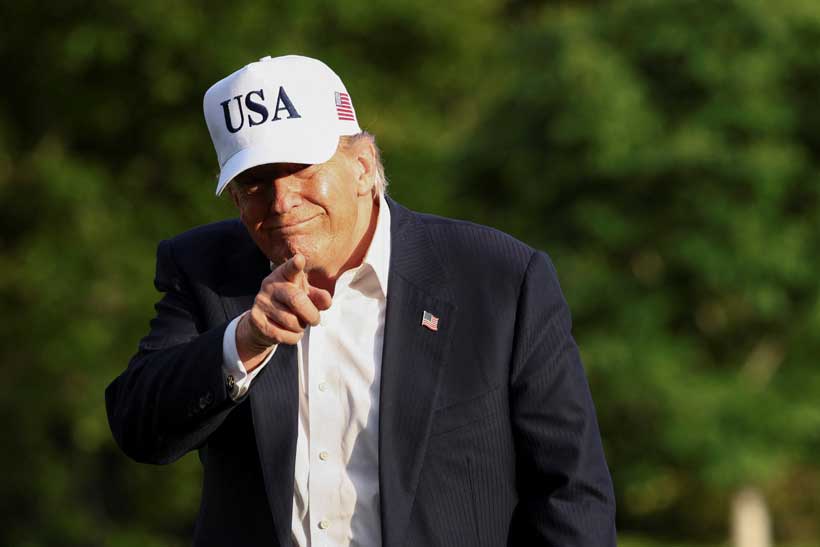
U. S. President Donald Trump stated that Iran has delayed negotiations to reach a deal and warned that they would “have to pay the price. ” This comes after Iran launched missile and drone attacks on U. S. bases in Jordan, Kuwait, and Bahrain in what it called retaliation for American strikes on Iranian targets near the Strait of Hormuz. The situation escalated following Trump’s claim that Iran had downed a U. S. Apache helicopter, marking a significant increase in conflict since the April ceasefire agreement.
Trump expressed on social media that Iran has been ineffectual and threatened consequences for their delay in negotiations that could have been beneficial for them. In response, the U. S. military executed strikes targeting Iranian air defenses and other military assets, which they considered a proportional response. Air defenses in Iran’s neighbor countries intercepted many of the incoming missiles, and there were no immediate reports of damage to U. S. facilities.
Following these exchanges, Iran’s Foreign Ministry announced it would reassess diplomatic relations with the U. S., citing ongoing ceasefire violations. It emphasized that any diplomatic discussion requires a stable environment. In the wake of Trump’s threats, oil prices rose, and stock markets fell, revealing his concerns over Iran’s military capabilities and potential future U. S. strikes on Iranian infrastructure.
Despite the ongoing tensions, diplomatic efforts seemed to persist. A Qatari delegation that had been mediating talks between the U. S. and Iran arrived in Tehran to discuss the current situation. The U. S. strikes the previous night lasted around four hours, during which nearly 20 Iranian targets were reportedly hit, leading the Iranian Revolutionary Guard Corps (IRGC) to claim it struck back at U. S. bases in retaliation.
As a result of these actions, two crew members of a tanker were reported missing after a suspected missile strike linked to U. S. operations. The IRGC’s attacks targeted several U. S. sites, but preliminary reports suggested that most Iranian missiles and drones were intercepted with no significant casualties or damage reported. Jordan and Kuwait confirmed the interception of missiles targeting U. S. bases, emphasizing the protective measures in place.
Efforts for peace appear increasingly uncertain, despite the April ceasefire and intentions for negotiations related to Iran’s nuclear program. Iran’s demands for any agreement include lifting sanctions, returning frozen assets, recognizing its control over the Strait of Hormuz, and ending conflicts in Lebanon. Meanwhile, the fighting in Lebanon between Israel and Iranian-supported Hezbollah continues, and U. S. blockades remain active around Iran.
With information from Reuters