


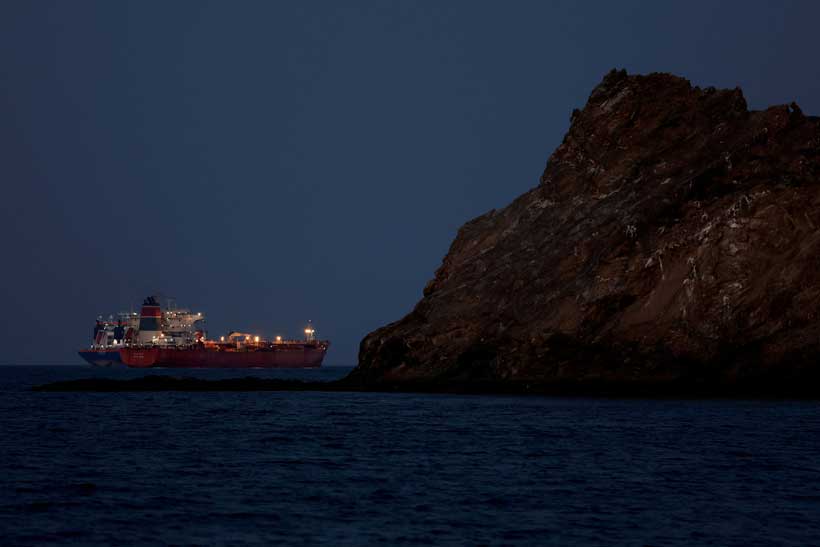
Iran’s announcement of a surveillance and permit zone stretching from Qeshm toward Fujairah is not merely another Gulf security measure. It is an attempt to redefine one of the world’s most important waterways by administrative decree. The Strait of Hormuz is not a private corridor, a customs lane, or a geopolitical cash machine. It is a global artery. When Tehran says ships entering the zone should coordinate with Iranian authorities, and when the new Persian Gulf Strait Authority claims a role in permits, monitoring, and fees, the issue is no longer only regional rivalry. It becomes a test of whether international navigation can be made conditional on the demands of one coastal state.
Security Is Not a Blank Cheque
Iran has legitimate security concerns. So do Oman, the United Arab Emirates, Saudi Arabia, Qatar, Iraq, shipping companies, energy importers, and the seafarers who sail these routes. The problem is not surveillance itself. Modern maritime security depends on monitoring, communication, traffic separation, and emergency coordination. The problem is unilateral control. According to Reuters reporting on Iran’s Hormuz mechanism, Tehran has framed the initiative to ensure sustainable security. But security that requires ships to seek political clearance, pay special fees, or submit to selective treatment is not neutral safety management. It is leverage dressed as regulation.
The law of the sea was designed precisely to prevent this kind of coercion. Under UNCLOS Part III, straits used for international navigation are subject to transit-passage principles. Even where coastal states have authority over territorial waters, they cannot turn an international strait into a discretionary checkpoint. UNCLOS rules on innocent passage also reject the idea that passage alone can become a taxable privilege. That distinction matters. A coastal state may regulate safety; it may not sell permission to move through a global chokepoint.
Stay ahead of the geopolitical week.
MD Briefing delivers expert analysis across five global fronts — the Indo-Pacific, energy, geoeconomics, European security, and the Middle East — every Monday morning. Free.
Fujairah Changes the Meaning of the Move
The reported extension of the surveillance zone toward Fujairah is especially sensitive. Fujairah is not just another coastal point; it is the UAE’s outlet to the Gulf of Oman and a strategic alternative to the Persian Gulf route. The UAE has long invested in infrastructure that reduces exposure to Hormuz disruption, and Reuters has noted Fujairah’s role in keeping some exports moving during regional instability. By drawing a surveillance zone toward that area, Iran is signalling that its ambitions are not confined to the narrowest part of the strait. It wants influence over the wider maritime approaches.
That should worry everyone, including states that currently maintain pragmatic ties with Tehran. The Guardian’s reporting on Oman’s position shows how difficult this issue is for Gulf diplomacy. Oman has historically played a balancing role, but any arrangement that appears to validate unilateral tolls or selective passage would set a dangerous precedent. Today it is Hormuz. Tomorrow it could be Bab-el-Mandeb, Malacca, the Turkish Straits, or another chokepoint where geography becomes coercion.
The World Economy Is the Hostage
Hormuz matters because the numbers are enormous. The US Energy Information Administration has described the strait as central to global oil and LNG flows, with around one-fifth of global petroleum liquids consumption and a major share of LNG trade moving through it. This is not a local shipping dispute. Insurance prices, refinery margins, fertilizer costs, Asian energy security, European inflation, and food logistics all feel the shock when Hormuz becomes uncertain.
Shipping companies understand this better than politicians. The International Chamber of Shipping has emphasized the importance of reopening and protecting crews. Al Jazeera reported Iranian claims of coordinating vessel passages, but coordination under duress is not the same as normal commerce. The International Maritime Organization has also kept attention on the safety implications of the crisis. Behind every “transit permit” are crews, cargoes, contracts, and economies waiting for predictability.
A Bad Precedent Must Be Resisted
The response should not be reckless military escalation. Nor should it be passive acceptance. The right answer is a multilateral maritime framework involving Iran, Oman, the UAE, other Gulf states, major importing economies, and shipping bodies. Any surveillance system must be transparent, non-discriminatory, limited to safety, and free from political tolls. The Crisis Group’s Hormuz analysis underlines the risk of escalation around the waterway, while Security Council Report has warned more broadly about threats to freedom of navigation.
Iran may believe the world’s dependence on Hormuz gives it bargaining power. In the short term, it does. But converting geography into a fee-based instrument will isolate Iran further and invite countermeasures. Reports from HSToday, Windward, Kurdistan24, and Alhurra all point to the same basic reality: the Strait of Hormuz is becoming a theater of administrative warfare.
The international community should draw a clear line. Maritime safety cooperation is welcome. Surveillance for navigation, rescue, deconfliction, and environmental protection is legitimate. But permits, political vetting, and coercive fees are not. The UK and France have defended freedom of navigation, and that principle must be defended consistently, not only when convenient. If Hormuz becomes a toll gate, the world will have taught every coastal power that control of a chokepoint is more valuable than respect for law. That would be a defeat far larger than one strait.
